




Instant online reading.
Don't wait for delivery!
Go digital and save!
Full Steam Ahead!
Unleash the Power of Vision in Your Company and Your Life
By: Patrick Lencioni, Jesse Lyn Stoner, Ken Blanchard
Hardcover | 1 January 2018 | Edition Number 2
At a Glance
216 Pages
Revised
22.2 x 14.8 x 2.2
Hardcover
RRP $59.99
$49.75
17%OFF
or 4 interest-free payments of $12.44 with
orShips in 25 to 30 business days
They also discover how to ensure that the vision comes alive through understanding the principles of: how it is created, how it is communicated and how it is lived and demonstrate that vision is not only necessary, but also possible and achievable.
About the Authors
Ken Blanchard is a prominent, sought-after author, speaker, and business consultant, Blanchard is universally characterized by his friends, colleagues, and clients as one of the most insightful, powerful, and compassionate individuals in business today. Ken is one of the most influential leadership experts in the world and is respected for his years of groundbreaking work in the fields of leadership and management.
Jesse Lyn Stoner, founder of Seapoint Center, is a well-known organizational consultant, executive coach, and author. Her clients include Fortune 1000, small business, non-profit and government agencies such as The Hartford Life Insurance Company, Jackson Hole Ski Resort, New York City Housing Authority, The Center for Human Development, Avon Public Schools, and The Tennessee Valley Authority (TVA). She is co-author of the previous edition of Full Steam Ahead! (Berrett-Koehler, 2003). She has also authored three other titles published by The Ken Blanchard Companies.
Patrick Lencioni is the bestselling author of The Five Dysfunctions of a Team. His most recent book is Getting Naked: A Business Fable About Shedding The Three Fears That Sabotage Client Loyalty.
Industry Reviews
-Warren Bennis, author of Still Surprised and On Becoming a Leader
"This story provides a wonderful road map through the very important territory of vision that can move into action. I found myself recalling many details of the journey well after I put the book down-it stayed vividly in my memory. A powerful, simple guide for a journey we all need to take."
-Margaret J. Wheatley, author of Leadership and the New Science and Walk Out Walk On
"For those who...extract the lessons from this wonderfully powerful and simple book and put them into practice, the rewards will be extraordinary."
-from the introduction by Patrick Lencioni, President, The Table Group, and author of The Five Dysfunctions of a Team
"Inspiring a shared vision is the signature leadership competency. It's also the most difficult practice to learn and apply. In this wonderful gem of a book Ken Blanchard and Jesse Stoner show you how to find a meaningful purpose, picture a compelling future, and clarify your values. This engaging story is full of practical advice that you'll be able to apply immediately. It's essential reading for any leader who needs to answer the question, 'Where are we going?' Come to think of it, that would be all of us!"
-Jim Kouzes, coauthor of the bestselling The Leadership Challenge and The Truth about Leadership, and Dean's Executive Professor of Leadership, Leavey School of Business
"So many of the lessons I share with my teams revolve around attaining goals by having a clear vision of where we are headed as a group and also individually. Full Steam Ahead! emphasizes the ways in which those visions can not only help you reach greatness but also maintain it for you and your team. In the past I've shared this book with friends and coaching peers alike and continue to do so in order to share the wisdom and effective guidance that Ken and Jesse provide on each and every page."
-John Calipari, Head Coach, University of Kentucky Basketball, two-time National Coach of the Year, and author of the national bestseller Bounce Back
"I LUV this heartwarming lesson from Blanchard and Stoner and urge anyone who wants to develop a clear vision to study the messages clearly and articulately delivered on each page of Full Steam Ahead!"
-Colleen Barrett, President Emeritus, Southwest Airlines Company and coauthor of Lead with LUV
"In order to do your personal best, you must have a vision. To me a clear vision answers the question, 'What mountain do we want to climb?' Full Steam Ahead! is a wonderful guidebook that will not only help you find your mountain, but will give you all the roadmaps and tools you'll need to make it to the top. Highly recommended!"
-Garry Ridge, CEO, WD-40 Company and coauthor of Helping People Win at Work
"A clear vision gives an organization heart. Without it, work will have no meaning. Full Steam Ahead! is a must read."
-James H. Amos, Jr., Chairman Emeritus, Mail Boxes, Etc.
"Before beginning any kind of planning, everyone on the team should read this book. It will ensure you're headed in the right direction. Full Steam Ahead! should be required reading."
-Barbara Bennett, Former Executive Vice President, The Stanley Works
"Leadership is about going somewhere. Without a clear vision your leadership doesn't matter. Full Steam Ahead! will help your leadership efforts get started in the right direction."
-James E. Despain, former Vice President, Caterpillar, and author of And Dignity for All
"Great things come from a powerful vision-fortunes are made, diseases get cured, and democracies are born. Blanchard and Stoner not only teach readers how to develop a potent vision in Full Steam Ahead!, but also how to bring it alive in the hearts and minds of the people who will make it happen."
-Robert W. Jacobs, author of Real Time Strategic Change
"Blanchard and Stoner demonstrate how clear vision helps you focus on the results you desire. Time is a precious commodity. Full Steam Ahead! shows you how to get the most out of your efforts."
-Loyal Nordstrom, President, Honolulu Holdings, Inc.
A Proper Ending I stood in disbelief as a cold wind lashed across my face. I can't believe he's gone, I thought. I couldn't imagine a world without Jim in it. Yet, here I stood at an open grave on this gloomy winter day. I looked around at those gathered with me. They appeared to be as shocked as I felt. Jim had meant so much to all of us.
As Jim's daughter Kristen read the eulogy, the familiar words comforted me, and I could almost sense his presence. "Jim Carpenter was a loving teacher and example of simple truths, whose leadership helped him and others awaken to the presence of God in their lives. He was a caring child of God, a son, brother, spouse, father, grandfather, father-in-law, brother-in-law, godfather, uncle, cousin, friend, and business colleague, who strove to find a balance between success and significance. He was able to say no in a loving manner to people and projects that got him off purpose. He was a person of high energy who was able to see the positive in any event or situation. No matter what happened, he could find a 'learning' or a message in it. Jim valued integrity; his actions were consistent with his words; and he was a mean, lean, 185-pound, flexible golfing machine. He will be missed because wherever he went, he made the world a better place by his having been there."
A loving teacher and example of simple truths. I reflected how eloquently those words described the way Jim had lived his life. This was the essence of who he was. I smiled to myself as I thought about how the words even captured Jim's humor. He certainly loved golf, even though he had never become a "mean, lean golfing machine." As we walked away from the cemetery, I caught up with Kristen.
"That was a lovely eulogy," I told her as I put my arm around her. Kristen sighed and said, "Thanks, Ellie. But I didn't write it. I think Dad did. I was sitting at his desk in his study, trying to compose a eulogy, when I found this one lying in the top drawer. I thought it described him better than anything I could have written."
She paused a moment and continued, "But I don't know why he would have written it." "I know why," I replied softly. "I was with him when he wrote it. He didn't write it for his funeral. It was his vision for his life. It guided him."
Continuing on my own as I headed toward my car, I reflected on Jim's vision. I considered how he had used the power of vision to transform the small insurance agency his father had started into a thriving, nationally recognized company. I chuckled to myself as I remembered how he had struggled at first, knowing he needed a vision but unsure how to create one. He wasn't one of the lucky people who woke up one morning with a clear vision. Yet by understanding the key elements of a vision and what was important about the process of creating, communicating, and living it, he'd been able to create a shared vision that unified and mobilized the people in his agency. Equally important, he had created a vision for his life. And I thought about how I had used those same lessons to create a vision for my life. Then my thoughts raced back to the beginning of the journey—a journey that had transformed not only the agency but also both of us, so many years ago. It had been a different time, a different life, a different me—yet it felt as though it were only yesterday.
Chapter Two A Real Beginning
I stood before the doors of Carpenter Insurance Agency, at the threshold of a new world. At thirty-eight years old, I had never worked a day outside the house. I had been a top student in college, heading toward a rewarding career. During a summer internship at an accounting firm, I'd met Doug, a handsome, up-and-coming CPA. Our plan was to marry as soon as I graduated. Then I'd go to graduate school, earn an MBA, and get a great job. We'd have a couple of children, and with our two incomes we'd have a large house, a nanny, fun vacations, and a great life. We did marry and I did begin an MBA program at a prestigious school. But two things happened that weren't in the plan: we got pregnant unexpectedly—twins, no less!—and Doug got sick. Shortly before the twins were born, Doug started coming home from work exhausted. At first we thought he was experiencing "sympathy pregnancy" symptoms. But when muscle weakness and cramps started interfering with his tennis game, he decided to see a doctor. After months of tests, specialists, and anxiety, Doug was diagnosed with ALS (Lou Gehrig's Disease). By the time the twins were eighteen months old, I was a widow.
Snap your fingers and that's how fast fifteen years went by. Fortunately, Doug had a good life insurance policy and his parents helped out, so by living frugally, I was able to stay home with my children full-time. Maybe I felt like I needed to make up for their not having a father, but my children became the center of my life. I dated a bit, but whenever things started getting serious, I'd start feeling disloyal to Doug's memory and to his parents who were helping us out so much. Now I was at a new point in my life. My children had started high school and didn't seem to need me the way they once had. The years had eased the pain of losing Doug, and the life insurance money was running out. It was time to get a job. And I was ready to start a new life. I had spent the last fifteen years taking care of everyone else. Now it was time to take care of me.
I perused ads for a business or financial position, since that had been my college major. Eventually, I found my first job in the accounting department for this good-sized insurance agency. With a bit of trepidation and a lot of excitement, I went shopping for business clothes and prepared to enter this strange new world. * * *
As I entered the doors of Carpenter Insurance, I was greeted by Marsha, head of accounting, who had interviewed me for the position. She gave me a tour of the building, outlined my responsibilities, introduced me to my coworkers, handed me some employment paperwork to complete, and showed me my cubicle. A computer had already been set up for me as well as voice mail. There was even a message waiting for me on voice mail: Good morning, everyone. This is Jim. It's said that Abraham Lincoln often slipped out of the White House on Wednesday evenings to listen to the sermons of Dr. Finnes Gurley at New York Avenue Presbyterian Church. He generally preferred to come and go unnoticed. So when Dr. Gurley knew the president was coming, he left his study door open. On one of those occasions, the president slipped through a side door in the church and took a seat in the minister's study, located just to the side of the sanctuary. There he propped the door open, just wide enough to hear Dr. Gurley. During the walk home, an aide asked Mr. Lincoln his appraisal of the sermon. The president thoughtfully replied, "The content was excellent; he delivered with elegance; he obviously put work into the message." "Then you thought it was an excellent sermon?" questioned the aide. "No," Lincoln answered. "But you said that the content was excellent. It was delivered with eloquence, and it showed how hard he worked," the aide pressed. "That's true," Lincoln said, "But Dr. Gurley forgot the most important ingredient. He forgot to ask us to do something great."
I believe there is nothing wrong with average lives and average accomplishments; most of the good of the world builds on the accumulated efforts of everyday people. But a life should strive for greatness, as Lincoln seemed to know. Who was Jim, and why was his message in my voice mailbox? This was something I hadn't expected in the business world.
Later in the morning, Marsha explained that I would spend the day shadowing my new coworker, Darryl, who would help me learn the ropes. I joined Darryl and a few others from the department for lunch. Darryl was quiet, but the rest of us chatted about an upcoming big project, the weather, and our families. I didn't ask about the voice mail message—partly because it slipped my mind but mostly because I didn't want to sound as though I didn't know about the business world.
Although not very social, Darryl was a good person to explain how things worked because he was so totally task focused. The day flew by and I hardly had time to organize my desk. * * *
Over the next few days, I dug right in. I was eager to learn everything as quickly as possible. One of Darryl's responsibilities was to collect and organize receipts from the agents for their reimbursable expenses such as travel. He wanted me to take over this responsibility and some others as soon as possible and kept me quite busy. By Friday, I still hadn't asked anyone about the voice mail messages. But each morning, I was intrigued by the brief message that began with the words "Good morning, everyone. This is Jim." The messages were quite unusual. They seemed to be a mix of stories, personal philosophy, and information about things that were happening in people's lives. For example, one message began:
Good morning, everyone. This is Jim. Yesterday Sue Mason, one of our receptionists, had a successful operation, but they did find some cancer. They think they got most of it out, but she's got to go through some chemotherapy. So let's send our prayers, good energy, and positive thoughts toward Sue. I hadn't met Sue, but I sent her some positive thoughts anyway. I felt it couldn't hurt. I still hadn't asked anyone about the messages, partly because it never seemed to be the right time to do so. And partly because it had become a bit of a mystery—something to look forward to each day. It had been a long time since I had some mystery in my life.
When I got home at the end of my first week of work, I reflected on my experiences. I was exhausted but had enjoyed the week. Although it was a little stressful learning all the routines and figuring out my job, I was excited and energized. For the most part, my coworkers were friendly, and my boss seemed nice. Saturday morning, as I sat alone at the breakfast table drinking a cup of coffee, I felt a little sad. I had seen the twins all of ten minutes earlier in the morning. I had planned on making them a nice breakfast, but they turned me down. They grabbed their own breakfast, which they quickly gulped down. When I offered to pour some orange juice, Jen announced, "Mom, we're not little kids anymore!"—implying that I had offended her—and headed out the door for a swim meet.
That set the tone for the weekend. I hardly saw the kids at all the next two days. And when they were around, they didn't seem interested in talking with me. I tried to tell Jen about my new job, but she listened politely for only a moment and then excused herself. When I asked Alex how the week had gone, he looked up briefly from his computer, said, "Fine," and resumed what he had been doing. Ah, I thought, they're moving into the next phase of development—independence. They don't need me the way they used to. Good thing I took this job. By Sunday night, I was bored and looking forward to going back to work. I went to bed early and was wide awake the next morning at 5:30. No point in trying to go back to sleep. I used to drive Jen and Alex to swim practice before school. Now that they were in high school, they car-pooled with older teammates. Obviously they didn't care if I made breakfast for them. What to do? I considered going into work early. I had been assigned a project. If I did a good job, it might prove my capabilities. Why not get at it? I thought. I dressed quickly, left a note for Jen and Alex telling them I had left for work, and arrived there around 6:30.
It hadn't occurred to me that the building would be locked. Walking around the side, I tested the doors and found one unlocked in the back. I entered the quiet building with a bit of trepidation. I hadn't met many of the people who worked there yet, and I didn't want to be arrested for breaking and entering. The door opened to a hallway. I was immediately drawn to the aroma of freshly brewed coffee coming from a room to my left. I poked my head in and noticed several photocopy machines. To my delight, I found fresh coffee in a coffeemaker on a counter near the entrance to the room. It smelled so wonderful that I walked over and helped myself to a cup. As I was enjoying the first sip, I heard a "humpf" behind me.
Startled, I turned and spilled my coffee. I hadn't noticed a small table almost hidden in the back of the room behind a row of copy machines, nor had I noticed the man sitting at it. But clearly he had noticed me. He sat comfortably with a cup of coffee and appeared to have been watching me for some time. "Care to join me?" he invited.
Self-consciously, I wiped up the spilled coffee and joined him. "I'm new here," I explained hesitantly. "I wanted to come in early to get some work done, and this was the only door open."
At first I thought he was a custodian or security guard and worried that I might be in trouble. I was quickly assured that was not the case. He was the kind of person who immediately made you feel at ease. We chatted easily. He was an attentive listener and showed genuine interest in me. Although I'm a private person, I was surprised at how much I opened up with him. I told him about getting married so young, how hard it had been caring for a dying husband and two babies. "I couldn't imagine what it would be like to lose my beloved wife and raise our kids on my own," he said gently.
"It has been tough," I said. "I put my life on hold to raise my kids, and now they don't seem to need me anymore. Truth be told, this is my first real job. I'm both excited and nervous about it." It suddenly occurred to me that I was being rude. "Forgive me," I said. "You're such a good listener that I've monopolized the conversation—and I don't even know your name."
"My name is Jim, and I'm the president of the agency," he said with a smile. "I enjoyed meeting you, Ellie, and learning about your life. I'm glad you've joined our company. And now, if you'll excuse me, it's time for me to get to work." He stood up and walked off, leaving me stunned and speechless. Later that morning, when I listened to my voice mail, I heard the following message:
Good morning, everyone. This is Jim. It's a little after 7:00. I was talking this morning with Ellie, our new associate in the accounting department, and I was reminded of a story I'd like to share with you. One day an expert in time management was speaking to a group. He pulled out a one-gallon, wide-mouthed jar and set it on the table in front of him. He also produced about a dozen fist-sized rocks and carefully placed them, one at a time, into the jar. When the jar was filled to the top and no more rocks would fit inside, he asked, "Is this jar full?" Everyone said yes. He then reached under the table and pulled out a bucket of gravel. He dumped some gravel in and shook the jar, causing pieces of gravel to work themselves down into the spaces between the rocks. He then asked the group once more, "Is the jar full?" But this time some of the group were not so sure. "Good," he said as he reached under the table and brought out a bucket of sand and dumped it in the jar. Once more he asked the question, "Is the jar full?" No one answered. He then grabbed a pitcher of water and poured it in until the jar was filled to the brim. He looked at the class and asked, "What's the point of this illustration?" One bright young man said, "The point is, no matter how full your schedule is, if you really think about it, you can always fit more things in it." "No," the speaker replied with a smile. "That's not the point. That's what most people think. The truth this illustration teaches is that if you don't put the big rocks in first, you'll never get them in at all." What are the big rocks in your life? Time with your loved ones, your dreams, your health, a worthy cause? Remember to put these in first, or you'll never get them in at all. So, one part of the mystery was solved. The voice mail messages came from Jim, the company's president. Although I now knew who was leaving the messages, I still didn't know why.
(Continues...)
1. Without a Goodbye
2. An Unfamiliar World
3. Out of the Gloom
4. The "Vision Thing"
5. Element 1: Significant Purpose
6. Element 2: Clear Values
7. Element 3: Picture of the Future
8. Blurry Vision
9. You Can't Get to the Future Without Being Present
10. 20/20 Vision
11. A New Contract: From Vision to Reality
12: How It's Created
13. How It's Communicated
14. How It's Lived
15. Courage
16. From Success to Significance
17. Epilogue Resource: A Summary of Learnings
ISBN: 9781605098753
ISBN-10: 1605098752
Series: BK Business
Published: 1st January 2018
Format: Hardcover
Language: English
Number of Pages: 216
Audience: General Adult
Publisher: RANDOM HOUSE US
Country of Publication: GB
Edition Number: 2
Edition Type: Revised
Dimensions (cm): 22.2 x 14.8 x 2.2
Weight (kg): 0.41
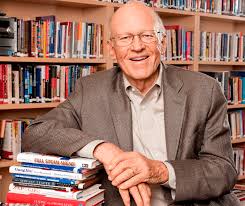
Ken Blanchard
Kenneth Hartley Blanchard is an American author. His extensive writing career includes over 60 published books, most of which are co-authored books. His most successful book, The One Minute Manager, has sold over 13 million copies and been translated into many languages.
Shipping
| Standard Shipping | Express Shipping | |
|---|---|---|
| Metro postcodes: | $9.99 | $14.95 |
| Regional postcodes: | $9.99 | $14.95 |
| Rural postcodes: | $9.99 | $14.95 |
How to return your order
At Booktopia, we offer hassle-free returns in accordance with our returns policy. If you wish to return an item, please get in touch with Booktopia Customer Care.
Additional postage charges may be applicable.
Defective items
If there is a problem with any of the items received for your order then the Booktopia Customer Care team is ready to assist you.
For more info please visit our Help Centre.
You Can Find This Book In

Paperback
RRP $19.99
$18.75

RRP $19.99
$18.75

Paperback
RRP $19.99
$18.75

RRP $19.99
$18.75

RRP $19.99
$18.75

RRP $59.99
$43.99
OFF

RRP $59.99
$49.75
OFF

RRP $39.99
$35.75
OFF

RRP $32.99
$30.99
![Self Leadership And The One Minute Manager : Gain The Mindset And Skillset For Getting What You Need To Succeed [Revised Edition] - Ken Blanchard](https://www.booktopia.com.au/covers/200/9780008263669/4599/self-leadership-and-the-one-minute-manager.jpg)


Paperback
$38.75

$51.75

$41.75

RRP $59.99
$45.75
OFF

Paperback
$27.99

RRP $32.99
$30.99

RRP $35.00
$30.75
OFF

RRP $55.00
$46.75
OFF

RRP $59.99
$48.75
OFF


