



At a Glance
Paperback
RRP $16.99
$12.75
25%OFF
ISBN: 9781853260186
ISBN-10: 1853260185
Series: Wordsworth Classics
Published: 31st May 1992
Format: Paperback
Language: English
Number of Pages: 176
Audience: General Adult
Publisher: Wordsworth Editions
Country of Publication: GB
Edition Type: Annotated
Dimensions (cm): 19.7 x 12.5 x 1.1
Weight (kg): 0.135
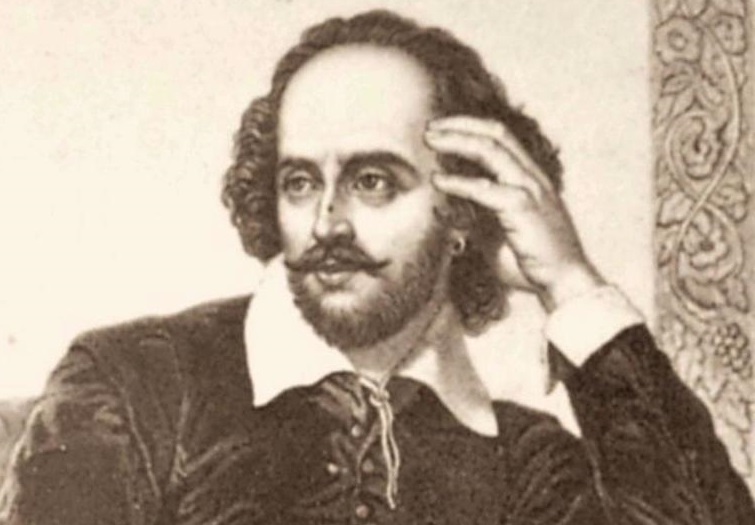
William Shakespeare
William Shakespeare was born at Stratford upon Avon in April, 1564. He was the third child, and eldest son, of John Shakespeare and Mary Arden. His father was one of the most prosperous men of Stratford, who held in turn the chief offices in the town. His mother was of gentle birth, the daughter of Robert Arden of Wilmcote. In December, 1582, Shakespeare married Ann Hathaway, daughter of a farmer of Shottery, near Stratford; their first child Susanna was baptized on May 6, 1583, and twins, Hamnet and Judith, on February 22, 1585. Little is known of Shakespeare's early life; but it is unlikely that a writer who dramatized such an incomparable range and variety of human kinds and experiences should have spent his early manhood entirely in placid pursuits in a country town. There is one tradition, not universally accepted, that he fled from Stratford because he was in trouble for deer stealing, and had fallen foul of Sir Thomas Lucy, the local magnate; another that he was for some time a schoolmaster.
From 1592 onwards the records are much fuller. In March, 1592, the Lord Strange's players produced a new play at the Rose Theatre called Harry the Sixth, which was very successful, and was probably the First Part of Henry VI. In the autumn of 1592 Robert Greene, the best known of the professional writers, as he was dying wrote a letter to three fellow writers in which he warned them against the ingratitude of players in general, and in particular against an 'upstart crow' who 'supposes he is as much able to bombast out a blank verse as the best of you: and being an absolute Johannes Factotum is in his own conceit the only Shake-scene in a country.' This is the first reference to Shakespeare, and the whole passage suggests that Shakespeare had become suddenly famous as a playwright. At this time Shakespeare was brought into touch with Edward Alleyne the great tragedian, and Christopher Marlowe, whose thundering parts of Tamburlaine, the Jew of Malta, and Dr Faustus Alleyne was acting, as well as Hieronimo, the hero of Kyd's Spanish Tragedy, the most famous of all Elizabethan plays.
In April, 1593, Shakespeare published his poem Venus and Adonis, which was dedicated to the young Earl of Southampton: it was a great and lasting success, and was reprinted nine times in the next few years. In May, 1594, his second poem, The Rape of Lucrece, was also dedicated to Southampton.
There was little playing in 1593, for the theatres were shut during a severe outbreak of the plague; but in the autumn of 1594, when the plague ceased, the playing companies were reorganized, and Shakespeare became a sharer in the Lord Chamberlain's company who went to play in the Theatre in Shoreditch. During these months Marlowe and Kyd had died. Shakespeare was thus for a time without a rival. He had already written the three parts of Henry VI, Richard III, Titus Andronicus, The Two Gentlemen of Verona, Love's Labour's Lost, The Comedy of Errors, and The Taming of the Shrew. Soon afterwards he wrote the first of his greater plays - Romeo and Juliet - and he followed this success in the next three years with A Midsummer Night's Dream, Richard II, and The Merchant of Venice. The two parts of Henry VI, introducing Falstaff, the most popular of all his comic characters, were written in 1597-8.
The company left the Theatre in 1597 owing to disputes over a renewal of the ground lease, and went to play at the Curtain in the same neighbourhood. The disputes continued throughout 1598, and at Christmas the players settled the matter by demolishing the old Theatre and re-erecting a new playhouse on the South Bank of the Thames, near Southwark Cathedral. This playhouse was named the Globe. The expenses of the new building were shared by the chief members of the Company, including Shakespeare, who was now a man of some means. In 1596 he had bought New Place, a large house in the centre of Stratford, for £60, and through his father purchased a coat-of-arms from the Heralds, which was the official recognition that he and his family were gentlefolk.
By the summer of 1598 Shakespeare was recognized as the greatest of English dramatists. Booksellers were printing his more popular plays, at times even in pirated or stolen versions, and he received a remarkable tribute from a young writer named Francis Meres, in his book Palladis Tamia. In a long catalogue of English authors Meres gave Shakespeare more prominence than any other writer, and mentioned by name twelve of his plays.
Shortly before the Globe was opened, Shakespeare had completed the cycle of plays dealing with the whole story of the Wars of the Roses with Henry V. It was followed by As You Like It, and Julius Caesar, the first of the maturer tragedies. In the next three years he wrote Troilus and Cressida, The Merry Wives of Windsor, Hamlet, and Twelfth Night.
On March 24, 1603, Queen Elizabeth died. The company had often performed before her, but they found her successor a far more enthusiastic patron. One of the first acts of King James was to take over the company and to promote them to be his own servants, so that henceforward they were known as the King's Men. They acted now very frequently at Court, and prospered accordingly. In the early years of the reign Shakespeare wrote the more sombre comedies, All's Well that Ends Well, and Measure for Measure, which were followed by Othello, Macbeth, and King Lear. Then he returned to Roman themes with Antony and Cleopatra and Coriolanus.
Since 1601 Shakespeare had been writing less, and there were now a number of rival dramatists who were introducing new styles of drama, particularly Ben Jonson (whose first successful comedy, Every Man in his Humour, was acted by Shakespeare's company in 1598), Chapman, Dekker, Marston, and Beaumont and Fletcher who began to write in 1607. In 1608 the King's Men acquired a second playhouse, an indoor private theatre in the fashionable quarter of the Blackfriars. At private theatres, plays were performed indoors; the prices charged were higher than in the public playhouses, and the audience consequently was more select. Shakespeare seems to have retired from the stage about this time: his name does not occur in the various lists of players after 1607. Henceforward he lived for the most part at Stratford, where he was regarded as one of the most important citizens. He still wrote a few plays, and he tried his hand at the new form of tragi-comedy - a play with tragic incidents but a happy ending - which Beaumont and Fletcher had popularized. He wrote four of these - Pericles, Cymbeline, The Winter's Tale, and The Tempest, which was acted at Court in 1611. For the last four years of his life he lived in retirement. His son Hamnet had died in 1596: his two daughters were now married. Shakespeare died at Stratford upon Avon on April 23, 1616, and was buried in the chancel of the church, before the high altar. Shortly afterwards a memorial which still exists, with a portrait bust, was set up on the North wall. His wife survived him.
William Hazlitt (1778–1830) on Shakespeare:
The striking peculiarity of Shakespeare’s mind was its generic quality, its power of communication with all other minds—so that it contained a universe of thought and feeling within itself, and had no one peculiar bias, or exclusive excellence more than another. He was just like any other man, but that he was like all other men. He was the least of an egotist that it was possible to be. He was nothing in himself; but he was all that others were, or that they could become. He not only had in himself the germs of every faculty and feeling, but he could follow them by anticipation, intuitively, into all their conceivable ramifications, through every change of fortune or conflict of passion, or turn of thought. He had “a mind reflecting ages past,” and present—all the people that ever lived are there. There was no respect of persons with him. His genius shone equally on the evil and on the good, on the wise and the foolish, the monarch and the beggar.
Shipping
| Standard Shipping | Express Shipping | |
|---|---|---|
| Metro postcodes: | $9.99 | $14.95 |
| Regional postcodes: | $9.99 | $14.95 |
| Rural postcodes: | $9.99 | $14.95 |
Orders over $79.00 qualify for free shipping.
How to return your order
At Booktopia, we offer hassle-free returns in accordance with our returns policy. If you wish to return an item, please get in touch with Booktopia Customer Care.
Additional postage charges may be applicable.
Defective items
If there is a problem with any of the items received for your order then the Booktopia Customer Care team is ready to assist you.
For more info please visit our Help Centre.
You Can Find This Book In

RRP $14.99
$11.99
OFF

RRP $14.99
$8.75
OFF

RRP $14.99
$8.75
OFF

RRP $14.99
$8.75
OFF

RRP $49.99
$38.75
OFF

RRP $14.99
$8.75
OFF

RRP $14.99
$8.75
OFF

RRP $14.99
$8.75
OFF

RRP $14.99
$8.75
OFF

RRP $14.99
$8.75
OFF
RRP $14.99
$13.75

RRP $16.99
$12.75
OFF

RRP $16.99
$12.75
OFF

RRP $59.99
$45.75
OFF

RRP $14.99
$8.75
OFF

RRP $19.99
$14.99
OFF

RRP $15.99
$15.75


RRP $19.99
$15.75
OFF

RRP $19.99
$15.75
OFF

RRP $17.95
$14.75
OFF

RRP $16.99
$11.99
OFF

RRP $26.99
$21.75
OFF

RRP $16.99
$11.75
OFF