



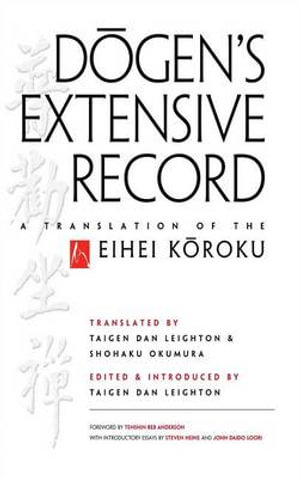
Dogen's Extensive Record
A Translation of the Eihei Koroku
Paperback | 16 March 2010
At a Glance
Paperback
$65.75
Ships in 5 to 10 business days
ISBN: 9780861716708
ISBN-10: 0861716701
Published: 16th March 2010
Format: Paperback
Language: English
Number of Pages: 728
Audience: General Adult
Publisher: Wisdom Publications,U.S.
Country of Publication: US
Dimensions (cm): 22.86 x 15.24 x 4.45
Weight (kg): 1.07
Shipping
| Standard Shipping | Express Shipping | |
|---|---|---|
| Metro postcodes: | $9.99 | $14.95 |
| Regional postcodes: | $9.99 | $14.95 |
| Rural postcodes: | $9.99 | $14.95 |
How to return your order
At Booktopia, we offer hassle-free returns in accordance with our returns policy. If you wish to return an item, please get in touch with Booktopia Customer Care.
Additional postage charges may be applicable.
Defective items
If there is a problem with any of the items received for your order then the Booktopia Customer Care team is ready to assist you.
For more info please visit our Help Centre.
You Can Find This Book In

RRP $28.99
$24.75
OFF

RRP $34.99
$28.75
OFF

RRP $29.99
$17.99
OFF

RRP $26.99
$22.99
OFF

RRP $26.99
$22.99
OFF

RRP $26.99
$21.99
OFF

RRP $29.99
$24.99
OFF

RRP $34.99
$28.75
OFF

RRP $34.99
$28.75
OFF


RRP $26.99
$22.99
OFF

RRP $30.79
$28.75

RRP $34.99
$28.75
OFF

RRP $39.99
$31.75
OFF


RRP $29.99
$24.99
OFF

RRP $26.99
$22.99
OFF

RRP $80.00
$50.75
OFF


RRP $22.99
$21.75


