The Pearson Guide to Critical and Creative Thinking
By: Robert DiYanni
Paperback | 28 July 2014 | Edition Number 1
At a Glance
384 Pages
25.4 x 20.32 x 1.91
Paperback
RRP $203.89
$193.75
or 4 interest-free payments of $48.44 with
orAvailable for Backorder. We will order this from our supplier however there isn't a current ETA.
Critical and creative thinking for life experience and career success
The first edition of The Pearson Guide to Critical and Creative Thinking provides students with the tools, techniques, and strategies for thinking both critically and creatively. A toolbox for higher-order analytical and imaginative thinking, readers practice critical and creative thinking by applying learned theories to examples, demonstrations, and exercises. Exercises involve both individual and collaborative critical and creative thinking applications across academic disciplines, as well as in personal and professional career contexts. The clear and easy to follow writing style makes concepts and theories accessible to all students, especially in the foundational chapters. Later chapters enable students to exercise their reasoning skills and judgment by generating ideas and applying what they’ve learned.
This title is available in a variety of print and digital formats. Pearson offers its titles on the devices students love through CourseSmart, Amazon, and more. To learn more about pricing options and customization, click the Choices tab.
Industry Reviews
"The organization is great. Each chapter adds to the ones that follow and allows the student to build upon what they are learning from one chapter to the next."
-Tanya Allred, New Mexico State University at Alamogordo
"This style is user friendly. It was easy to read and was not too technical or difficult to understand . . . The content is relevant, accurate and solid"
- Laura Earner, Saint xavier University
"The author does make good use of concrete examples. Students taking such a course likely have a variety of backgrounds and major areas of interest. This text takes that into account with examples ranging from photos and drawings to math equations, to poetry."
- Carol Davis, California State University, Monterey Bay
"I like the tone of the book. . . . the exercises and their mix of self-examination and scholarship. I like the breadth of topics that are included at the end of the book. They take critical thinking into realms students might not have considered before."
- Christina Conroy, Morehead State University
"One of the best elements of this text is its flexibility. It provides instructors with the ability to market their Critical Thinking courses to different student audiences as well."
- Lisa Bellantoni, Albright College
"One of the main things that I like about this text is the interaction with the reader. The exercises interspersed through the chapters involve the reader in the text and force them to 'think'."
- Cathy Hall, Indiana University Northwest
In This Section:
- Brief Table of Contents
- Detailed Table of Contents
I) Brief Table of Contents
PART ONE - INTRODUCING CRITICAL AND CREATIVE THINKING
- Chapter 1. Developing Critical Thinking
- Chapter 2. Developing Creative Thinking
PART TWO - CRITICAL THINKING: ANALYSIS
- Chapter 3. Analyzing Language
- Chapter 4. Analyzing Images
- Chapter 5. Thinking, Reading, Writing
PART THREE - CRITICAL THINKING: ARGUMENT
- Chapter 6. Reasoning Well: Sound Thinking
- Chapter 7. Reasoning Badly: Thinking Fallacies
- Chapter 8. Analyzing and Constructing Arguments
PART FOUR - CREATIVE THINKING: GENERATING IDEAS
- Chapter 9. Parallel Thinking and Lateral Thinking
- Chapter 10. Finding Ideas Through Imaginative Thinking
- Chapter 11. Creative Whacks and Thinkertoys
PART FIVE - CREATIVE THINKING: APPLICATIONS AND EXPLORATIONS
- Chapter 12. Thinking about Design
- Chapter 13. Thinking about Innovation
- Chapter 14. Thinking about Technology and Information
II) Detailed Table of Contents
PART ONE - INTRODUCING CRITICAL AND CREATIVE THINKING
- Chapter 1. Developing Critical Thinking
- Learning Goals
- Chapter Overview
- Focusing Questions
- What is Critical Thinking?
- Habits of Mind
- Overcoming Obstacles to Thinking
- A Model for Critical Thinking
- Thinking about Thinking: How We Know What We Know
- Focus on Perception: Perception and Knowledge
- Being Wrong
- Intuitions and Rationalizations
- The Pleasures and Benefits of Error
- The Perspective of Philosophy
- Looking Back and Looking Ahead
- Resources
- Chapter 2. Developing Creative Thinking
- Learning Goals
- Chapter Overview
- Focusing Questions
- What is Creative Thinking?
- Seeking Alternatives and Possibilities
- Broadening Perception
- Reversing Relationships
- Cross-Fertilization
- Shifting Attention
- Denying the Negative, Pursuing the Possible
- The Eight Commandments of Ideation
- SCAMPER
- The Creative Habit
- Developing Creative Confidence
- Idea Killers and Idea Growers
- Creative Questioning
- Looking Back and Looking Ahead
- Resources
PART TWO - CRITICAL THINKING: ANALYSIS
- Chapter 3. Analyzing Language
- Learning Goals
- Chapter Overview
- Focusing Questions
- Language Saturation
- Words
- The Prevalence of Metaphor
- Language and Thought
- Reports, Inferences, and Judgments
- Language and Critical Analysis
- An Approach to Analysis
- Looking Back and Looking Ahead
- Resources
- Chapter 4. Analyzing Images
- Learning Goals
- Chapter Overview
- Focusing Questions
- The Prevalence and Power of Images
- Image, Icon, Symbol, Sign
- The Vocabulary of Comics
- Images with Words: Analyzing an Advertisement
- Observations and Analysis: Allen Edmonds Shoe Ad
- Images, Ideas and Emotion
- Comparing Representational and Abstract Images
- A Graphic Novel: Shaun Tan's The Arrival
- Two Powerful Images
- Moving Images: The Power of Movies
- The Attraction of Movies
- Looking Back and Looking Ahead
- Resources
- Chapter 5. Thinking, Reading, Writing
- Learning Goals
- Chapter Overview
- Focusing Questions
- Why Read?
- The Pleasures of Reading
- Kinds of Reading
- Why Write?
- The Pleasures of Writing
- Kinds of Writing
- Active Reading
- The Interpretive Impulse
- An Approach to Reading and Writing
- Summarizing and Paraphrasing
- Evaluation—Judging and Considering Values
- Writing to Evaluate a Text
- The Value of Reading
- Digital Reading
- Looking Back and Looking Ahead
- Resources
PART THREE - CRITICAL THINKING: ARGUMENT
- Chapter 6. Reasoning Well: Sound Thinking
- Learning Goals
- Chapter Overview
- Focusing Questions
- The Pervasiveness of Argument
- What is an Argument?
- Argument Basics: Claims, Evidence, Assumptions
- Argument and Implications
- Going Further Into Evidence: Claims, Warrants, Backing
- Inductive and Deductive Reasoning
- Syllogisms and Argument
- Argument and Authority
- Argument and Analogy
- Argument and Causality
- Looking Back and Looking Ahead
- Resources
- Chapter 7. Reasoning Badly: Thinking Fallacies
- Learning Goals
- Chapter Overview
- Focusing Questions
- How Thinking Goes Wrong
- Fallacies—Errors in Reasoning
- Looking Back and Looking Ahead
- Resources
- Chapter 8. Analyzing and Constructing Arguments
- Learning Goals
- Chapter Overview
- Focusing Questions
- Analyzing Arguments
- Logic and Rhetoric
- Logos, Ethos, Pathos
- Argument and Eloquence—"Letter from Birmingham Jail"
- Constructing Arguments
- Guidelines for Constructing an Argument
- Argument and the Classical Oration
- Rogerian Argument
- Cultural Relativism
- Looking Back and Looking Ahead
- Resources
PART FOUR - CREATIVE THINKING: GENERATING IDEAS
- Chapter 9. Parallel Thinking and Lateral Thinking
- Learning Goals
- Chapter Overview
- Focusing Questions
- Thinking Tools
- Six Thinking Hats
- Lateral Thinking
- Concepts
- Essences
- Concepts as Cognitive Tools
- Looking Back and Looking Ahead
- Resources
- Chapter 10. Finding Ideas Through Imaginative Thinking
- Learning Goals
- Chapter Overview
- Focusing Questions
- The Priority of Imagination
- Imagination First: Unlocking Possibility
- Why Imagination?
- Imagination, Creativity, Innovation
- Capacities for Imaginative Thinking
- Raising Your Imagination Quotient
- The Limits of Imagination
- What is an Idea?
- Why Ideas are Important
- How to Get Ideas
- Creation and Destruction
- Looking Back and Looking Ahead
- Resources
- Chapter 11. Creative Whacks and Thinkertoys
- Learning Goals
- Chapter Overview
- Focusing Questions
- Creative Whacks
- Explorer, Artist, Judge, Warrior
- Thinkertoys
- Using Paradox
- Combining Things
- Thinking the Unthinkable
- Walt Disney—Dreamer, Realist, Critic
- Looking Back and Looking Ahead
- Resources
PART FIVE - CREATIVE THINKING: APPLICATIONS AND EXPLORATIONS
- Chapter 12. Thinking about Design
- Learning Goals
- Chapter Overview
- Focusing Questions
- What We Talk About When We Talk About Design
- Design and Everyday Life
- The Design of Processes
- Good and Bad Design
- Levels of Design
- Design and Human Behavior
- Designing for Error
- Paradoxes of Design
- Principles of Design
- Design Constraints and Compromises
- Anti-Design
- Design Thinking
- Design, Art, and Society
- Design and Truth
- Looking Back and Looking Ahead
- Resources
- Chapter 13. Thinking about Innovation
- Learning Goals
- Chapter Overview
- Focusing Questions
- What is Innovation?
- Principles of Innovation
- Conditions of Innovation
- Innovation and Resonance
- Innovation Myths and Innovation Drivers
- Inadvertent Discoveries
- Achieving Insights
- Group and Solo Innovation
- Where Good Ideas Come From
- Creating Innovators
- Zig-Zag Innovation
- Social Innovation
- What Thwarts Innovation?
- Balancing Innovation Factors
- Looking Back and Looking Ahead
- Resources
- Chapter 14. Thinking about Technology and Information
- Learning Goals
- Chapter Overview
- Focusing Questions
- The Power and Promise of Technology
- The Internet and Responsibility
- Into the Electronic Millennium
- Technology Education
- Technopoly
- Technology and Ethics
- Social Networking
- Does Facebook Reduce Life to a Data Base?
- The Implications of Artificial Intelligence
- Technology and Our Brains
- Digital Citizenship
- Technology and Information
- The River of Knowledge
- The Trustworthiness of Information
- Big Data
- Information, Privacy, and Political Control
- Information, Meaning, and Knowledge
- Looking Back and Looking Ahead
- Resources
ISBN: 9780205909247
ISBN-10: 0205909248
Series: Mythinkinglab
Published: 28th July 2014
Format: Paperback
Language: English
Number of Pages: 384
Audience: General Adult
Publisher: Pearson Education (US)
Country of Publication: GB
Edition Number: 1
Dimensions (cm): 25.4 x 20.32 x 1.91
Weight (kg): 0.75
Shipping
| Standard Shipping | Express Shipping | |
|---|---|---|
| Metro postcodes: | $9.99 | $14.95 |
| Regional postcodes: | $9.99 | $14.95 |
| Rural postcodes: | $9.99 | $14.95 |
Orders over $49.00 qualify for free shipping.
How to return your order
At Booktopia, we offer hassle-free returns in accordance with our returns policy. If you wish to return an item, please get in touch with Booktopia Customer Care.
Additional postage charges may be applicable.
Defective items
If there is a problem with any of the items received for your order then the Booktopia Customer Care team is ready to assist you.
For more info please visit our Help Centre.
You Can Find This Book In

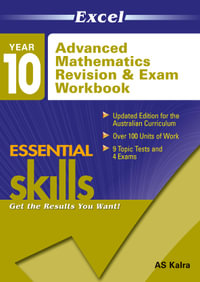
Excel Essential Skills: Advanced Mathematics Revision & Exam Workbook - Year 10
Excel Essential Skills (Maths)
Paperback
RRP $21.95
$18.75
OFF
![Collins Easy Learning Complete French Grammar, Verbs and Vocabulary (3 Books In 1) [2nd Edition] : Trusted support for learning - Collins Dictionaries](https://www.booktopia.com.au/covers/200/9780008141721/9626/collins-easy-learning-complete-french-grammar-verbs-and-vocabulary-3-books-in-1-2nd-edition-.jpg)
Collins Easy Learning Complete French Grammar, Verbs and Vocabulary (3 Books In 1) [2nd Edition]
Trusted support for learning
Paperback
RRP $29.99
$22.75
OFF
This product is categorised by
- Non-FictionLiterature, Poetry & PlaysHistory & Criticism of Literature
- Non-FictionEducationPhilosophy & Theory of Education
- Non-FictionEducationGeneral Study & Learning Skills
- Non-FictionPhilosophy
- Non-FictionPsychologyCognition & Cognitive Psychology
- Non-FictionSelf-Help, Personal Development & Practical AdvicePopular PsychologyMemory Improvement & Thinking Techniques
- Text BooksHigher Education & Vocational Textbooks