Get Free Shipping on orders over $0
Pathways through Crisis : Urban Risk and Public Culture - Carl A. Maida

Pathways through Crisis

Urban Risk and Public Culture

By: Carl A. Maida

Hardcover | 16 December 2008

At a Glance

Hardcover


RRP $220.00

$192.99

12%OFF

or 4 interest-free payments of $48.25 with

 or 

Ships in 3 to 5 business days

When densely populated urban areas face severe crisesâ"natural disasters, epidemics, sudden unemployment, massive immigrationâ"they often find that established mechanisms cannot respond adequately to the problems. Carl Maida argues that solutions to these problems tend to be developed within the affected communities themselves. In Pathways through Crisis, he draws on his two decades of work in ethnography and with crisis centers in the Los Angeles area to study the kinds of informal organizations that arise at the grass-roots level in order to deal with severe crises. This ground-breaking examination of responses to urban disaster suggests how both informal and formal organizations can be developed to serve people under extreme duress.
Industry Reviews
In Pathways through Crisis anthropologist Carl Maida has brought together historical, sociological, and contemporary case studies to demonstrate how members of poor minority groups cope with crises. He uses metropolitan Los Angeles, with its multiplicity of inner-city populations, as his 'social laboratory,' describing their varied responses to epidemics, to natural disasters, and to the arrival of new generations of immigrants the settled populations may, or may not, want to absorb. Maida's book should be welcome in urban communities everywhere. -- Bettyann Holtzmann Kevles, Yale University
Carl Maida's Pathways through Crisis examines a panorama of crises that have afflicted modern Los Angeles and its environs, from manufacturing layoffs and immigrant influxes to fires and earthquakes. For each radical dislocation in LA's experience, Maida provides a national historical background, an explanation of policy governing recovery, and local institutional and community responses as well as case studies of groups and individuals who endure and overcome. This is wide-ranging sociology, public health, and local history on a grand scale. As 'disaster' becomes a metaphor for twenty-first-century life, this book, with its calm and deliberative prose and in-depth look at different kinds of urban crises, can serve as a guidebook for policy makers, health professionals, and community leaders striving to the repair torn social fabric in any urban environment. -- Robert Louis Chianese, California State University, Northridge
Carl Maida lays the groundwork for a public anthropology centered in the notion of praxis. Over twenty years of fieldwork has produced a book that is ethnographic, philosophical, historical, but also action-oriented. It is a must-read for those interested in the ethnography of Southern California and the impact of its political economy on the lived experience of working people. -- Sam Beck, Cornell University
Maida's work represents that rare enlightened amalgam of lucidity in presenting important issues that link the human condition in broad perspective to the harsh day-to-day stresses of urban existence. With focus on the complexities of the variegated Los Angeles area, he considers crisis and trauma created by significant social upheavals and skillfully-with both a realistic and hopeful viewpoint-demonstrates how competent creativity and coping can solve, or at least mitigate, the most severe human problems encountered in this century. -- Fred Massarik, University of California, Los Angeles
The various crises that Carl Maida investigates-deindustrialization, displacements and migrations, environmental degradation, earthquakes and other 'natural' disasters-are likely to become only more acute in years to come. In its case-study approach, Pathways through Crisis carefully delineates the kinds of challenges that many communities will face. But by focusing on alternative forms of problem-solving, help-seeking, and negotiating after crises, it also demonstrates the possibilities of local organization and offers reasons for hope. -- Steven Biel, Harvard University

More in Psychology

Life's Tough - Be Tougher : Real tools for resilience - David Buttifant
The ADHD Field Guide for Adults - Erik Gude

RRP $34.99

$29.99

14%
OFF
Psychology Research Methods - Lorelle J. Burton

RRP $79.95

$73.75

Explicit Instruction : Effective and Efficient Teaching - Anita L. Archer
Why We Sleep : The New Science of Sleep and Dreams - Matthew Walker
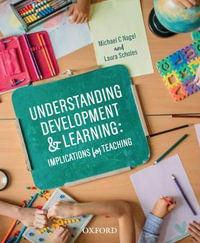
Understanding Development and Learning : Implications for Teaching - Michael Nagel
All Birds Have Anxiety : An affirming introduction to anxiety - Kathy Hoopmann
DBT Skills Training Handouts and Worksheets : 2nd Edition - Marsha M. Linehan