

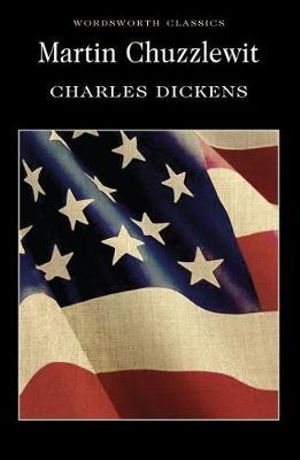
At a Glance
832 Pages
New edition
25.6 x 16.3 x 8.4
Paperback
RRP $16.99
$16.75
or 4 interest-free payments of $4.19 with
Ships in 15 to 25 business days
| Introduction | p. vii |
| Note on the Text | p. xvii |
| Preface | p. xxiii |
| ntroductory, Concerning the Pedigree of The Chuzzlewit Family | p. 1 |
| Wherein Certain Persons Are Presented to The Reader, with Whom He May, If He Please, Become Better Acquainted | p. 23 |
| In Which Certain Other Persons Are Introduced; On The Same Terms as in the Last Chapter | p. 40 |
| In Which Certain Other Persons Are Introduced; On The Same Terms as in the Last Chapter | p. 89 |
| Accompanies Mr. Pecksniff and His Charming Daughters to the City of London; and Relates What Fell Out, Upon Their Way Thither | p. 103 |
| Town and Todgers's | p. 112 |
| Containing Strange Matter; on Which Many Events In This History, May, for Their Good or Evil Influence, Chiefly Depend | p. 135 |
| Wherein a Certain Gentleman Becomes Particular In His Attentions to a Certain Lady; and More Coming Events Than One, Cast Their Shadows Before | p. 148 |
| Will Be Seen in the Long Run, If Not in the Short One, To Concern Mr. Pinch and Others, Nearly. Mr. Pecksniff Asserts the Dignity of Outraged Virtue; And Young Martin Chuzzlewit Forms a Desperate Resolution | p. 166 |
| Showing, What Became of Martin and His Desperate Resolve, After He Left Mr. Pecksniff's House; What Persons He Encountered; What Anxieties He Suffered And What News He Heard | p. 184 |
| In Which Martin Bids Adieu to the Lady of His Love And Honors an Obscure Individual Whose Fortune He Intends to Make, by Commending Her to His Protection | p. 202 |
| In Which Martin Bids Adieu to the Lady of His Love And Honors an Obscure Individual Whose Fortune He Intends to Make, by Commending Her to His Protection | p. 211 |
| In Which Martin Bids Adieu to the Lady of His Love And Honors an Obscure Individual Whose Fortune He Intends to Make, by Commending Her to His Protection | p. 238 |
| Does Business with the House of Anthony Chuzzlewit And Son, from Which One of the Partners Retires Unexpectedly | p. 255 |
| The Reader is Brought into Communication With Some Professional Persons, and Sheds a Tear Over The Filial Piety of Good Mr. Jonas | p. 264 |
| The Reader is Brought into Communication With Some Professional Persons, and Sheds a Tear Over The Filial Piety of Good Mr. Jonas | p. 280 |
| More American Experiences. Martin Takes a Partner And Makes a Purchase. Some Account of Eden, as It Appeared on Paper. Also of the British Lion. Also Of The Kind of Sympathy Professed and Entertained, By The Watertoast Association of United Sympathizers | p. 293 |
| From Which It Will Be Seen That Martin Became a Lion On His Own Account. Together with the Reason Why | p. 313 |
| From Which It Will Be Seen That Martin Became a Lion On His Own Account. Together with the Reason Why | p. 322 |
| From Which It Will Be Seen That Martin Became a Lion On His Own Account. Together with the Reason Why | p. 330 |
| Is in Part Professional; and Furnishes the Reader With Some Valuable Hints in Relation to The Management of a Sick Chamber | p. 345 |
| An Unexpected Meeting, and a Promising Prospect | p. 359 |
| Showing That Old Friends May Not Only Appear With New Faces, but in False Colours. That People Are Prone to Bite; and That Biters May Sometimes Be Bitten | p. 387 |
| Showing That Old Friends May Not Only Appear With New Faces, but in False Colours. That People Are Prone to Bite; and That Biters May Sometimes Be Bitten | p. 436 |
| Showing That Old Friends May Not Only Appear With New Faces, but in False Colours. That People Are Prone to Bite; and That Biters May Sometimes Be Bitten | p. 442 |
| In Which the Travellers Move Homeward, And Encounter Some Distinguished Characters Upon the Way | p. 457 |
| Arriving in England, Martin Witnesses a Ceremony From Which He Derives the Cheering Information That He Has Not Been Forgotten in His Absence | p. 471 |
| Arriving in England, Martin Witnesses a Ceremony From Which He Derives the Cheering Information That He Has Not Been Forgotten in His Absence | p. 477 |
| Tom Pinch, Going Astray, Finds That He is Not The Only Person in That Predicament. He Retaliates Upon a Fallen Foe | p. 496 |
| Secret Service | p. 504 |
| Secret Service | p. 513 |
| The Pinches Make a New Acquaintance, and Have Fresh Occasion for Surprise and Wonder | p. 529 |
| Mr. Jonas and His Friend, Arriving at a Pleasant Understanding, Set Forth Upon an Enterprise | p. 541 |
| Continuation of the Enterprise of Mr. Jonas And His Friend | p. 550 |
| Has an Influence on the Fortunes of Several People Mr. Pecksniff is Exhibited in the Plenitude of Power And Wields the Same with Fortitude and Magnanimity | p. 559 |
| Further Continuation of the Enterprise of Mr. Jonas And His Friend | p. 577 |
| n Which Tom Pinch and His Sister Take a Little Pleasure; but Quite in a Domestic Way, and with No Ceremony About It | p. 586 |
| In Which Miss Pecksniff Makes Love, Mr. Jonas Makes Wrath, Mrs. Gamp Makes Tea, and Mr. Chuffey Makes Business | p. 594 |
| Conclusion of the Enterprise of Mr. Jonas And His Friend | p. 614 |
| Bears Tidings of Martin, and of Mark, as Well As Of a Third Person Not Quite Unknown to the Reader Exhibits Filial Piety in an Ugly Aspect; and Casts ADoubtful Ray of Light Upon a Very Dark Place | p. 622 |
| Bears Tidings of Martin, and of Mark, as Well As Of a Third Person Not Quite Unknown to the Reader Exhibits Filial Piety in an Ugly Aspect; and Casts ADoubtful Ray of Light Upon a Very Dark Place | p. 636 |
| Bears Tidings of Martin, and of Mark, as Well As Of a Third Person Not Quite Unknown to the Reader Exhibits Filial Piety in an Ugly Aspect; and Casts ADoubtful Ray of Light Upon a Very Dark Place | p. 644 |
| Bears Tidings of Martin, and of Mark, as Well As Of a Third Person Not Quite Unknown to the Reader Exhibits Filial Piety in an Ugly Aspect; and Casts ADoubtful Ray of Light Upon a Very Dark Place | p. 650 |
| Bears Tidings of Martin, and of Mark, as Well As Of a Third Person Not Quite Unknown to the Reader Exhibits Filial Piety in an Ugly Aspect; and Casts ADoubtful Ray of Light Upon a Very Dark Place | p. 660 |
| Bears Tidings of Martin, and of Mark, as Well As Of a Third Person Not Quite Unknown to the Reader Exhibits Filial Piety in an Ugly Aspect; and Casts A Doubtful Ray of Light Upon a Very Dark Place | p. 679 |
| What John Westlock Said to Tom Pinch's Sister What Tom Pinch's Sister Said to John Westlock What Tom Pinch Said to Both of Them; and How They All Passed the Remainder of the Day | p. 698 |
| Gives the Author Great Concern. for It is the Last In the Book | p. 706 |
| Preface to the Cheap Edition (1850) | p. 717 |
| Preface to the Charles Dickens Edition (1867) | p. 719 |
| Postscript Added in 18681 | p. 721 |
| Preliminaries and Number Plans | p. 723 |
| Explanatory Notes | p. 727 |
| Table of Contents provided by Publisher. All Rights Reserved. |
ISBN: 9781853262050
ISBN-10: 1853262056
Series: Wordsworth Classics
Published: 5th June 1994
Format: Paperback
Language: English
Number of Pages: 832
Audience: General Adult
Publisher: Wordsworth Editions
Country of Publication: GB
Edition Type: New edition
Dimensions (cm): 25.6 x 16.3 x 8.4
Weight (kg): 0.48
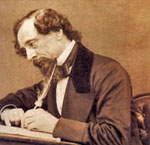
Charles Dickens
One of the grand masters of Victorian literature
Charles Dickens was born at Portsmouth on 7 February 1812, the second
of eight children. Dickens's childhood experiences were similar to
those depicted in David Copperfield. His father, who was a government
clerk, was imprisoned for debt and Dickens was briefly sent to work in
a blacking warehouse at the age of twelve.
He received little formal education, but taught himself shorthand and
became a reporter of parliamentary debates for the Morning Chronicle.
He began to publish sketches in various periodicals, which were
subsequently republished as Sketches by Boz. The Pickwick Papers were
published in 1836–7 and after a slow start became a publishing
phenomenon and Dickens's characters the centre of a popular cult.
Part of the secret of his success was the method of cheap serial
publication which Dickens used for all his novels. He began Oliver
Twist in 1837, followed by Nicholas Nickleby (1838) and The Old
Curiosity Shop (1840–41).After finishing Barnaby Rudge (1841) Dickens
set off for America; he went full of enthusiasm for the young republic
but, in spite of a triumphant reception, he returned disillusioned. His
experiences are recorded in American Notes (1842). Martin Chuzzlewit
(1843–4) did not repeat its predecessors' success but this was quickly
redressed by the huge popularity of the Christmas Books, of which the
first, A Christmas Carol, appeared in 1843.
During 1844–6 Dickens travelled abroad and he began Dombey and Son
while in Switzerland. This and David Copperfield (1849–50) were more
serious in theme and more carefully planned than his early novels. In
later works, such as Bleak House (1853) and Little Dorrit (1857),
Dickens's social criticism became more radical and his comedy more
savage.
In 1850 Dickens started the weekly periodical Household Words,
succeeded in 1859 by All the Year Round; in these he published Hard
Times (1854), A Tale of Two Cities (1859) and Great Expectations
(1860–61). Dickens's health was failing during the 1860s and the
physical strain of the public readings which he began in 1858 hastened
his decline, although Our Mutual Friend (1865) retained some of his
best comedy.
His last novel, The Mystery of Edwin Drood, was never completed and he
died on 9 June 1870. Public grief at his death was considerable and he
was buried in the Poets' Corner of Westminster Abbey.
A Note on our choice
The Works of Charles Dickens are available in many different editions, published by many different publishers.
The Booktopia Book Guru has recommended the Penguin Black Classic paperback editions here, as Australian readers have had a long established relationship with the Penguin Black Classic editions, with their informative and erudite introductions and notes.
There are, however, other options (see the series tab below). Both Oxford Classics and Vintage Classics publish Dickens, with notes and introductions. As do many US publishing houses.
Wordsworth Classics publish cheaper, no frills, editions of the classics, Dickens included, but the cheapest option, for those who have don’t want to read the classics but have to in order to pass a course, the US publisher, Dover, issues a thrift edition: these are cheap and cheerful, read and discard productions, which offer nothing but the text.
Shipping
| Standard Shipping | Express Shipping | |
|---|---|---|
| Metro postcodes: | $9.99 | $14.95 |
| Regional postcodes: | $9.99 | $14.95 |
| Rural postcodes: | $9.99 | $14.95 |
Orders over $89.00 qualify for free shipping.
How to return your order
At Booktopia, we offer hassle-free returns in accordance with our returns policy. If you wish to return an item, please get in touch with Booktopia Customer Care.
Additional postage charges may be applicable.
Defective items
If there is a problem with any of the items received for your order then the Booktopia Customer Care team is ready to assist you.
For more info please visit our Help Centre.


