



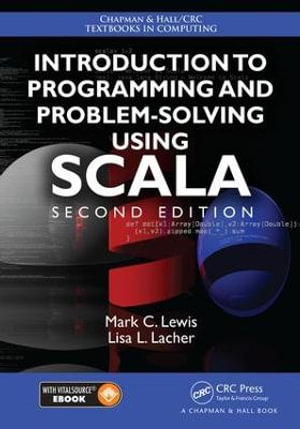
Introduction to Programming and Problem-Solving Using Scala
By: Mark C. Lewis
Paperback | 24 August 2016 | Edition Number 2
Sorry, we are not able to source the book you are looking for right now.
We did a search for other books with a similar title, however there were no matches. You can try selecting from a similar category, click on the author's name, or use the search box above to find your book.
ISBN: 9781498730952
ISBN-10: 1498730957
Series: Chapman & Hall/CRC Textbooks in Computing
Published: 24th August 2016
Format: Paperback
Language: English
Number of Pages: 590
Audience: General Adult
Publisher: Taylor & Francis Inc
Country of Publication: GB
Edition Number: 2
Edition Type: New edition
Dimensions (cm): 24.9 x 17.7 x 3.3
Weight (kg): 1.09
Shipping
| Standard Shipping | Express Shipping | |
|---|---|---|
| Metro postcodes: | $9.99 | $14.95 |
| Regional postcodes: | $9.99 | $14.95 |
| Rural postcodes: | $9.99 | $14.95 |
Orders over $79.00 qualify for free shipping.
How to return your order
At Booktopia, we offer hassle-free returns in accordance with our returns policy. If you wish to return an item, please get in touch with Booktopia Customer Care.
Additional postage charges may be applicable.
Defective items
If there is a problem with any of the items received for your order then the Booktopia Customer Care team is ready to assist you.
For more info please visit our Help Centre.
You Can Find This Book In

RRP $39.99
$32.75
OFF


RRP $131.20
$81.75
OFF

RRP $44.99
$35.75
OFF
RRP $114.00
$91.20
OFF

RRP $73.95
$70.75
RRP $152.00
$121.60
OFF
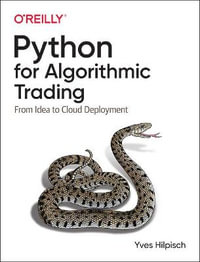
RRP $152.00
$121.60
OFF


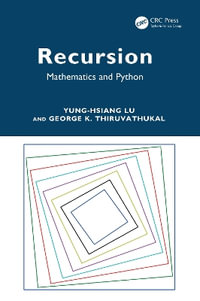

$139.75


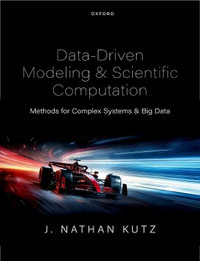


RRP $158.00
$157.75

RRP $97.60
$76.75
OFF
This product is categorised by
- Non-FictionComputing & I.T.Computer Programming & Software DevelopmentProgramming & Scripting Languages
- Non-FictionComputing & I.T.Computer Programming & Software DevelopmentAlgorithms & Data Structures
- Non-FictionMathematics
- Non-FictionComputing & I.T.Digital Lifestyle & Online World: Consumer & User GuidesComputer Games & Online Games Strategy Guides
- Non-FictionComputing & I.T.Computer Programming & Software DevelopmentSoftware Engineering
- Non-FictionComputing & I.T.Information Technology General Issue
- Non-FictionComputing & I.T.Computer Science
- Booktopia Publisher ServicesTaylor & Francis
- Non-FictionComputing & I.T.Computer Programming & Software DevelopmentObject-Oriented Programming or OOP