At a Glance
96 Pages
22.86 x 15.24 x 0.58
Paperback
RRP $32.99
$32.75
or 4 interest-free payments of $8.19 with
orShips in 5 to 7 business days
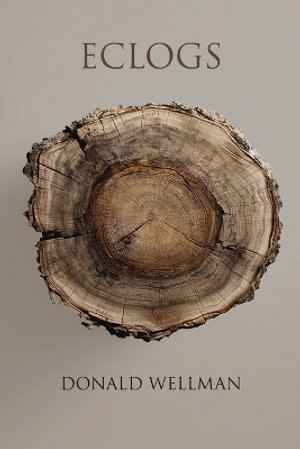
Eclogs are most often set in the countryside. That is where these poems begin. Pastures and dilapidated barns, small homes and brooks that carve the forest into jigsaw puzzles before descending to the sea, abandoned factories. This is a landscape created by European settler populations as they explored the rivers that traverse the land. One model poet for my thinking has been Frederick H¶lderlin. In my youth I lived in the Neckar valley as he did. That as well as the high hills and low mountains of a once agricultural New Hampshire and Maine have shaped my feeling for landscapes. The language owes much to objectivist poetics. The poems range from conversations among settlers to the recognition of others who reside in a baroque past that originates with reflections on the cosmos made by nomadic populations and that continue among today's refugees who live in Gaza or the Sudan under the shadow of a continuing holocaust.
The poems usually follow a three-step pattern. The first stage includes narrative or historical material, the second is reflective, and the third a conclusion that much like the ways in which sonnets do, concludes with an image that propels one onward. The method is baroque. Individual poems participate in a series, clusters or thematic runs, interspersed with lyric fragments. The aura of history is built without specific standards of authenticity (inventive, autobiographical, or historical). My goal has been to make an accessible lyric poetry in which individual elements are parts of an emergent whole. The work then is a holistic enterprise wherein shifts of perspective are cumulative. The work is riverine and baroque. It engages the cosmic landscape underlying observable phenomenon, its flow and its silences. This book is to be read from the first page to the last, continuously, as if it were a story or a fable.
Industry Reviews
Donald Wellman wonders how the pastoral might speak to a time when the sheepish cede their powers over the present to the rapacious. The wonder of it is that his eclogues, wherein he ponders the afterlives of poetry, are still about horizons, are still, as he puts it, antiphonal choirs. These meditations and provocations are, in the end, "neither elegy nor melancholy," but ways of being, even in a world gone wrong. -Aldon Nielsen author of Black Chant and Heat Strings
With the publication of his august new collection, Eclogs, Donald Wellman takes his place in a tradition of pastoral poetry that goes back to Virgil and includes his own inspiration, H¶lderlin, as well as fellow New Englander Charles Olson. Wellman infuses the ancient form with his empathic objectivist poetics. The book opens with stories drawn from local histories of European settlement and displacement of indigenous peoples in the Eastern Woodlands, but later poems extend his meditations to refugees today, the human tragedies unfolding in "the shadow of a continuing holocaust." Wellman's brilliance and humility dower these radiant poems with genius. -Cynthia Hogue, author of instead, it is dark
The eclogs were, under Virgil's plow, extracts of a landscape that represented a nostalgia for the present, a commons undergoing Heraclitean (and Augustan) transformations in the wake of power. In Donald Wellman's hands, the Eclogs are revived as shimmering extractions of the multitudinous landscapes of the embodied mind. Wellman's meticulously layered poems shimmer like an "index of hallucinations" that fold us into the Whitmanesque wilds of an American Baroque. More than just pastoral reminiscences, these poems are eco-logs that record the inner landscapes of one poet's journey across the outer zones of the "intracranial," in what might be called steps toward an ecology of the lyric mind. At once objectivist in its materiality, and romantic in its H¶lderlin-inflected lens on the cosmic, Eclogs stand as a testament to Wellman's rich body of work. -Jose-Luis Moctezuma author of Place-Discipline
Prefaceix
a bull pine that had collapsed upon itself.1
when I suffer the angels rejoice2
the vertical cladding of the barn,3
a window frame without a window,4
reaching out from the forest,5
bodies of poets swim through sunset clouds, 6
schooldays, the sky is ever a white pearlescent7
a bleakness that is not a resolution8
I washed my hair this morning. The growth9
impoverished circumstances, the deliveryman,10
I have become the woman I was, a sensate mass11
Der H¶lderlinturm am Neckar in May,12
the felt lining soaked and torn,13
descent stresses muscles differently than ascent. 14
H¶lderlin took pains to work his lines15
the baby boy lay on the embankment,16
his fingers were yellow with poppy dust.17
after years of discipline18
a pink camel entered his brain from19
a photograph of Jack London in his office 1916,20
bronze spear points flutter among grass stems, 21
I write the date on a scrap of paper because it is important.22
that was my village. The kids in the garden.23
Porphyry says that honeybees seek sea caves.24
if Ellsworth Kelly's art is art, is it also an art that earns25
compressed layers of horizon through which the sun descends,26
somewhere among the constellations,27
the figure in the tower is my brother.28
as he rode his bike across town ice pellets pinged his face.29
under the seawall, mothers feed their fawns,30
is there a need for transition among elements,31
the trenches were laden with corpses dressed32
my father's body was found at the bottom of a well33
because I am not worthy, because I am not. 34
thoughts of Prince Edward Island, 35
a touch, a smear, different hues, an instinct36
images spin in the backwash of time. A fragment37
wrote by lamplight at 3 am,38
eclog by David Melnick,39
the level of brutality indicates premeditation.40
these are the final months, the poet thought.41
draft after draft, a dray horse42
place-discipline43
in this watered land, on these watered rocks, stream44
clouds have lowered themselves, immobilized45
looking into heaven's throat as I lay upon Malvern Hill,46
scent of fresh popcorn47
street doors three stories high.48
assaulted with green dye, in the confines of an artic cell,49
a withheld Arcadia fell from the sky,50
in this valley they chose to raise children, 51
rapacious Zionism. Arabs and colonizers 52
knots and cracks53
black arcs, wire thin, lay over blue-gray slabs 54
the elongated body of the violinist in blue,55
another immortal has left us. Footprints56
we old men with scruffy gray beards57
a landscape about returning home,58
...and more.
ISBN: 9781962847384
ISBN-10: 1962847381
Published: 9th February 2026
Format: Paperback
Language: English
Number of Pages: 96
Audience: General Adult
Publisher: Dos Madres Press
Dimensions (cm): 22.86 x 15.24 x 0.58
Weight (kg): 0.14
Shipping
| Standard Shipping | Express Shipping | |
|---|---|---|
| Metro postcodes: | $9.99 | $14.95 |
| Regional postcodes: | $9.99 | $14.95 |
| Rural postcodes: | $9.99 | $14.95 |
Orders over $89.00 qualify for free shipping.
How to return your order
At Booktopia, we offer hassle-free returns in accordance with our returns policy. If you wish to return an item, please get in touch with Booktopia Customer Care.
Additional postage charges may be applicable.
Defective items
If there is a problem with any of the items received for your order then the Booktopia Customer Care team is ready to assist you.
For more info please visit our Help Centre.
You Can Find This Book In

Habitats of Australia, New Guinea, and the Solomons
A Field Guide for Birders, Naturalists, and Ecologists
Flexi Bound Book
RRP $55.00
$44.75
OFF

The Land in Winter
Shortlisted for the Booker Prize 2025 & Winner of the Walter Scott Prize for Historical Fiction
Paperback
RRP $24.99
$21.75
OFF

The Wild Silence
The Sunday Times Bestseller from the Million-Copy Bestselling Author of The Salt Path
Paperback
RRP $26.99
$22.99
OFF