

Get Free Shipping on orders over $79
Current Topics in Complement - John D. Lambris

Current Topics in Complement

By: John D. Lambris

eText | 26 January 2007 | Edition Number 1

At a Glance

eText


$479.01

or 4 interest-free payments of $119.75 with

 or 

Instant online reading in your Booktopia eTextbook Library *

Why choose an eTextbook?

Instant Access *

Purchase and read your book immediately

Read Aloud

Listen and follow along as Bookshelf reads to you

Study Tools

Built-in study tools like highlights and more

* eTextbooks are not downloadable to your eReader or an app and can be accessed via web browsers only. You must be connected to the internet and have no technical issues with your device or browser that could prevent the eTextbook from operating.
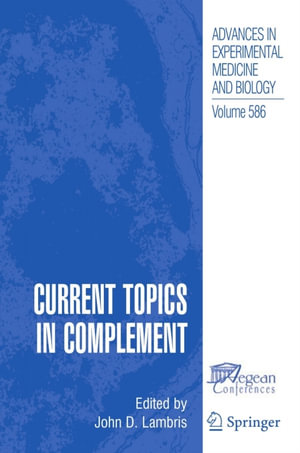
Complement has long been regarded as a pivotal effector arm of the innate im-mune response, eliciting important immunoregulatory functions in the context of inflammation and also serving as a vital link between the innate and adaptive immune response. In the post-genomic era, our knowledge of the innate immune system is enriched by findings that point to novel functions that do not strictly correlate with immunological defense and surveillance, immune modulation or inflammation. Several studies indicate that complement proteins exert functions that are either more complex than previously thought, or go well beyond the innate immune character of the system. The advent of high-throughput platforms for genome and proteome-wide profiling, together with the enormous amount of raw genetic information that has accumulated in the databases, have stirred new expectations in biomedical research. They have led complementologists to revisit established biological systems, such as the complement system, from a global and integrative perspec-tive. Complement research is now faced with the challenge of trying to integrate isolated biochemical pathways into complex gene and protein regulatory cir-cuits. In this respect, scientists from around the world convened at the Third Aegean Conferences Workshop on Complement Associated Diseases, Animal Models, and Therapeutics (June 5 10, 2005), to discuss recent advances in this fast evolving field. This volume represents a collection of topics on the 'novel' functions of complement, pathophysiology, protein structures, design of complement inhibitors, and complement assays discussed during the conference.
on
Desktop
Tablet
Mobile

More in Immunology

T Cell Activation : Methods and Protocols - Björn-Philipp Diercks

eBOOK

RRP $349.00

$314.99

10%
OFF
Real Talk On HPV - Chowikei Studio

eBOOK

Cancer Vaccines : Methods and Protocols - Vered Padler-Karavani

eBOOK

RRP $349.00

$314.99

10%
OFF