Get Free Shipping on orders over $0
Comb Management - Wally Shaw

Comb Management

By: Wally Shaw

Paperback | 5 December 2018

At a Glance

Paperback


$14.85

or 4 interest-free payments of $3.71 with

Ships in 5 to 7 business days

Honey bees can successfully live in all sorts of different nest sites – a hole

in a tree, a chimney pot or a bee-hive – but in all cases this is just a cavity in

which to make a set of combs. It is in and on these combs that all the within

the colony functions occur. Because it is dark in the hive, communication is

through pheromones or vibration and combs provide the ideal carrier for this

information. For example, bees can always locate the queen by following

the trail of her footprint pheromone on the combs. The main outside the

hive activities are foraging, swarming and queen mating. As beekeepers,

interested in the production of honey, we tend to concentrate on the foraging

activities of our bees and it is easy to overlook the fact that over 95% of a

typical worker bee’s life is spent within the confines of the colony engaged in

some activity in or on the combs. In a sense, the combs are an extension of

the bees that made them and it is bees and combs together that constitute

the colony.

Up until about 1850, bee colonies, whether wild of under human stewardship

(it hardly qualified as management), built themselves a set of combs entirely

according to their own design in whatever cavity they could find or was

provided by the beekeeper. No restriction was placed on the way the colony

used these combs to engage in their main activities of brood rearing and food

storage. With the introduction of the moveable frame hive, followed quickly by

the invention of wax foundation and the queen excluder, everything changed.

Beekeepers were now able to induce the bees to make their combs where

they (the beekeepers) wanted them, ie in wooden frames. The beekeeper

could now even influence the size of cells they built by the dimensions of the

hexagon embossed on the sheet of wax. It also became possible to separate

the use of combs for brood rearing and honey storage using a queen excluder.

Some of the changes that modern beekeeping has imposed on colonies have

potential effects on the health and welfare of the bees and others do not.

More in Apiculture or Beekeeping

Flow Hive's Book of Bees and Beekeeping - Cedar Anderson

RRP $45.00

$36.99

18%
OFF
A Guide to Native Bees of Australia - Dr Terry Houston

RRP $49.99

$40.75

18%
OFF
The Australian Beekeeping Manual : 3rd Edition - Robert Owen

RRP $59.99

$45.75

24%
OFF
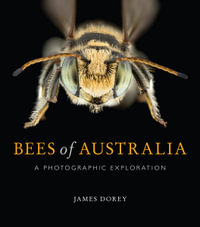
Bees of Australia : A Photographic Guide - Mr James Dorey

RRP $49.99

$40.75

18%
OFF
Beekeeping For Dummies : 5th Edition - Howland Blackiston

RRP $45.95

$32.17

30%
OFF
Building Beehives For Dummies : For Dummies - Howland Blackiston

RRP $41.95

$29.37

30%
OFF
Bees & Honey : River Cottage Handbook No.19 - Rachel de Thample

RRP $35.00

$28.75

18%
OFF
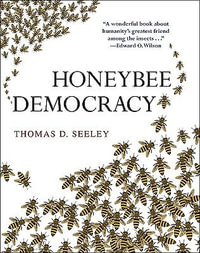
Honeybee Democracy - Thomas D. Seeley

RRP $49.99

$40.75

18%
OFF
Beekeeping Success : Start Right, Grow Strong Colonies, Harvest More Honey - Dr Robert Owen
Beekeeping For Dummies, UK Edition - David Wiscombe

RRP $39.95

$27.97

30%
OFF
Build-Your-Own Beehive : Rp Minis - Jessie Oleson Moore

RRP $24.99

$23.75

Manuka : The biography of an extraordinary honey - Cliff Van Eaton

RRP $34.99

$27.99

20%
OFF
Honey : Recipes From a Beekeeper's Kitchen - Amy Newsome

RRP $55.00

$42.75

22%
OFF
Variations on a Beehive