Get Free Shipping on orders over $49
Being White, Being Good : White Complicity, White Moral Responsibility, and Social Justice Pedagogy - Barbara Applebaum

Being White, Being Good

White Complicity, White Moral Responsibility, and Social Justice Pedagogy

By: Barbara Applebaum

Hardcover | 18 March 2010

At a Glance

Hardcover


RRP $210.00

$184.75

12%OFF

or 4 interest-free payments of $46.19 with

 or 

Ships in 3 to 5 business days

Contemporary scholars who study race and racism have emphasized that white complicity plays a role in perpetuating systemic racial injustice. Being White, Being Good seeks to explain what scholars mean by white complicity, to explore the ethical and epistemological assumptions that white complicity entails, and to offer recommendations for how white complicity can be taught. The book highlights how well-intentioned white people who might even consider themselves as paragons of antiracism might be unwittingly sustaining an unjust system that they say they want to dismantle. What could it mean for white people "to be good" when they can reproduce and maintain racist system even when, and especially when, they believe themselves to be good? In order to answer this question, Barbara Applebaum advocates a shift in our understanding of the subject, of language, and of moral responsibility. Based on these shifts a new notion of moral responsibility is articulated that is not focused on guilt and that can help white students understand and acknowledge their white complicity.

Being White, Being Good introduces an approach to social justice pedagogy called "white complicity pedagogy." The practical and pedagogical implications of this approach are fleshed out by emphasizing the role of uncertainty, vulnerability, and vigilance. White students who acknowledge their complicity have an increased potential to develop alliance identities and to engage in genuine cross-racial dialogue. White complicity pedagogy promises to facilitate the type of listening on the part of white students so that they come open and willing to learn, and "not just to say no." Applebaum also conjectures that systemically marginalized students would be more likely and willing to invest energy and time, and be more willing to engage with the systemically privileged, when the latter acknowledge rather than deny their complicity. It is a central claim of the book that acknowledging complicity encourages a willingness to listen to, rat
Industry Reviews
By rigorously mapping the intricacies of white complicity vis-a-vis systemic racism, inspired by robust social justice concerns, and using white complicity pedagogy as her point of methodological embarkation, Barbara Applebaum, in Being White, Being Good, has profoundly troubled the waters of whiteness studies, identified its intrinsic limits, and forced a deeper and more honest self-reflexive posture on the part of its white practitioners to be cognizant (even as this is always already limited) of white moral self-glorification, white 'good intentions' and white self-cognitive sophistication-all forms of distancing strategies. Applebaum does all of this while simultaneously not shying away from offering a form of ethical responsibility that is fueled precisely through the recognition of the social ontology and ineluctability of racist complicity. This is racial theory and critical pedagogy born of fearless speech and fearless listening. -- George Yancy, professor of philosophy, Emory University
Applebaum has put together an impressive array of theoretical resources in this meticulously argued account of white complicity and its attendant pedagogical challenges. She intricately weaves together her analysis of poststructural subjectivity and agency with philosophical discussions of complicity to articulate a new form of moral responsibility no longer reliant on blame but robustly concerned with responsibility. -- Cris Mayo, University of Illinois at Urbana-Champaign
Applebaum's argument is ultimately a cautionary one, providing no doubt an important corrective to white social justice advocates who think they can somehow bracket or, even worse, move beyond their privilege. Applebaum makes this point extremely well. She also details a very thoughtful model for responsibility under complicity that offers some important broad guidelines for how we ought to think differently about our privilege, and about how we ought to teach about diversity issues. * Journal of Philosophy of Education *

More in Ethnic Studies

The First Inventors : How people shaped a continent - Billy Griffiths
First Knowledges The Collection : 10-Book Box Set

RRP $199.00

$137.99

31%
OFF
Dark Emu : Aboriginal Australia and the Birth of Agriculture - Bruce Pascoe
Junior Atlas of Indigenous Australia - Macquarie Dictionary

RRP $39.99

$26.75

33%
OFF
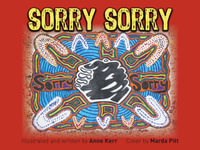
Sorry Sorry - Anne; Pitt, Mardi Kerr

Hardcover

$29.99

All About Love : New Visions [Deluxe Collector's Edition] - Bell Hooks
Growing Up Aboriginal in Australia - Anita Heiss

RRP $32.99

$26.99

18%
OFF
First Knowledges Plants : Past, Present and Future - Zena Cumpston
Bush Tukka Guide : 2nd Edition - 60+ bush foods and recipes - Samantha Martin
First Knowledges Country : Future Fire, Future Farming - Bruce Pascoe
Songlines : Power and Promise - Margo Neale

RRP $26.99

$22.99

15%
OFF
The Four Agreements : Practical Guide to Personal Freedom - Don Miguel Ruiz
Looking from the North : Australian history from the top down - Henry Reynolds
Big Sky : When the Emu Left the Earth - Bruce Pascoe

RRP $34.99

$28.75

18%
OFF
How Europe Underdeveloped Africa - Walter Rodney

RRP $32.99

$25.75

22%
OFF