Get Free Shipping on orders over $79
Tsunami Science and Engineering - Valentin Heller

Tsunami Science and Engineering

By: Valentin Heller (Editor)

Hardcover | 1 July 2016

At a Glance

Hardcover


RRP $140.58

$119.75

15%OFF

or 4 interest-free payments of $29.94 with

 or 

Ships in 5 to 7 business days

JMSE Special Issue: Tsunami Science and Engineering

Recent earthquake-tsunamis including the 2004 Indian Ocean Tsunami, with over 230,000 casualties, and the 2011 Tōhoku Tsunami in Japan, with over 18,500 people missing or dead, serve as tragic reminders that such waves pose a major natural hazard to human beings. Landslide-tsunamis, including the 1958 Lituya Bay case, may exceed 150 m in height and if similar waves are generated in lakes or reservoirs (so-called impulse waves), then they may overtop dams and cause significant devastation downstream, such as in the 1963 Vaiont case with around 2,000 casualties.

The after-effects due to such catastrophes are not limited to the region immediately impacted by the wave; for example, the 1963 Vaiont case affected hydropower plant planning and management globally and the 2011 Tōhoku Tsunami initiated changes to nuclear power plant policies worldwide.
Active prevention of the wave generation is extremely unlikely and limited to rare cases where creeping slides could be stabilized. Scientists and engineers thus work mainly on passive methods to face this hazard. In many cases, the propagation time between generation and shoreline is sufficiently long, allowing early warning systems for evacuation to be an effective passive method. For impulse waves in smaller water bodies, however, the propagation time is too short for an adequate evacuation so further passive methods are critical. Such methods include sea walls, reinforced infrastructure and the provision of adequate freeboards of dam reservoirs. These methods require detailed knowledge of (i) the wave features as a function of the generation mechanism, (ii) the shoreline run-up and (iii) the interaction with structures.
Despite a significant increase in research activities after the 2004 Indian Ocean Tsunami, there certainly can be -- and needs to be -- more research with the aim to reduce the destruction caused by tsunamis to us and our environment.

More in Technology in General

The Technology Book : Big Ideas Simply Explained - DK

RRP $45.00

$35.75

21%
OFF
Engineering Drawing + Sketchbook : 8th Edition - A. W. Boundy

RRP $119.96

$113.75

The Design of Everyday Things : Revised and Expanded Edition - Don Norman
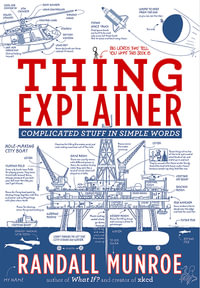
Thing Explainer : Complicated Stuff in Simple Words - Randall Munroe
First Knowledges Innovation : Knowledge and Ingenuity - Ian J McNiven
Technologies for Children : 3rd Edition - Marilyn Fleer

RRP $92.95

$78.75

15%
OFF
Melbourne Airport Tullamarine : A History - Arun Chandu

RRP $49.99

$40.75

18%
OFF
Energy and Energy Transformation - Yongjian  Gu
Ionic Liquids-based Nanofluids - Aswathy Joseph
Engineering Mechanics - Val Ivanoff

RRP $119.96

$113.75

Engineering Mechanics: Dynamics, SI Units : Global Edition - Russell Hibbeler
Dynamics of Marine Structures - Yingguang  Wang

RRP $503.95

$442.99

12%
OFF
BioMEMS Devices - Azrul Azlan  Hamzah

RRP $344.95

$306.75

11%
OFF
Real Analysis : Measure and Integration - Marat V. Markin