Get Free Shipping on orders over $89
Time, Space & Material : The Mechanics of Layering in Architecture - Anne-Catrin Schultz

Time, Space & Material

The Mechanics of Layering in Architecture

By: Anne-Catrin Schultz

Hardcover | 1 March 2015

At a Glance

Hardcover


RRP $130.00

$88.75

32%OFF

or 4 interest-free payments of $22.19 with

 or 

Ships in 10 to 15 business days

This book examines the application of the principle of layering in architecture, its mechanics, possible application and meaning. Layering is widely used in the discussions of the 20th and 21st centuries architecture but rarely defined or examined. Layering bridges the tectonics of structure and skin, offers a system for the creation of different architectural spaces over time and functions as a design principle without hierarchy. Three types of layering are identified: a chronological sedimentation of planes materializing changes over time (temporal layering), the additive sequence of spaces (spatial layering), and the stratification of individual planes (material layering). Like a palimpsest, historic cities frequently reveal temporal layering and aspects of change over time, a condition familiar to archaeologists who study layer upon layer of remnants of civilisation, including architectural remains and urban organization. In historic cities, one can read at least the most recent layers to determine a physical chronology of the city's history; contemporary architects add strata of the 21st century. Cities are composed of several layers, offering a complex understanding of time in which a view of the present includes also the perception of the past. At a building scale, layers can be part of the spatial composition, multiple elements of walls, the skin, the structure or decorative and narrative elements. Just as the position and order of geological strata contain information related to their age, formation, and origin, the position and form of architectural layers come with information about their function, intellectual scope, and provenance. The possible elements of such an architectural strategy include materials, light, water, and color as well as associations, memories, and analogies embedded in the layers or in the voids between them. Material layering is based on a perceived separation of spatial enclosures into floor, wall, and ceiling or roof elements and combinations thereof. Individual elements may consist of multiple planes fulfilling a series of specific functions. The architectural enclosure can represent the physical wrapper of a building and might transport the structure's narrative, tectonic information, cultural expression, the architect's design intent, and other topics that might be embedded.

More in Architectural Structure & Design

AutoCAD & AutoCAD LT All-in-One For Dummies - Lee Ambrosius

RRP $90.95

$62.75

31%
OFF
Catwalk : The Art of the Fashion Show Aâ"Z - Jochen Eisenbrand

RRP $120.00

$83.75

30%
OFF
Architecture : Form, Space, and Order - Francis D. K. Ching

RRP $92.95

$66.75

28%
OFF
The Matter of Architecture : Geology, Buildings and Us - Paul Dobraszczyk
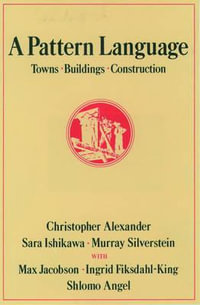
A Pattern Language : Towns, Buildings, Construction - Christopher Alexander

RRP $134.95

$78.75

42%
OFF
Eames : Basic Arts Series - Gloria Koenig

RRP $39.99

$31.75

21%
OFF
Julia Watson. Lo-TEK. Water. A Field Guide for TEKnology - Julia Watson
Three Birds Renovations : Dream Home How-To - Bonnie Hindmarsh

RRP $45.00

$35.75

21%
OFF
Cocoon : Creating Homes with Heart - Ali Heath

RRP $55.00

$42.75

22%
OFF
The Monocle Book of Designers on Sofas : Monocle Handbook - Virginia McLeod
Building Construction Illustrated - Francis D. K. Ching

RRP $92.95

$66.75

28%
OFF
Little Book of Hermes : The story of the iconic fashion house - Karen Homer
The Art of Japanese Joinery - Kiyosi Seike

RRP $54.99

$42.75

22%
OFF
Fundamentals of Building Construction : Materials and Methods - Edward Allen
Architects' Data : 6th Edition - Ernst Neufert

RRP $155.95

$108.75

30%
OFF
Bible of British Taste : Stories of Home, People and Place - Ruth Guilding