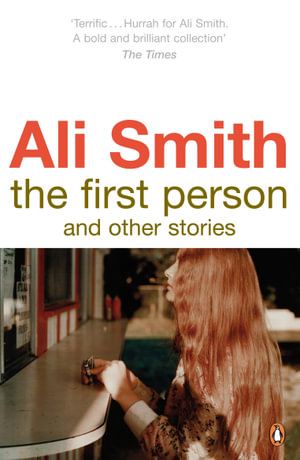
A form-bending and endlessly inventive collection of short stories - from the Booker Prize-shortlisted, Women''s Prize-winning author of How to be both and the critically acclaimed Seasonal quartet
''A glorious collection that celebrates and subverts the short story form'' Independent
A middle-aged woman conducts a poignant conversation with her gauche fourteen-year-old self. An innocent supermarket shopper finds in her trolley a foul-mouthed, insulting and beautiful child. Challenging the boundaries between fiction and reality, we see a narrator, ''Ali'', as she drinks tea, phones a friend and muses on the relationship between the short story and a nymph.
Innovative, sophisticated and intelligent, The First Person and Other Stories effortlessly appeals to our hearts, heads and funny bones in equal measure. One-of-a-kind Ali Smith and the short story are made for each other.
*****
''Hurrah for Ali Smith . . . A bold and brilliant collection of stories by a writer unafraid to give it to us as it is'' The Times
''Gleefully turns the short story inside-out . . . Smith is such a dazzling author that finishing one of her books is always bittersweet'' Scotland on Sunday
Industry Reviews
A collection of 12 smartly constructed observations of the way we think and write, from Whitbread Award - winning Scottish author Smith (The Accidental, 2006, etc.).The book offers compellingly quirky demonstrations of how our imaginations react to ordinary people and everyday occurrences. For example, in "True Short Story," an overheard conversation about the differences between the novel and the short story elicits complex counter-arguments and speculations from the narrator, who begins to consider the conversation's relevance to her close friend's painful treatment for cancer and to figures in Ovidian myth. In "No Exit," the question of whether a movie theater's "Exit" sign is actually a misdirection evokes the narrator's fear, empathy and imaginative powers. In three companion stories that include the title piece, "The Second Person" and "The Third Person," couples debate and fabricate possible future scenarios for their lives together and apart. Stories that employ essentially conventional plots range from a disappointingly undeveloped account of the confusions visited on the mother of a boy stricken with an undiagnosable debilitating illness ("I Know Something You Don't Know") and on the boy himself, to a virtually perfect Kafkaesque nightmare ("The Child") in which a woman shopper finds her cart occupied by someone else's baby, tries and fails to persuade others the child isn't hers, then helplessly "adopts" it briefly - hearing from its precociously foul mouth a litany of misogynistic and racist abuse that vividly renders every would-be mother's irrational fears about what she might be bringing into the world.The willed spareness of the stories grows annoying, but at her best Smith is an original observer of the blessings and curses of living inside one's imagination. (Kirkus Reviews)