Get Free Shipping on orders over $79
Structural Anthropology Zero - Claude Levi-Strauss

Structural Anthropology Zero

By: Claude Levi-Strauss, Ninon Vinsonneau (Translator), Jonathan Magidoff (Translator)

Paperback | 8 October 2021 | Edition Number 1

At a Glance

Paperback


RRP $39.95

$35.75

11%OFF

or 4 interest-free payments of $8.94 with

 or 

Ships in 5 to 7 business days

This volume of Levi-Strauss's writings from 1941 to 1947 bears witness to a period of his work which is often overlooked but which was the crucible for the structural anthropology that he would go on to develop in the years that followed.

Like many European Jewish intellectuals, Levi-Strauss had sought refuge in New York while the Nazis overran and occupied much of Europe.  He had already been introduced to Jakobson and structural linguistics but he had not yet laid out an agenda for structuralism, which he would do in the 1950s and 60s. At the same time, these American years were the time when Levi-Strauss would learn of some of the world's most devastating historical catastrophes - the genocide of the indigenous American peoples and of European Jews.  From the beginning of the 1950s, Levi-Strauss's anthropology tacitly bears the heavy weight of the memory and possibility of the Shoah. To speak of 'structural anthropology zero' is therefore to refer to the source of a way of thinking which turned our conception of the human on its head. But this prequel to Structural Anthropology also underlines the sense of a tabula rasa which animated its author at the end of the war as well as the project – shared with others – of a civilizational rebirth on novel grounds.

Published here in English for the first time, this volume of Levi-Strauss’s texts from the 1940s will be of great interest to students and scholars in anthropology, sociology and the social sciences generally.

Industry Reviews
“This volume makes available the early writings of the great anthropologist and philosopher Claude Levi-Strauss, which together constitute a prehistory of structuralism. It sheds light on his American period, in exile during World War II, a time of great creativity during which he met and was strongly influenced by Roman Jakobson and was introduced to Northwest Coast art – in short, a time of life that was a catalyst for who he would become in his later incarnation as an international intellectual celebrity.”
Michael E. Harkin, University of Wyoming

More in Archaeology

The Dawn of Everything : A New History of Humanity - David Graeber
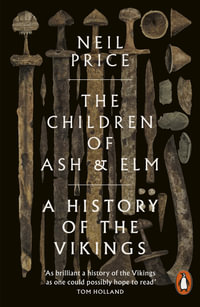
The Children of Ash and Elm : A History of the Vikings - Neil Price
Domination - Alice Roberts

Paperback

RRP $36.99

$29.75

20%
OFF
Forms of the Visible : An Anthropology of Figuration - Philippe Descola
Urbanism and Empire in Roman Sicily - Laura Pfuntner

RRP $92.99

$89.75

Istanbul : A Tale of Three Cities - Bettany Hughes

RRP $29.99

$24.99

17%
OFF
Fingerprints Of The Gods : The Quest Continues - Graham Hancock

RRP $52.99

$40.75

23%
OFF
Crypt : Life, Death and Disease in the Middle Ages and Beyond - Alice Roberts
Reconstruction of Cultural Heritage - Juliet Verni
Egyptian Archaeology and the Museum - Brett Cody