Get Free Shipping on orders over $89
Strategic Command and Control : Redefining the Nuclear Threat - Bruce, QC Blair

Strategic Command and Control

Redefining the Nuclear Threat

By: Bruce, QC Blair

1 May 1985

At a Glance

RRP $44.99

$44.75

or 4 interest-free payments of $11.19 with

 or 

Ships in 3 to 5 business days

During the past twenty-five years, U.S. strategists have argued that avoiding nuclear war depends on deterring a Soviet first strike by ensuring that U.S. forces could survive a surprise attack in numbers sufficient to inflict unacceptable damage in retaliation. U.S. military and political leaders have thus emphasized acquiring more powerful and accurate weaponry and providing better protection for it, while defense analysts have focused on assessing the relative strength and survivability of U.S. and Soviet forces. In the process neither has given sufficient attention to the vulnerability of the U.S. command, control, and communications system that would coordinate warning of an attack in progress and the response to it. In this study Bruce G. Blair examines accepted assumptions about mutual deterrence, force strength, and survivability, and concludes that the vulnerability of command, control, and communications not only precludes an effective retaliatory strike but also invites a preemptive Soviet first strike. After summarizing the assumptions and evaluative methodology behind mainstream strategic theory, the study describes the current decentralized command and control system that, under conditions of surprise attack, could be unable to communicate with decisionmakers or with units responsible for executing the decisions. Blair traces in detail the development of the system over three decades; the attempts to improve it through the use of procedural guidelines, alternative and redundant communications channels, and survival tactics; and the continuing vulnerabilities from improved Soviet weapons and the environmental forces engendered by massive nuclear detonations. Blair also analyzes the probable effects of proposals by the Reagan administration to strengthen command, control, and communications systems and provides recommendations for further strengthening and for altering related policies, deployments, and strategies to improve the stability of deterrence.

More in Military & Defence Strategy

The Art Of War : Popular Penguins : Popular Penguins - Sun Tzu
The 33 Strategies Of War : The Modern Machiavellian Robert Greene - Robert Greene
The Art Of War : Deluxe Slipcased Edition - Sun Tzu

RRP $47.99

$40.75

15%
OFF
Generation Kill - Evan Wright

$30.75

Conflict : The Evolution of Warfare From 1945 to Gaza - David Petraeus
Code of Silence : How Australian Women Helped Win the War - Diana Thorp
Victory to Defeat : The British Army 1918-40 - Richard Dannatt

RRP $29.99

$24.99

17%
OFF
Hill 112 : A Novel of D-Day and the Battle of Normandy - Adrian Goldsworthy
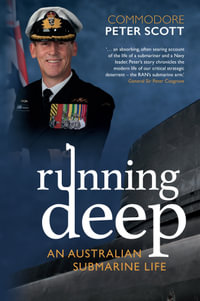
Running Deep : An Australian Submarine Life - Peter Scott

RRP $39.59

$35.75

10%
OFF
Night of Power : The Betrayal of the Middle East - Robert Fisk

RRP $45.00

$35.75

21%
OFF