Get Free Shipping on orders over $79
Pulling Focus : Intersubjective Experience, Narrative Film, and Ethics - Jane Stadler

Pulling Focus

Intersubjective Experience, Narrative Film, and Ethics

By: Jane Stadler

Paperback | 24 May 2012 | Edition Number 1

At a Glance

Paperback


RRP $86.99

$79.75

or 4 interest-free payments of $19.94 with

 or 

Ships in 25 to 30 business days

The most powerful films have an afterlife. Their sensory appeal and their capacity to elicit involvement in story, character and conflict reaches beyond the screen to subtly reframe the way spectators view ethical issues and agents within the narrative, and in the world outside the cinema. Pulling Focus: Intersubjective Experience and Narrative Film questions how cinematic narratives relate to and affect ethical life. Extending Martha Nussbaum and Wayne Booth's work on moral philosophy and literature to consider cinema, Dr. Stadler shows that film spectatorship can be understood as a model for ethical attention that engages the audience in an affective relationship with characters and their values. Building on Vivian Sobchack's Address of the Eye and Carnal Thoughts, she uses a phenomenological approach to analyse ethical dimensions of film extending beyond narrative content, arguing that the camera describes experience and views screen characters with an evaluative form of perception: an ethical gaze in which spectators participate. Films discussed include Dead Man Walking, Lost Highway, Batman Begins, Nil By Mouth, and Eternal Sunshine of the Spotless Mind.

The most powerful films have an afterlife. Their sensory appeal and their capacity to elicit involvement in story, character and conflict reaches beyond the screen to subtly reframe the way spectators view ethical issues and agents within the narrative, and in the world outside the cinema. Pulling Focus: Intersubjective Experience and Narrative Film questions how cinematic narratives relate to and affect ethical life. Extending Martha Nussbaum and Wayne Booth's work on moral philosophy and literature to consider cinema, Dr. Stadler shows that film spectatorship can be understood as a model for ethical attention that engages the audience in an affective relationship with characters and their values. Building on Vivian Sobchack's Address of the Eye and Carnal Thoughts, she uses a phenomenological approach to analyse ethical dimensions of film extending beyond narrative content, arguing that the camera describes experience and views screen characters with an evaluative form of perception: an ethical gaze in which spectators participate. Films discussed include Dead Man Walking, Lost Highway, Batman Begins, Nil By Mouth, and Eternal Sunshine of the Spotless Mind.

More in Media Studies

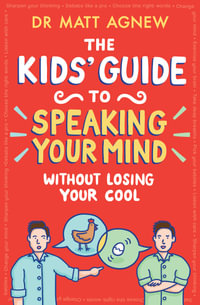
The Kids' Guide to Speaking Your Mind Without Losing Your Cool - Matt Agnew
Down the Drain - Julia Fox

RRP $24.99

$21.75

13%
OFF
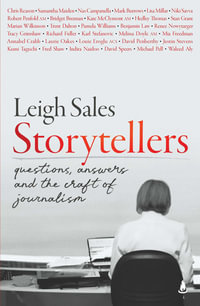
Storytellers : questions, answers and the craft of journalism - Leigh Sales
Manufacturing Consent : The Political Economy of the Mass Media - Noam Chomsky
The Rise and Rise of Kerry Packer 'Uncut' - Paul Barry

RRP $26.99

$22.99

15%
OFF
The Year's Best Sports Writing 2025 : Year's Best Sports Writing - Hanif Abdurraqib
How a Game Lives - Jacob Geller

$50.99

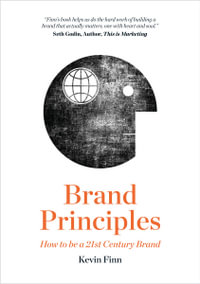
Brand Principles : How to be a 21st Century brand - Kevin Finn

RRP $34.99

$13.75

61%
OFF
Building Back Truth in an Age of Misinformation - Leslie F. Stebbins
True Crime : Key Themes and Perspectives - Ian Cummins
The Ends of Art Studies : Time, Transcendence and Boundaries - Fan Baiding