Get Free Shipping on orders over $79
Paradigm Lost? : Transitions and the Search for a New World Order - David Jablonsky

Paradigm Lost?

Transitions and the Search for a New World Order

By: David Jablonsky

eText | 24 March 1995 | Edition Number 1

At a Glance

eText


$108.61

or 4 interest-free payments of $27.15 with

 or 

Instant online reading in your Booktopia eTextbook Library *

Why choose an eTextbook?

Instant Access *

Purchase and read your book immediately

Read Aloud

Listen and follow along as Bookshelf reads to you

Study Tools

Built-in study tools like highlights and more

* eTextbooks are not downloadable to your eReader or an app and can be accessed via web browsers only. You must be connected to the internet and have no technical issues with your device or browser that could prevent the eTextbook from operating.
This book examines major historical post-war transition periods, with particular emphasis on the differences and similarities of the American experience after both world wars of this century and with the post-Cold War transition currently underway. Jablonsky provides a strategic vision that incorporates a multilateral, great-power approach to the international relations of our era. After every momentous event there is usually a transition period in which participants in the events, whether individuals or nation-states, attempt to chart their way into an unfamiliar future. For the United States in this century there are three such transitions, each focused on America's role in the international arena. After World War I, the American people specifically rejected the global role for the United States implicit in Woodrow Wilson's strategic vision of collective security. In contrast to this return to normalcy, after World War II the United States moved inexorably toward international leadership in response to the Soviet threat. The result was an acceptance of George Kennan's strategic vision of containing the Soviet Union on the Eurasian landmass and the subsequent bipolar confrontation of the two super-powers in a twilight war that lasted for more than 40 years. Sometime in the penultimate decade of this century, the United States and its allies won the Cold War. Once again the United States faces a transitional period, and the primary questions revolve around the management of power and America's role in global politics. In this regard, the Cold War set in train a blend of integrative and disintegrative forces and trends that are adding to the complex tensions of the current transition. The realist paradigm still pertains in this situation where nation-states are still the primary international actors. In such a world, American government elites must convince an electorate, increasingly conscious of the domestic threats to national security, of the need to continue to exercise global leadership in the management of power. The answer, as Jablonsky demonstrates, is a strategic vision that incorporates a multilateral, great-power approach to international relations.
on
Desktop
Tablet
Mobile

More in Warfare & Defence

A Question of Loyalty - Douglas C. Waller

eBOOK

RRP $25.99

$20.99

19%
OFF
A Short History of World War I : Short History - James L. Stokesbury

eBOOK

Chain of Command : The Road from 9/11 to Abu Ghraib - Seymour M. Hersh

eBOOK

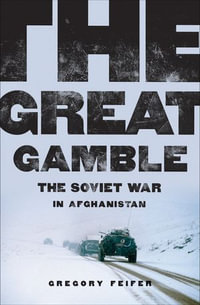
The Great Gamble : The Soviet War in Afghanistan - Gregory Feifer

eBOOK

The Icarus Syndrome : A History of American Hubris - Peter Beinart

eBOOK