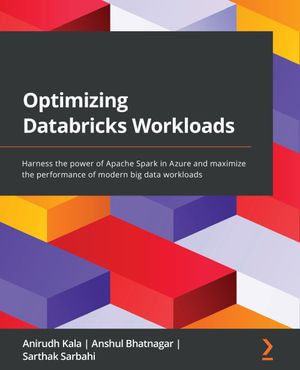
Accelerate computations and make the most of your data effectively and efficiently on Databricks
Key Features
- Understand Spark optimizations for big data workloads and maximizing performance
- Build efficient big data engineering pipelines with Databricks and Delta Lake
- Efficiently manage Spark clusters for big data processing
Book Description
Databricks is an industry-leading, cloud-based platform for data analytics, data science, and data engineering supporting thousands of organizations across the world in their data journey. With this book, you'll explore the fast, easy, and collaborative Apache Spark-based big data analytics platform for data science and data engineering in the cloud.
Optimizing Databricks Workloads starts with a brief introduction to Azure Databricks and quickly moves on to cover important optimization techniques. You'll understand how to select the optimal Spark cluster configurations for running big data processing and workloads in Databricks and get to grips with some very useful optimization techniques for Spark dataframes, best practices for optimizing Delta Lake, and techniques to optimize Spark jobs through Spark Core. You'll learn about some of the real-world scenarios where Databricks has helped organizations increase performance and save costs across various domains.
By the end of this Databricks book, you'll have gained the toolkit knowledge and skills to speed up your Spark jobs and process your data more efficiently.
What you will learn
- Get to grips with Spark fundamentals and the Databricks platform
- Process big data using the Spark Dataframe API with Delta Lake
- Analyze data using graph processing in Databricks
- Use MLflow to manage machine learning lifecycles in Databricks
- Learn to choose the right cluster configuration for your workloads
- Explore file compaction and clustering methods to tune Delta tables
- Discover advanced optimization techniques to speed up Spark jobs
Who This Book Is For
This book is for data engineers, data scientists, and cloud architects who have worked with Spark/Databricks and have a basic understanding of data engineering principles. Working knowledge of Python and SQL experience in PySpark and Spark SQL will be helpful.
Table of Contents
- Discovering Databricks
- Batch and Real-Time Processing in Databricks
- Learning Machine Learning and Graph Processing in Databricks
- Managing Spark Clusters
- Big Data Analytics
- Databricks Delta Lake
- Spark Core
- Case Studies