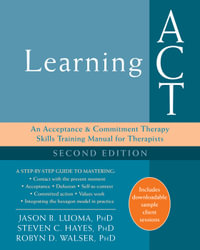
"Approachable and user-friendly."
—The Professional Counselor
The use of metaphor is central to the implementation of acceptance and commitment therapy (ACT) and dialectical behavior therapy (DBT), and is a powerful tool for all practicing psychotherapists. In Metaphor in Practice, psychotherapist Niklas Törneke presents the first practical book to combine the behavioral and linguistic sciences of metaphor, and illustrates how and when to apply metaphors in practice for better treatment outcomes.
The use of metaphors and experiential exercises can help clients gain a deeper understanding of the problems that cause their disorders. Metaphors help clients connect with their values, and often spark the inspiration and motivation needed to make a commitment to change. And while metaphor is central to relational frame theory (RFT), acceptance and commitment therapy (ACT), and dialectical behavior therapy (DBT), research now shows its usefulness has an even broader reach.
In this book, you’ll find a scientific analysis of metaphor based on over thirty years of research, as well as trends in research over the last ten years. The book includes an overview of RFT, how metaphor has influenced the community of behavior analysis, as well as available clinical research on metaphor use. You’ll also discover how to create metaphors for functional analysis, distance of observation, and things that matter to your client. Most importantly, you’ll find practical examples of metaphors and clinical exercises you can use in-session.
There are many books on metaphor and psychotherapy, but this is the first book to make the connection between the science of metaphor and the detailed clinical process of using that knowledge. If you are a mental health professional—or simply interested in the science of metaphor—this book will provide everything you need to understand and apply this approach.
Industry Reviews
“This is a comprehensive and compelling read on how to make metaphors work in therapy. It is a light and interesting book that highlights the power and potential complexity of metaphor when harnessed appropriately by the therapist. It covers the scientific underpinnings of how metaphors work, and explains the best way to create a therapeutic context that will enable metaphors to do what they do best: create psychological flexibility in the way in which we relate to ourselves. The work is scholarly and timely, but it is also alive with interesting transcript segments and relevant clinical metaphors. The book is neither dumbed down nor hard to read. In fact, it was pleasurable and interesting, and takes the reader on a journey that will positively change the way therapists use metaphor in their clinical practice.”
—Yvonne Barnes-Holmes, PhD, associate professor in behavior analysis at Ghent University