Get Free Shipping on orders over $79
God's Terrorists : The Wahhabi Cult and the Hidden Roots of Modern Jihad - Charles Allen

God's Terrorists

The Wahhabi Cult and the Hidden Roots of Modern Jihad

By: Charles Allen

Paperback | 4 September 2007 | Edition Number 1

At a Glance

Paperback


$50.75

or 4 interest-free payments of $12.69 with

 or 

Ships in 15 to 25 business days

What are the roots of today’s militant fundamentalism in the Muslim world? In this insightful and wide-ranging history, Charles Allen finds an answer in an eighteenth-century reform movement of Muhammed ibn Abd al-Wahhab and his followers-the Wahhabi-who sought the restoration of Islamic purity and declared violent jihad on all who opposed them. The Wahhabi teaching spread rapidly-first throughout the Arabian Peninsula, then to the Indian subcontinent, where a more militant expression of Wahhabism flourished. The ranks of today’s Taliban and al-Qaeda are filled with young men trained in Wahhabi theology. God’s Terrorists sheds much-needed light on the origins of modern terrorism and shows how this dangerous ideology lives on today.
Industry Reviews
Allen joins 9/11 to his long-standing interest in the soldier/scholar adventurers of the British Raj and turns up some interesting nuggets on Islamic fundamentalism.As early as the 12th century, writes Allen (The Search for the Buddha, 2003, etc.), radicals sought to turn Islam into a militantly unaccommodating faith. Against the backdrop of the Mongol invasions of the Arab world, a Syrian jurist named Ibn Taymiyya declared Muhammad wrong to suggest-or so ecumenical clerics had determined-that jihad was an internal struggle for purity as much as a war against enemies of the faith. No, said Ibn Taymiyya: Jihad was literal, an "unrelenting struggle against all who stood in the way of Islam's destiny." That militant stance was revived in the 18th century in the Arabian backcountry, when fundamentalist Bedouins preached fire and brimstone. At first, the Wahhabi cult didn't make much of a dent outside of the kingdom of the Saudis, rejected and condemned as schismatic. Still, where Islam was felt to be threatened, as in India, when brought under British rule, new adherents were easily recruited, particularly among young males "from among the poor and ignorant (preferably prepubescent orphans)" who could be easily indoctrinated. So it was in the Raj, when cadres of Islamic assassins set out to murder as many Britons as they could, retiring to the schools called madrassas to read scripture in their off hours. The same demographic category, writes Allen, fueled the Taliban, which emerged "seemingly from nowhere" in 1994 to seize power in Afghanistan, soon to be allied with al-Qaeda. Both movements grew from the same fundamentalist roots, the author asserts, adding that others will follow unless grievances such as the lack of education and opportunity for young Muslims-to say nothing of the lack of a Palestinian state-are neutralized.This narrative has a grafted-on feel, but it is still of use to those seeking to understand the origins and growth of Islamic extremism. (Kirkus Reviews)

More in African History

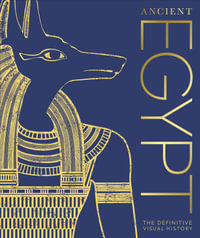
Ancient Egypt : The Definitive Visual History - DK

RRP $59.99

$43.75

27%
OFF
The Untold Railway Stories - Monisha Rajesh

RRP $45.00

$35.75

21%
OFF
The Wretched of the Earth : Penguin Modern Classics - Frantz Fanon
Africa Is Not A Country : Breaking Stereotypes of Modern Africa - Dipo Faloyin
Tobruk: 75th Anniversary Edition - Peter FitzSimons

RRP $29.99

$24.99

17%
OFF
Michael Palin in Venezuela - Michael Palin

RRP $39.99

$31.75

21%
OFF
Decolonizing Language and Other Revolutionary Ideas - Ngugi wa Thiong'o
Half of a Yellow Sun - Chimamanda Ngozi Adichie

$23.99