



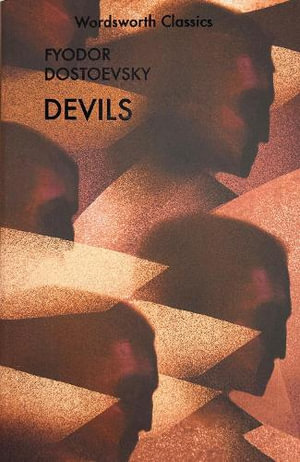
At a Glance
Paperback
RRP $16.99
$12.99
24%OFF
ISBN: 9781840220995
ISBN-10: 1840220996
Series: Wordsworth Classics
Published: 5th January 2010
Format: Paperback
Language: English
Number of Pages: 720
Audience: General Adult
Publisher: Wordsworth Editions
Country of Publication: GB
Edition Number: 2
Dimensions (cm): 20.5 x 13 x 4
Weight (kg): 0.43

Fyodor Dostoyevsky
Dostoyevsky's literary output explores human psychology in the troubled political, social and spiritual context of 19th-century Russian society. Considered by many as a founder or precursor of 20th-century existentialism, his Notes from Underground (1864), written in the embittered voice of the anonymous "underground man", was called the "best overture for existentialism ever written" by Walter Kaufmann. A prominent figure in world literature, Dostoyevsky is often acknowledged by critics as one of the greatest psychologists in world literature. Freud said his book The Brothers Karamazov contained all the psychology.
What genres does Fyodor Dostoyevsky write in?
Dostoyevsky wrote 19th century Russian fiction with strong elements of psychological realism, philosophical and existential fiction, social critique, and short fiction.
What major themes appear in his work?
His novels explore human psychology, morality, guilt and redemption, faith and doubt, social and political conditions, and spiritual crisis.
Which of his works are most widely recommended to read first?
Common entry points are Crime and Punishment for a gripping psychological novel, Notes from Underground for his existential voice and shorter form, and The Brothers Karamazov for a dense philosophical epic.
Are Dostoyevsky's books part of a series or are they standalone?
Most of his books are standalone novels and short stories. They are linked by recurring themes and settings but not by a continuous series or direct sequels.
Did Dostoyevsky receive major literary awards for his work?
Dostoyevsky lived before the era of modern international literary prizes. His recognition rests on lasting critical acclaim and influence rather than contemporary awards.
Shipping
| Standard Shipping | Express Shipping | |
|---|---|---|
| Metro postcodes: | $9.99 | $14.95 |
| Regional postcodes: | $9.99 | $14.95 |
| Rural postcodes: | $9.99 | $14.95 |
How to return your order
At Booktopia, we offer hassle-free returns in accordance with our returns policy. If you wish to return an item, please get in touch with Booktopia Customer Care.
Additional postage charges may be applicable.
Defective items
If there is a problem with any of the items received for your order then the Booktopia Customer Care team is ready to assist you.
For more info please visit our Help Centre.
You Can Find This Book In

RRP $26.99
$22.99
OFF

RRP $26.99
$22.99
OFF

RRP $14.99
$14.75

RRP $16.99
$15.99

RRP $22.99
$20.75
OFF

RRP $26.99
$22.99
OFF

RRP $24.99
$21.75
OFF

RRP $24.99
$14.99
OFF

RRP $12.99
$6.75
OFF

RRP $16.99
$13.75
OFF

RRP $39.99
$31.75
OFF

RRP $16.99
$12.99
OFF

RRP $22.99
$18.99
OFF

RRP $14.99
$14.75

RRP $15.99
$15.75


RRP $16.99
$13.75
OFF

RRP $16.99
$13.75
OFF

RRP $24.99
$21.75
OFF

RRP $22.99
$20.75
OFF
RRP $16.99
$12.99
OFF

RRP $26.99
$22.99
OFF


RRP $49.99
$42.75
OFF