



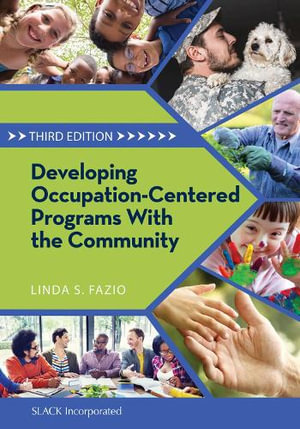
Developing Occupation-Centered Programs With the Community
By: Linda Fazio
Paperback | 15 May 2017 | Edition Number 3
Sorry, we are not able to source the book you are looking for right now.
We did a search for other books with a similar title, however there were no matches. You can try selecting from a similar category, click on the author's name, or use the search box above to find your book.
ISBN: 9781630912598
ISBN-10: 163091259X
Published: 15th May 2017
Format: Paperback
Language: English
Number of Pages: 462
Audience: College, Tertiary and University
Publisher: Taylor & Francis Ltd
Country of Publication: GB
Edition Number: 3
Edition Type: Revised
Dimensions (cm): 25 x 17.5 x 3.5
Weight (kg): 1
Shipping
| Standard Shipping | Express Shipping | |
|---|---|---|
| Metro postcodes: | $9.99 | $14.95 |
| Regional postcodes: | $9.99 | $14.95 |
| Rural postcodes: | $9.99 | $14.95 |
Orders over $79.00 qualify for free shipping.
How to return your order
At Booktopia, we offer hassle-free returns in accordance with our returns policy. If you wish to return an item, please get in touch with Booktopia Customer Care.
Additional postage charges may be applicable.
Defective items
If there is a problem with any of the items received for your order then the Booktopia Customer Care team is ready to assist you.
For more info please visit our Help Centre.
You Can Find This Book In

RRP $39.95
$27.99
OFF
RRP $247.75
$117.75
OFF

RRP $267.99
$126.75
OFF


RRP $69.95
$60.99
OFF


RRP $219.75
$104.75
OFF

RRP $26.99
$22.99
OFF

RRP $95.95
$77.75
OFF

RRP $16.99
$12.75
OFF

RRP $45.00
$35.75
OFF

RRP $150.00
$124.75
OFF

RRP $215.75
$102.75
OFF


RRP $39.99
$31.75
OFF

RRP $26.99
$22.99
OFF

RRP $84.95
$74.75
OFF

RRP $53.95
$49.75

RRP $64.95
$48.99
OFF