Get Free Shipping on orders over $79
Critical Mass : How One Thing Leads to Another - Philip Ball

Critical Mass

How One Thing Leads to Another

By: Philip Ball

Paperback | 16 May 2006

At a Glance

Paperback


$65.75

or 4 interest-free payments of $16.44 with

 or 

Ships in 15 to 25 business days

Are there "natural laws" that govern the ways in which humans behave and organize themselves, just as there are physical laws that govern the motions of atoms and planets? Unlikely as it may seem, such laws now seem to be emerging from attempts to bring the tools and concepts of physics into the social sciences. These new discoveries are part of an old tradition. In the seventeenth century the philosopher Thomas Hobbes, dismayed by the impending civil war in England, decided that he would work out what kind of government was needed for a stable society. His solution sparked a new way of thinking about human behavior in looking for the "scientific" rules of society. Adam Smith, Immanuel Kant, Auguste Comte, and John Stuart Mill pursued this idea from different political perspectives. But these philosophers lacked the tools that modern physics can now bring to bear on the matter. Philip Ball shows how, by using these tools, we can understand many aspects of mass human behavior. Once we recognize that we do not make most of our decisions in isolation but are affected by what others decide, we can start to discern a surprising and perhaps even disturbing predictability in our laws, institutions, and customs. Lively and compelling, "Critical Mass "is the first book to bring these new ideas together and to show how they fit within the broader historical context of a rational search for better ways to live. Philip Ball majored in chemistry at Oxford University and received a Ph.D. in physics from the University of Bristol. He is now a writer and consulting editor for "Nature." He is the author of "Life's Matrix": " A Biography of Water"; "Bright Earth": " Art and the Invention of Color," which was nominated for a National Book Critics Circle Award; and "The Devil's Doctor." He lives in London, England, with his wife. Winner of the Aventis Prize
"Critical Mass" asks the question, Why is society the way it is? How does it emerge from a morass of individual interactions? Are there laws of nature that guide human affairs? Is anything inevitable about the ways humans behave and organize themselves, or do we have complete freedom in creating our societies? In short, just how, in human affairs, does one thing lead to another?
In searching for answers, science writer Philip Ball argues that we can enlist help from a seemingly unlikely source: physics. The first person to think this way was the seventeenth-century English philosopher Thomas Hobbes. His approach, described in "Leviathan," was based not on utopian wishful thinking, but rather on Galileo's mechanics; it was an attempt to construct a moral and political theory from scientific first principles. Although his solution--absolute monarchy--is unappealing today, Hobbes sparked a new way of thinking about human behavior in looking for the "scientific" rules of society. Adam Smith, Immanuel Kant, Auguste Comte, and John Stuart Mill pursued this same idea from different political perspectives.
Today the purpose of applying concepts from physics to the social, political, and economic sciences is no longer to prescribe how society ought to be; instead, it is to understand the way it is, and how it evolves. In "Critical Mass," Ball looks at what this "physics of society" has to say about how people move in open or enclosed spaces; how they make decisions and cast votes, form allegiances, join groups, establish companies and communities. He examines the behavior of financial markets and reveals the hidden structure in networks of social and business contacts, and he explores the politics of conflict and cooperation from a scientific point of view. If physics can help us explain and understand human interaction and social behavior, can it also be used to anticipate and thereby avoid problems? Can physics be harnessed to improve societies, to guide us toward better decisions, and to make a safer and fairer world? Or is that merely another dream destined for the graveyard of utopias past? "A wide-ranging and dazzlingly informed book about the science of interactions. I can promise you'll be amazed."--Bill Bryson, chair of the 2005 Aventis General Prize Judging Panel "Philip Ball makes physics sexy again in "Critical"" ""Mass.""--Elissa Schappel, "Vanity Fair" "A prolific and accomplished science journalist . . . "Critical Mass" is] lively and wonderfully informative."--George Scialabba, "The ""Boston"" Globe""" "Fascinating . . . impressively clear and breathtaking in scope . . . substantial, impeccably researched . . . persuasive. For anyone who would like to learn about the intellectual ferment at the surprising junction of physics and social science, "Critical Mass" is the place to start."--Stephen Strogatz, "Nature""" ""Critical Mass" is an intellectual roller-coaster."--"The Economist" "A highly provocative work of popular science."--"Kirkus Reviews "(starred review) "In this wide-ranging investigation of pioneering attempts to explain social behavior by applying formulas borrowed from physics, Ball explains how maverick social theorists are now using discoveries about molecular motion and crystal formation to predict the behavior of various human groups, including crowds of soccer fans and clusters of pedestrians. Ball acknowledges that past 'political arithmeticians' have often dehumanized their subjects by adopting mechanistic assumptions about individual psychology and have sometimes legitimated totalitarian rulers by giving them a putatively scientific charter. But Ball's numerous detailed examples of the new social physics show how statistical models from physics can yield highly reliable predictions for large-group outcomes without abridging the unpredictable freedom of individual choice. These same examples teach that a consistent physics of society yields not an ideological straitjacket stipulating how people "should "act but rather a detailed portrait of how people "do "act. Because the new social physics can help managers and p
Industry Reviews
Praise for "Critical Mass", Winner of the 2005 Aventis Prize for Science Books:
"""A wide-ranging and dazzlingly informed book about the science of interactions. I can promise you'll be amazed." --Bill Bryson, chair of the 2005 Aventis General Prize Judging Panel

"Philip Ball makes physics sexy again in "Critical""""Mass"."-Elissa Schappel, "Vanity Fair"

"It's lively and wonderfully informative."--George Scialabba, "The ""Boston"" Globe"
""
"Fascinating. . . impressively clear and breathtaking in scope. . . substantial, impeccably researched . . . persuasive. For anyone who would like to learn about the intellectual ferment at the surprising junction of physics and social science, "Critical Mass" is the place to start." - Stephen Strogatz, "Nature"

A wide-ranging and dazzlingly informed book about the science of interactions. I can promise you'll be amazed. "Bill Bryson, chair of the 2005 Aventis General Prize Judging Panel"

Philip Ball makes physics sexy again in "Critical" "Mass." "Elissa Schappel, Vanity Fair"

It's lively and wonderfully informative. "George Scialabba, The Boston Globe"

Fascinating. . . impressively clear and breathtaking in scope. . . substantial, impeccably researched . . . persuasive. For anyone who would like to learn about the intellectual ferment at the surprising junction of physics and social science, "Critical Mass" is the place to start. "Stephen Strogatz, Nature""


A wide-ranging and dazzlingly informed book about the science of interactions. I can promise you'll be amazed. Bill Bryson, chair of the 2005 Aventis General Prize Judging Panel

Philip Ball makes physics sexy again in Critical Mass. Elissa Schappel, Vanity Fair

It's lively and wonderfully informative. George Scialabba, The Boston Globe

Fascinating. . . impressively clear and breathtaking in scope. . . substantial, impeccably researched . . . persuasive. For anyone who would like to learn about the intellectual ferment at the surprising junction of physics and social science, Critical Mass is the place to start. Stephen Strogatz, Nature

"

"A wide-ranging and dazzlingly informed book about the science of interactions. I can promise you'll be amazed." --Bill Bryson, chair of the 2005 Aventis General Prize Judging Panel

"Philip Ball makes physics sexy again in Critical Mass." --Elissa Schappel, Vanity Fair

"It's lively and wonderfully informative." --George Scialabba, The Boston Globe

"Fascinating. . . impressively clear and breathtaking in scope. . . substantial, impeccably researched . . . persuasive. For anyone who would like to learn about the intellectual ferment at the surprising junction of physics and social science, Critical Mass is the place to start." --Stephen Strogatz, Nature


More in Philosophy of Science

Prove It : A Scientific Guide for the Post-Truth Era - Elizabeth Finkel
God, the Science, the Evidence - Michel-Yves Bollore

RRP $48.99

$38.75

21%
OFF
Creative Machines : AI, Art & Us - Maya Ackerman

RRP $57.95

$44.75

23%
OFF
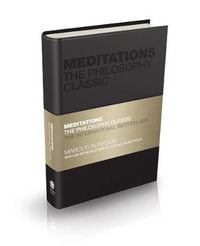
Meditations : The Philosophy Classic - Marcus Aurelius

RRP $24.95

$21.75

13%
OFF
The Poetics of Space : Penguin Classics - Gaston Bachelard

RRP $32.99

$23.75

28%
OFF
Life 3.0 : Being Human in the Age of Artificial Intelligence - Max Tegmark
Godel, Escher, Bach : An Eternal Golden Braid - Douglas R. Hofstadter

RRP $39.99

$31.75

21%
OFF
Man-Made : How the bias of the past is being built into the future - Tracey Spicer
The Universal One - Walter Russell

RRP $54.99

$43.75

20%
OFF
Reality+ : Virtual Worlds and the Problems of Philosophy - David J. Chalmers
AI: Game On : How to decide who or what decides - Tim Trumper

RRP $29.99

$24.99

17%
OFF
Wonderstruck : How Wonder and Awe Shape the Way We Think - Helen De Cruz
The Logic of Scientific Discovery : Routledge Classics - Karl Popper
The Greatest Show On Earth : The Evidence for Evolution - Richard Dawkins