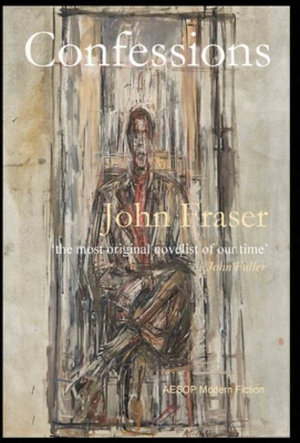
John Fraser’s latest novel shows how confessions are less about contrition than about seeking accomplices and pardoners – though there is a nod to various 'confessors' – Augustine, Rousseau. Confessions starts with an invocation to addiction, those who take on that burden, and those who will take it on or share it. The story follows the branches of a family tree, rooted in the life of an alcoholic and his accomplice-therapist, and their descendants. Their children are shown being forced to confess what they – probably – haven’t done, and to perform a personal sacrifice in recompense, connecting a funicular between the high town and the low. Metaphorically, there is a contrast between addiction in the higher- ups, and that of the lower. Crime too is a sort of addiction, involving pardon, repentance, cures not taken, punishments evaded and selfless accomplices sought. In the end, what is confessed depends on what you think is good and bad. Necessity, among other things, seems to decide. The last protagonist, Clémence, has to choose, as her last resort, a branch of the tree – piecework in the fashion trade, which may require prostitution too....
Industry Reviews
‘One of the most extraordinary publishing events of the past few years has been the rapid, indeed insistent, appearance of the novels of John Fraser. There are few parallels in literary history to this almost simultaneous and largely belated appearance of a mature œuvre, sprung like Athena from Zeus’s forehead; and the novels in themselves are extraordinary. I can think of nothing much like them in fiction. Fraser maintains a masterfully ironic distance from the extreme conditions in which his characters find themselves. There are strikingly beautiful descriptions, veiled allusions to rooted traditions, unlikely events half-glimpsed, abrupted narratives, surreal but somehow apposite social customs. Fraser’s work is conceived on a heroic scale in terms both of its ideas and its situational metaphors. If he were to be filmed, it would need the combined talents of a Bunuel, a Gilliam, a Cameron. Like Thomas Pynchon, whom in some ways he resembles, Fraser is a deep and serious fantasist, wildly inventive. The reader rides as on a switchback or luge of impetuous attention, with effects flashing by at virtuoso speeds. The characters seem to be unwitting agents of chaos, however much wise reflection the author bestows upon them. They move with shrugging self- assurance through circumstances as richly-detailed and as without reliable compass- points as a Chinese scroll.’ - John Fuller, poet, novelist, Whitbread Award winner and Booker Prize nominee