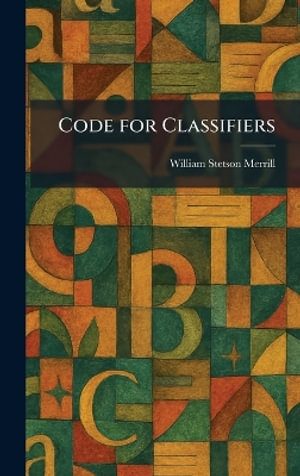
"Code for Classifiers" is a seminal work in the field of library and information science, designed to provide a systematic set of principles for the classification of books and documents. Written by the distinguished librarian William Stetson Merrill, this manual addresses the practical and theoretical challenges encountered when assigning subject categories to diverse literary works.
Rather than focusing solely on a specific system like the Dewey Decimal Classification or Library of Congress Classification, "Code for Classifiers" offers a universal framework for determining the most appropriate placement for a work based on its primary subject and intent. The text serves as an essential guide for professionals and students seeking to understand the logic behind bibliographic organization. It explores the nuances of subject analysis, providing clear rules and examples to ensure consistency across library collections.
This work remains a significant historical contribution to the standardization of cataloging practices, reflecting the rigorous intellectual effort required to organize the world's knowledge. Its focus on the inherent subject matter of a book makes it an invaluable resource for anyone interested in the history of information management and the evolution of modern library science.
This work has been selected by scholars as being culturally important, and is part of the knowledge base of civilization as we know it. This work was reproduced from the original artifact, and remains as true to the original work as possible. Therefore, you may see the original copyright references, library stamps (as most of these works have been housed in our most important libraries around the world), and other notations in the work.
This work is in the public domain in the United States of America, and possibly other nations. Within the United States, you may freely copy and distribute this work, as no entity (individual or corporate) has a copyright on the body of the work.
As a reproduction of a historical artifact, this work may contain missing or blurred pages, poor pictures, errant marks, etc. Scholars believe, and we concur, that this work is important enough to be preserved, reproduced, and made generally available to the public. We appreciate your support of the preservation process, and thank you for being an important part of keeping this knowledge alive and relevant.