Get Free Shipping on orders over $79
Capture and Exclude : Developing Economies and the Poor in Global Finance - Amiya Kumar Bagchi

Capture and Exclude

Developing Economies and the Poor in Global Finance

By: Amiya Kumar Bagchi (Editor), Gary Dymski (Editor)

Hardcover | 1 August 2007 | Edition Number 1

At a Glance

Hardcover


RRP $64.95

$52.99

18%OFF

or 4 interest-free payments of $13.25 with

 or 

Available for Backorder. We will order this from our supplier however there isn't a current ETA.

The essays gathered in this book address two broad questions. What are the legacies of the imperial age and the colonial epoch, in the capitalist economy of the present day? And what challenges do global financial dynamics pose for developing countries, and for lower- and middle-income households?

Increasing cross-border economic flows have attracted ever more attention. Ironically, cross-border financial relations are centuries old: they date to the birth of the modern nation-state, and, indeed, emerged under the dual shadows caste by imperialism and colonialism. Under colonialism, the financial flows were asymmetric, almost always flowing from the periphery to the core. This historical fact has a continuity in the world economy's financial core - the US, Western Europe, Japan, and newly emerging urban East Asia, and a few selected regions elsewhere. There, globalization has, in the past quarter-century, provided ever more investment and credit options for firms and consumers with access to what Marx would have called 'world money'. But any balance-sheet of the contemporary impacts of cross-border financial flows for nations outside this global core - that is, formerly colonialized and imperially dominated areas - would look quite different. Certainly, there are global 'financial citizens' in these countries, who have benefited from freer global financial flows. But, overall, these nations' macroeconomies have been compromised by contractionary policies forced on them due to recurrent cross-border financial crises; further, many micro-economic tragedies have unfolded in the wake of these macroshocks.

The chapters in this book investigate three interlocking domains: the terrain of ideology about how global financial markets are supposed to work, across nations and across agents; the terrain of institutions and market structures; and the terrain of macro-economic and regulatory policy. Special attention is paid to the situation of India. This book demonstrates that, because asymmetric power rooted in imperialism and exploitation underlies the current era, exclusion and fragility are persistent features of the world in which we live.

More in Economics

The Ultimate Hidden Truth of the World - David Graeber

RRP $26.99

$22.99

15%
OFF
Introduction to Medieval Europe 300-1500 : 4th Edition - Wim Blockmans
The Culture Code : The Secrets of Highly Successful Groups - Daniel Coyle
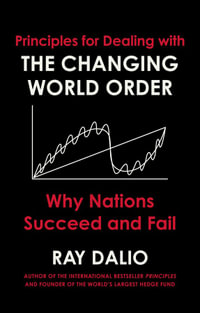
The Changing World Order : Why Nations Succeed or Fail - Ray Dalio
The Bookseller at the End of the World - Ruth Shaw

RRP $34.99

$28.75

18%
OFF
Abundance : How We Build a Better Future - Ezra Klein

RRP $36.99

$29.75

20%
OFF
The Trading Game : A Confession - Gary Stevenson

RRP $26.99

$22.99

15%
OFF
Technofeudalism : What Killed Capitalism - Yanis Varoufakis

RRP $26.99

$22.99

15%
OFF
Psycho-Cybernetics (Updated and Expanded) : Psycho-cybernetics - Maxwell Maltz
Goliath's Curse : The History and Future of Societal Collapse - Luke Kemp
Blindspotting : How to see what others miss - Kirstin Ferguson

SIGNED COPY

RRP $36.99

$26.75

28%
OFF
The Winner's Curse : Behavioral Economics Anomalies Then and Now - Richard H. Thaler
Capital in the Twenty-First Century - Thomas Piketty

RRP $43.95

$34.75

21%
OFF
Thinking in Systems : A Primer - Donella Meadows

RRP $55.00

$29.75

46%
OFF
Bullshit Jobs : A Theory - David Graeber

RRP $26.99

$22.99

15%
OFF