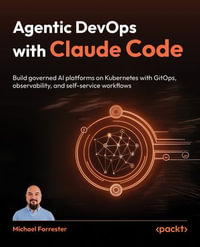
"This book makes a compelling case that experimentation is not a process layered on top of architecture, but a property the architecture itself must support."- Scott Hanselman, VP, Member of Technical Staff, Microsoft and GitHub
Key Features
- Apply Scale by Subtraction to improve reliability while controlling cost and complexity
- Evolve ShopFlow from MVP to a global platform through realistic architectural trade-offs
- Implement Zero Trust, database sharding, FinOps, and AI-native self-healing
- Purchase of the print or Kindle book includes a free PDF eBook
Book Description
Scale systems confidently by knowing when to simplify instead of adding complexity. You'll learn to distinguish temporary demand spikes from sustained growth, align architecture with business goals, and make decisions that improve reliability, cost efficiency, and delivery speed using measurable ROI instead of assumptions.
Following the evolution of ShopFlow from startup MVP to a global AI-native platform, you'll tackle real-world trade-offs in application design, data, security, infrastructure, and operations. Through practical scenarios, you'll determine when to scale vertically or horizontally, decouple services, shard databases, implement Zero Trust security, and introduce AI-driven automation. Along the way, you'll apply the Scale by Subtraction framework to eliminate unnecessary complexity, reduce operational overhead, and improve system resilience without overengineering.
Written by Imran Siddique, a Principal Group Engineering Manager at Microsoft with over 17 years of experience building hyperscale systems, this book draws on expertise from Azure SQL, Azure DevOps, Azure Copilot, and other large-scale Microsoft platforms.
By the end of this book, you'll be able to make evidence-based architectural decisions and design distributed systems that scale sustainably without unnecessary cost or complexity.
What you will learn
- Apply Scale by Subtraction to reduce system complexity
- Distinguish temporary traffic spikes from sustained growth
- Use tipping-point metrics to guide service decoupling
- Shard databases while preserving data integrity
- Secure distributed systems with Zero Trust and mTLS
- Balance delivery velocity, availability, and FinOps
- Design AI-native infrastructure with autonomous agents
Who this book is for
Software architects, engineering directors, CTOs, and senior or staff engineers who need to scale systems, teams, and operational practices without introducing unnecessary complexity. A fundamental understanding of cloud computing and basic familiarity with AI applications are recommended; no specific language, vendor, or technology stack is required.