Get Free Shipping on orders over $79
An Invitation to 3-D Vision : From Images to Geometric Models :  From Images to Geometric Models - Yi Ma

An Invitation to 3-D Vision : From Images to Geometric Models

From Images to Geometric Models

By: Yi Ma, Stefano Soatto, Jana Kosecká

Hardcover | 1 November 2003

At a Glance

Hardcover


$169.00

or 4 interest-free payments of $42.25 with

 or 

Ships in 5 to 7 business days

Preface 1 Introduction 1.1 Visual perception: from 2-D images to 3-D models 1.2 A mathematical approach 1.3 A historical perspectiveI Introductory material 2 Representation of a three-dimensional moving scene 2.1 Three-dimensional Euclidean space 2.2 Rigid body motion 2.3 Rotational motion and its representations 2.4 Rigid body motion and its representations 2.5 Coordinate and velocity transformations 2.6 Summary 2.7 Exercises 2.A Quaternions and Euler angles for rotations 3 Image formation 3.1 Representation of images 3.2 Lenses, light, and basic photometry 3.3 A geometric model of image formation 3.4 Summary 3.5 Exercises 3.A Basic photometry with light sources and surfaces 3.B Image formation in the language of projective geometry 4 Image primitives and correspondence 4.1 Correspondence of geometric features 4.2 Local deformation models 4.3 Matching point features 4.4 Tracking line features 4.5 Summary 4.6 Exercises 4.A Computing image gradientsII Geometry of two views 5 Reconstruction from two calibrated views 5.1 Epipolar geometry 5.2 Basic reconstruction algorithms 5.3 Planar scenes and homography 5.4 Continuous motion case 5.5 Summary 5.6 Exercises 5.A Optimization subject to epipolar constraint 6 Reconstruction from two uncalibrated views 6.1 Uncalibrated camera or distorted space? 6.2 Uncalibrated epipolar geometry 6.3 Ambiguities and constraints in image formation 6.4 Stratified reconstruction 6.5 Calibration with scene knowledge 6.6 Dinner with Kruppa 6.7 Summary 6.8 Exercises 6.A From images to Fundamental matrices 6.B Properties of Kruppa's equations 7 Segmentation of multiple moving objects from two views 7.1 Multibody epipolar constraint and Fundamental matrix 7.2 A rank condition for the number of motions 7.3 Geometric properties of the multibody Fundamental matrix 7.4 Multibody motion estimation and segmentation 7.5 Multibody structure from motion 7.6 Summary 7.7 Exercises 7.A Homogeneous polynomial factorizationIII Geometry of multiple views 8 Multi
Industry Reviews

From the reviews:

"Computer vision is invading our daily lives ... . Covering all the aspects would be too vast an area to cover in one book, so here, the authors concentrated on the specific goal of recovering the geometry of a 3D object ... . The 22 pages of references form a good guide to the literature. The authors found an excellent balance between a thorough mathematical treatment and the applications themselves. ... the text will be a pleasure to read for students ... ." (Adhemar Bultheel, Bulletin of the Belgian Mathematical Society, Vol. 12 (2), 2005)

"This is primarily a textbook of core principles, taking the reader from the most basic concepts of machine vision ... to detailed applications, such as autonomous vehicle navigation. ... It is a clearly written book ... . Everything that is required is introduced ... . an entirely self-contained work. ... The book is aimed at graduate or advanced undergraduate students in electrical engineering, computer science, applied mathematics, or indeed anyone interested in machine vision ... . is highly recommended." (D.E. Holmgren, The Photogrammetric Record, 2004)

"This very interesting book is a great book teaching how to go from two-dimensional (2D)-images to three-dimensional (3D)-models of the geometry of a scene. ... A good part of this book develops the foundations of an appropriate mathematical approach necessary for solving those difficult problems. ... Exercises (drill exercises, advanced exercises and programming exercises) are provided at the end of each chapter." (Hans-Dietrich Hecker, Zentralblatt MATH, Vol. 1043 (18), 2004)

"This book gives senior undergraduate and beginning graduate students and researchers in computer vision, applied mathematics, computer graphics, and robotics a self-contained introduction to the geometry of 3D vision. That is the reconstruction of 3D models of objects from a collection of 2D images. ... Exercises are provided at the endof each chapter. Software for examples and algorithms are available on the author's website." (Daniel Leitner, Simulation News Europe, Vol. 16 (1), 2006)

More in Geometry

Grade 3 Geometry and Measurement - KUMON PUBLISHING

RRP $16.99

$13.75

19%
OFF
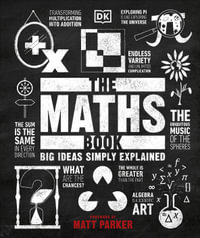
The Maths Book : Big Ideas Simply Explained - DK

RRP $42.99

$33.99

21%
OFF
Grade 6 Geometry and Measurement : Kumon Math Workbooks - KUMON PUBLISHING
The Golden Ratio : Divine Beauty of Mathematics - Rafael Araujo

RRP $59.99

$42.99

28%
OFF
Kumon Grade 4 Geometry and Measurement : Kumon Math Workbooks - KUMON PUBLISHING
Essential Trigonometry - Isabella Hughes

$458.75

College Geometry - April Watson

$452.75

Sacred Geometry : Philosophy and Practice - Robert Lawlor

RRP $21.99

$19.75

10%
OFF
Grade 5 Geometry and Measurement : Kumon Math Workbooks - KUMON PUBLISHING
Grade 1 Geometry & Measurement : Kumon Math Workbooks - KUMON PUBLISHING
Algebraic Topology - No Information Available

RRP $75.95

$64.99

14%
OFF
Calculus : 3rd Edition - Michael Spivak

RRP $97.95

$79.75

19%
OFF
Geometry : Grades 6 - 8 - Kumon Publishing

RRP $24.99

$18.99

24%
OFF
$G$-Global Homotopy Theory and Algebraic $K$-Theory - Tobias Lenz