Get Free Shipping on orders over $79
A "Splendid Idiosyncrasy" : Prehistory at Cambridge 1915-50 - Pamela  Jane Smith

A "Splendid Idiosyncrasy"

Prehistory at Cambridge 1915-50

By: Pamela Jane Smith

Paperback | 15 September 2009

At a Glance

Paperback


$90.20

or 4 interest-free payments of $22.55 with

 or 

Ships in 5 to 7 business days

It is often assumed that, in Britain, archaeology has always been a university-inspired course. However, the identification of qualified scientific archaeology with a formal education is a twentieth-century phenomenon. Archaeology as a waged, educated, vocational pursuit is a recent development. At the beginning of the twentieth century, there were no degree courses in archaeology, no profession or professionals, no formal controls over recruitment, nor institutionalised avenues of entry, nor established examination-based qualifying standards, certainly no faculties, textbooks, lectures, practicals, nor archaeological libraries. British universities have produced great lineages of descendants who practise archaeological specialisations the world over. Yet, it is not known why or how archaeology became a university option. There are no specific histories of how archaeology was institutionalised as a university degree subject in Great Britain and Eire. The entire history of all twentieth-century archaeologies, not just prehistoric, but classical, Romano-British, Anglo-Saxon, mediaeval and historic, can be viewed through the lens of amateur versus university professional and how these terms became defined and used. A university-based group emerged during the twentieth century, whose members gainfully asserted that anyone who was not university centred, or at least university-trained, was an amateur. It is widely accepted today that if you do not have a degree you are not a professional archaeologist. How did this happen? Who considered themselves professionals? Who preferred to be defined as amateur and how did the self-identity of archaeologists change? This work focuses on one small crucial beginning of this fascinating evolutionary process. It is the first history of its kind and is intended to be a block for the building of a broader informed history of British academic archaeology. It will hopefully set an example for other historians of archaeological institutions to follow.

More in Archaeology

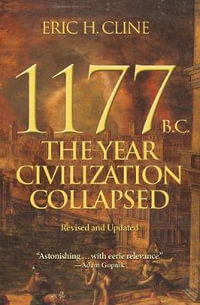
1177 B.C. : The Year Civilization Collapsed: Revised and Updated - Eric H. Cline
The Dawn of Everything : A New History of Humanity - David Graeber
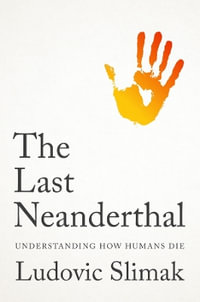
The Last Neanderthal : Understanding How Humans Die - Ludovic Slimak
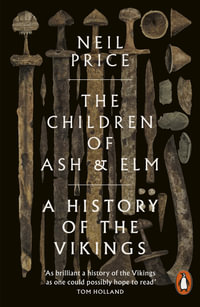
The Children of Ash and Elm : A History of the Vikings - Neil Price
Native America : The Story of the First Peoples - Kenneth L. Feder

RRP $69.99

$54.99

21%
OFF
Palestine : A Four Thousand Year History - Nur  Masalha
Urbanism and Empire in Roman Sicily - Laura Pfuntner

RRP $92.99

$89.75

Encounters : The Crusades In 50 Objects - Cathleen A. Fleck

RRP $83.99

$77.75

Glasgow : A New History - Alistair Moffat

$40.75

Witches : A King's Obsession - Steven Veerapen
Istanbul : A Tale of Three Cities - Bettany Hughes

RRP $29.99

$24.99

17%
OFF
Exile : The English Years of Mary, Queen of Scots - Rosemary Goring

RRP $49.99

$39.75

20%
OFF