

At a Glance
Format
ePUB
ePUB
eText
$92.95
or 4 interest-free payments of $23.24 with
orInstant online reading in your Booktopia eTextbook Library *
Why choose an eTextbook?
Instant Access *
Purchase and read your book immediately
Read Aloud
Listen and follow along as Bookshelf reads to you
Study Tools
Built-in study tools like highlights and more
* eTextbooks are not downloadable to your eReader or an app and can be accessed via web browsers only. You must be connected to the internet and have no technical issues with your device or browser that could prevent the eTextbook from operating.
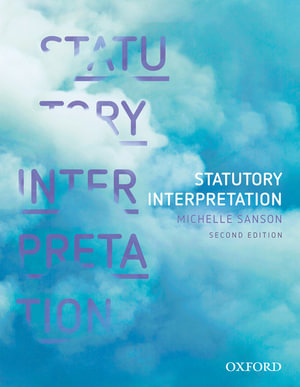
Statutory Interpretation 2nd edition revitalises learning of statutory interpretation as a living, breathing and dynamic tool for understanding and applying the law. The book is specifically designed to engage students with statutory interpretation and equip them with improved skills required for future legal practice. It is structured to align with the length of a typical semester, and in addition to research and analysis of statutory interpretation rules and principles, Statutory Interpretationprovides case scenarios and application exercises. Chapter 14 ‘A Synthesis: Practical Skills and Exercises’ has been designed as a consolidating chapter to which readers will repeatedly refer and contains a Statutory Interpretation Index (SII2) synthesising the book’s rules of statutory interpretation, a user-friendly flow diagram summarising statutory interpretation method, a worked example of its application, and a set of four practical exercises.New to this editionUpdated examples and case referencesAdditional case exercisesExpanded discussion on:principle of legalitystatutory discretions and obligationslegislative intention in pre-native title legislationinterpretive techniques including reading down, straining and reading inuse of international law in statutory interpretationNew section of dominant and subordinate provisions
on
Desktop
Tablet
Mobile
1. Introduction to Statutory InterpretationHistory and evolution of statutory interpretationThe role of the judiciary in interpreting legislationPractical outcome of this bookStructure of this bookGuidelines for interpretation of this book2. Creation of LegislationLegislative powerDrafting stylesPlain English draftingDrafting conventionsThe political dimensionParliamentary proceduresLegislation exampleConclusion3. Interpretation LegislationGenderAgeNumberDistanceTimeMeaning of ‘may’ and ‘shall’CommencementAmendmentRepealInvalidity4. Context and PurposeContextPurpose5. Intention and Interpretive TechniquesIntentionInterpretive techniques6. Intrinsic Materials: Statute ComponentsLong titleShort titlePreambleObjects clauseDefinition sectionsHeadingsSchedulesNotesPunctuationExamplesPenalties7. Intrinsic Materials: The TextAll words have meaningOrdinarily, the meaning is the ordinary meaningA technical or legal meaning may be usedCurrent meaningDictionary meaningConsistent meaning across an ActVariants of wordsLimiting wordsHendiadysTemporal expressionsCommon words and expressionsWhat if the intrinsic materials are inconsistent, or in conflict with one another?8. Extrinsic MaterialsUsing extrinsic materials to interpret textUsing extrinsic materials for context and purposeCommon law approach to use of extrinsic materialsWhich extrinsic materials can be used?Proliferation and limits9. Traditional Common Law ApproachesCommon law and statutesTraditional common law approachesLiteral ruleGolden ruleMischief ruleLatin maxims10. Statutory PresumptionsLegislation does not have extraterritorial effectLegislation does not take jurisdiction away from the courtsLegislation does not bind the CrownPenal provisions are strictly construedRemedial or beneficial provisions are broadly construedTaxation provisions construed to the taxpayer’s benefitLegislation enacting a word or phrase approves of its common law interpretationLegislation does not operate retrospectivelyLegislation does not remove property rightsOther statutory presumptions11. Fundamental and Human RightsNon-interference with fundamental rightsWhat is a fundamental right?Principle of legalityPractical applicationHuman rightsThe Australian Capital Territory approachThe Victorian approach12. International Law in Statutory InterpretationLegislative conformity with international lawSources of international lawInternational treatiesCustomary international lawGeneral principles of law13. Interpreting Specific InstrumentsDelegated or subordinate legislationCodesQuasi-legislative bodies and ‘soft’ lawConstitutionOther documents14. A Synthesis: Practical Skills and ExercisesStatutory Interpretation Index 1 (‘SII2’)Practical MethodologyPractical Exercise A: Criminal lawPractical Exercise B: Tort lawPractical Exercise C: Contract lawPractical Exercise D: Property lawFurther ReadingIndex
ISBN: 9780190304584
ISBN-10: 0190304588
Published: 15th June 2016
Format: ePUB
Language: English
Audience: College, Tertiary and University
Publisher: Oxford University Press Australia & New Zealand
Edition Number: 2


