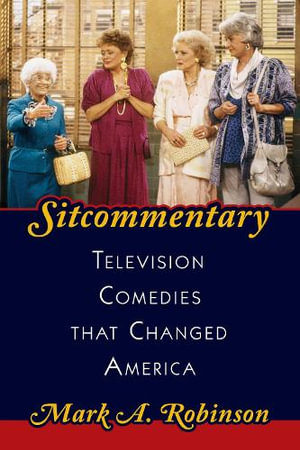
From I Love Lucy to Black-ish, sitcoms have often paved the way for social change.
Television comedy has long been on the frontline in how America evolves on social issues. There is something about comedy that makes difficult issues more palatable—with humor an effective device for presenting ideas that lead to social change. From I Love Lucy which introduced the first television pregnancy to Will & Grace, which normalized gay characters, the situation comedy has challenged the public to revisit social mores and reshape how we think about the world in which we live.
In Sitcommentary: Television Comedies That Changed America, Mark A. Robinson looks at more than three dozen programs that have tackled social issues, from the 1940s to the present. The author examines shows that frequently addressed hot-button topics throughout their runs—such as All in the Family, Maude, and Black-ish—as well as programs with special episodes that grappled with a societal concern like ageism, class, gender, race, or sexual orientation. Among the important sitcoms discussed in this volume are such beloved shows as The Brady Bunch, A Different World, The Facts of Life, The Golden Girls, Good Times, The Jeffersons, The Mary Tyler Moore Show, M*A*S*H, Modern Family, Murphy Brown, One Day at a Time, Roseanne, and Soap. Each has broken down barriers and facilitated discussion, debate, and social evolution in America.
Arranged in chronological order, these TV shows have influenced the masses by tackling tough topics or shining a spotlight on taboo subjects. With discussions of some of the most popular shows of all time, Sitcommentary will appeal to fans of these shows as well as anyone interested in the cultural history of America and American television.
Industry Reviews
Robinson delves into the social and cultural changes that have stemmed from 40 influential sitcoms in this solid history. This compendium uncovers how fictional characters changed American’s perspectives on serious topics— sex, race, politics, depression, war, gender roles—through humor. Coverage of each show, from 1950s and ’60s classic such as I Love Lucy and The Dick Van Dyke Show to today’s Modern Family and Black-ish, runs around half a dozen pages, so these aren’t comprehensive histories or analyses. Instead, Robinson focuses on the element of each show that made it groundbreaking, such as in 1968’s Julie, which “centered around a black widowed female who juggled parenthood and a career.” In other cases, Robinson touches on smaller aspects such as the concern that the pants Mary Tyler Moore wore on The Dick Van Dyke Show “wouldn’t create any panty lines or noticeable crevices or creases in the wrong places”; the show—one of the first to show women wearing pants—sparked a trend in pedal pushers. . . . Robinson’s astute history of groundbreaking sitcoms will likely have readers searching out reruns.