Get Free Shipping on orders over $79
Scepticism and Perceptual Justification - Dylan Dodd

Scepticism and Perceptual Justification

By: Dylan Dodd, Elia Zardini

eText | 1 May 2014 | Edition Number 1

At a Glance

eText


$95.59

or 4 interest-free payments of $23.90 with

 or 

Instant online reading in your Booktopia eTextbook Library *

Why choose an eTextbook?

Instant Access *

Purchase and read your book immediately

Read Aloud

Listen and follow along as Bookshelf reads to you

Study Tools

Built-in study tools like highlights and more

* eTextbooks are not downloadable to your eReader or an app and can be accessed via web browsers only. You must be connected to the internet and have no technical issues with your device or browser that could prevent the eTextbook from operating.
One of the hardest problems in the history of Western philosophy has been to explain whether and how experience can provide knowledge (or even justification for belief) about the objective world outside the experiencer's mind. A prominent brand of scepticism has precisely denied that experience can provide such knowledge. How, for instance (these sceptics ask) can I know that my experiences are not produced in me by a powerful demon (or, in a modern twist on that traditional Cartesian scenario, by a supercomputer)? This volume, originating from the research project on Basic Knowledge recently concluded at the Northern Institute of Philosophy, presents new essays on scepticism about the senses written by some of the most prominent contemporary epistemologists. They approach the sceptical challenge by discussing such topics as the conditions for perceptual justification, the existence of a non-evidential kind of warrant and the extent of one's evidence, the epistemology of inference, the relations between justification, probability and certainty, the relevance of subjective appearances to the epistemology of perception, the role that broadly pragmatic considerations play in epistemic justification, the contents of perception, and the function of attention. In all these cases, the papers show how philosophical progress on foundational issues can improve our understanding of and possibly afford a solution to a historically prominent problem like scepticism.
on
Desktop
Tablet
Mobile

More in Epistemology & The Theory of Knowledge

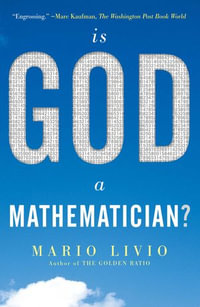
Is God a Mathematician? - Mario Livio

eBOOK

Technics and Enaction : A Philosophy of Imagination - Dr Émilien Dereclenne

eBOOK

The Book of Memory : Or, How to Live Forever - Mark Rowlands

eBOOK

Feminism Enchanted - Yanbing Er

eBOOK

RRP $59.11

$53.99

Deception : Mind, Metaphor, Memes, and Mimicry Machines - Professor of Linguistics and English Rukmini Bhaya Nair

eBOOK