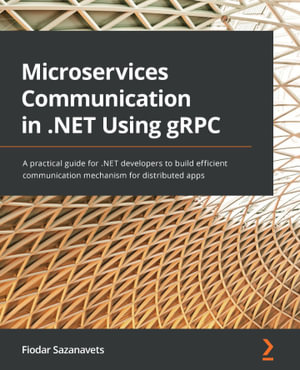
Cover everything you need to know about using gRPC on .NET, including fundamentals, use cases, and best practices
Key Features
- Explore the fundamental aspects of gRPC implementation on .NET
- Discover best practices for using gRPC, including performance and scalability
- Understand what the best contexts for using gRPC are and when it's not the best tool for the job
Book Description
gRPC is an efficient mechanism of communication over the web that was developed by Google. As gRPC runs over HTTP/2, it's much faster than the standard HTTP communication. gRPC is especially suitable for facilitating direct communication between microservices inside a distributed app. RPC stands for 'remote procedure calls', so applying it in code to call endpoints on a remote server is just as easy as calling functions and methods inside the app itself. gRPC is standardized, which makes it possible to find a suitable implementation of it in any modern programming language. Your distributed app does not need to have every component written in the same language. All services will continue to work together, regardless of the language they are written in.
Developers working with .NET will be able to put their knowledge to work with this guide to using gRPC. You'll start with the fundamentals of gRPC and how to use it inside .NET apps. As well as learning technical details, you'll explore best practices for performance and more. Next, you'll focus on scaling a gRPC app. Finally, you'll use different call types that gRPC supports and apply authentication and authorization to gRPC endpoints.
By the end of this book, you'll have practical gRPC knowledge and be able to use it in .NET apps to enable direct communication between microservices.
What you will learn
- Get to grips with the fundamentals of gRPC and Protobuf
- Explore use cases for gRPC on .NET
- Understand gRPC best practices, such as API versioning and performance enhancement
- Focus on mapping between gRPC and native C# code by applying well-known types
- Secure gRPC communication inside a .NET application
- Apply metrics, logging, and debugging to gRPC inside .NET
Who This Book Is For
.NET developers who are working with microservices and looking for efficient solutions to facilitate communication between services will find this gRPC book useful. Anyone who knows the fundamentals of .NET Core and is familiar with microservices architecture, but doesn't necessarily know about gRPC, will also find this book helpful.
Table of Contents
- Creating a basic gRPC application on ASP.NET Core
- When gRPC Is the Best Tool - And When It Isn't
- Protobuf - the communication protocol of gRPC
- Performance Best Practices for Using gRPC on .NET
- How to Apply Versioning to a gRPC API
- How to Scale a gRPC Application
- How to Use All Different Call Types That gRPC Supports
- Using Well-Known Types to Make Protobuf More Handy
- Securing gRPC Endpoints in Your ASP.NET Core Application with SSL/TLS
- Applying Authentication and Authorization to gRPC Endpoints
- Using Logging, Metrics, and Debugging in gRPC on .NET