Get Free Shipping on orders over $79
Intentional Acts and Institutional Facts : Essays on John Searle's Social Ontology - Savas L. Tsohatzidis

Intentional Acts and Institutional Facts

Essays on John Searle's Social Ontology

By: Savas L. Tsohatzidis

eText | 17 June 2007 | Edition Number 1

At a Glance

eText


$159.01

or 4 interest-free payments of $39.75 with

 or 

Instant online reading in your Booktopia eTextbook Library *

Why choose an eTextbook?

Instant Access *

Purchase and read your book immediately

Read Aloud

Listen and follow along as Bookshelf reads to you

Study Tools

Built-in study tools like highlights and more

* eTextbooks are not downloadable to your eReader or an app and can be accessed via web browsers only. You must be connected to the internet and have no technical issues with your device or browser that could prevent the eTextbook from operating.
Savas L. Tsohatzidis John Searle is famous for his contributions to two fields with long and dist- guished traditions within analytic philosophy—the philosophy of language and the philosophy of mind—, but his interests and achievements extend beyond these fields. From the early 1990s he has added to his research agenda a theme that was not only largely new to his philosophical preoccupations, but also largely absent from the concerns of analytic philosophy as a whole: the syst- atic examination of the mode of being of a particular kind of facts, institutional facts, that appear to be no less objectively knowable than ordinary physical facts, yet seem to be essentially dependent for their existence on the subjectivity of human minds (to recall one of his favourite examples, one can know that something is a piece of paper as objectively as one can know that it is a twenty-dollar bill, but something's being a piece of paper does not depend on anyone's taking it to be a piece of paper, whereas its being a twenty-dollar bill crucially depends on a lot of people taking it to be a twenty-dollar bill). Searle's attempt to give a systematic account of the combination of epistemic objectivity and ontological subjectivity that, in his view, characterizes institutional facts has led to a full-blown theory that he presented in his 1995 book, The Construction of Social Reality, and further developed in his 2001 book, Rationality in Action.
on
Desktop
Tablet
Mobile

Other Editions and Formats

Paperback

Published: 30th November 2010

More in Philosophy of Science

Free Will - Sam Harris

eBOOK

$14.99

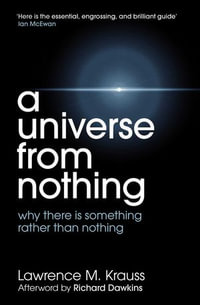
A Universe From Nothing - Lawrence M. Krauss

eBOOK

Please Explain - Karl Kruszelnicki

eBOOK

$16.99

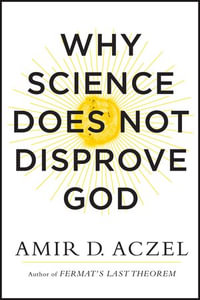
Why Science Does Not Disprove God - Amir D. Aczel

eBOOK

RRP $24.99

$20.99

16%
OFF