Get Free Shipping on orders over $79
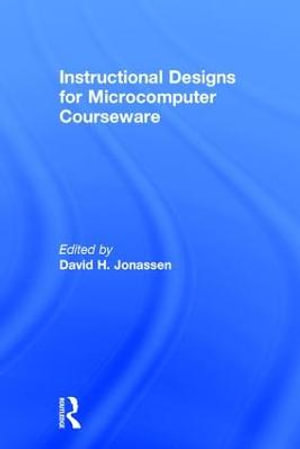
Instruction Design for Microcomputing Software : Interventions - David Jonassen

Instruction Design for Microcomputing Software

By: David Jonassen (Editor)

eText | 3 April 2013 | Edition Number 1

At a Glance

eText


$228.80

or 4 interest-free payments of $57.20 with

 or 

Instant online reading in your Booktopia eTextbook Library *

Why choose an eTextbook?

Instant Access *

Purchase and read your book immediately

Read Aloud

Listen and follow along as Bookshelf reads to you

Study Tools

Built-in study tools like highlights and more

* eTextbooks are not downloadable to your eReader or an app and can be accessed via web browsers only. You must be connected to the internet and have no technical issues with your device or browser that could prevent the eTextbook from operating.
International Relations (IR) theorists have ceaselessly sought to understand, explain, and transform the experienced reality of international politics. Running through all these attempts is a persistent, yet unquestioned, quest by theorists to develop strategies to eliminate or reduce the antinomies, contradictions, paradoxes, dilemmas, and inconsistencies dogging their approaches. A serious critical assessment of the logic behind these strategies is however lacking. This new work addresses this issue by seeking to reformulate IR theory in an original way. Arfi begins by providing a thorough critique of leading contemporary IR theories, including pragmatism, critical/scientific realism, rationalism, neo-liberal institutionalism and social-constructivism, and then moves on to strengthen and go beyond the valuable contributions of each approach by employing the logic of deconstruction pioneered by Derrida to explicate the consequences of taking into account the dilemmas and inconsistencies of these theories. The book demonstrates that the logic of deconstruction is resourceful and rigorous in its questioning of the presuppositions of prevailing IR approaches, and argues that relying on deconstruction leads to richer and more powerfully insightful pluralist IR theories and is an invaluable resource for taking IR theory beyond currently paralyzing 'wars of paradigms'. Questioning universally accepted presuppositions in existing theories, this book provides an innovative and exciting contribution to the field, and will be of great interest to scholars of international relations theory, critical theory and international relations.
on
Desktop
Tablet
Mobile

Other Editions and Formats

Paperback

Published: 1st March 1988

More in Education

What's the Difference? : What's the Difference? - Editors of Mental Floss

eBOOK

Help : The Original Human Dilemma - Garret Keizer

eBOOK

RRP $25.99

$20.99

19%
OFF