At a Glance
272 Pages
eBook
$10.99
or 4 interest-free payments of $2.75 with
Instant Digital Delivery to your Kobo Reader App
What is a human being? Objectively, nothing of consequence. Particles of dust in an infinite arena, present for an instant in eternity. Clumps of atoms in a universe with more galaxies than people. And yet a human being is necessary for the question itself to exist, and the presence of a question in the universe - any question - is the most wonderful thing.
Questions require minds, and minds bring meaning. What is meaning? I don't know, except that the universe and every pointless speck inside it means something to me. I am astonished by the existence of a single atom, and find my civilisation to be an outrageous imprint on reality. I don't understand it. Nobody does, but it makes me smile.
This book asks questions about our origins, our destiny, and our place in the universe. We have no right to expect answers; we have no right to even ask. But ask and wonder we do. Human Universe is first and foremost a love letter to humanity; a celebration of our outrageous fortune in existing at all. I have chosen to write my letter in the language of science, because there is no better demonstration of our magnificent ascent from dust to paragon of animals than the exponentiation of knowledge generated by science. Two million years ago we were apemen. Now we are spacemen. That has happened, as far as we know, nowhere else. That is worth celebrating.
About the Author
Brian Cox is a Professor of Particle Physics and Royal Society University Research Fellow at the University of Manchester, and works at the CERN laboratory in Geneva. He is also a popular presenter on TV and radio. Jeff Forshaw is Professor of Theoretical Physics at the University of Manchester, specializing in the physics of elementary particles. He was awarded the Institute of Physics Maxwell Medal in 1999 for outstanding contributions to theoretical physics.
Industry Reviews
Praise for Professor Brian Cox:
'Cox's romantic, lyrical approach to astrophysics all adds up to an experience that feels less like homework and more like having a story told to you. A really good story, too.' Guardian
'He bridges the gap between our childish sense of wonder and a rather more professional grasp of the scale of things.' Independent
'If you didn't utter a wow watching the TV, you will while reading the book.' The Times
'In this book of the acclaimed BBC2 TV series, Professor Cox shows us the cosmos as we have never seen it before - a place full of the most bizarre and powerful natural phenomena.' Sunday Express
'Will entertain and delight ... what a priceless gift that would be.' Independent on Sunday
on
ISBN: 9780008129798
ISBN-10: 0008129797
Published: 7th May 2015
Format: ePUB
Language: English
Number of Pages: 272
Audience: General Adult
Publisher: HarperCollins Publishers

Brian Cox
What genres and topics does Brian Cox write about?
Brian Cox writes popular science books focused on physics, cosmology, astrophysics and the nature of the universe. He is a particle physicist and science broadcaster (OBE and Royal Society research fellow) and often explains complex science for general readers.
Which Brian Cox book is best for someone new to his work?
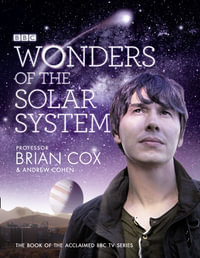
For general readers, Why Does E=MC2? (And Why Should We Care?) is a friendly introduction to key physics ideas. If you enjoyed his TV programmes, start with the tie-in books such as BBC Wonders of the Solar System or Human Universe.
Are Brian Cox's books part of a series or is there a recommended reading order?
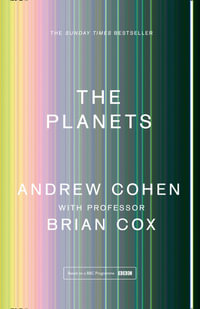
Most of his books are standalone and can be read in any order. There are thematic groups and TV tie-ins (the 'Wonders' titles, Human Universe, The Planets, etc.), so choose by topic or by the related BBC programme rather than a strict series order.
Are his books technical or accessible to non-specialists?
His books are principally popular science aimed at general readers, making complex ideas accessible. Some titles (for example those focused on quantum physics) go into deeper technical explanation, but they are still written for a broad audience.
Are any of his books based on TV programmes, and what formats are they available in?
Yes,several are BBC tie-ins (Human Universe, BBC Wonders of the Solar System, The Universe, Forces of Nature). Formats listed include hardcover and paperback; availability of ebooks or audiobooks varies by title and retailer.