



Christopher Hitchens
"One of the most prolific, as well as brilliant, journalists of our time"
Hitchens died on December 15, 2011, from complications arising from oesophageal cancer. His death prompted tributes and eulogies from a range of public figures, including Tony Blair, Richard Dawkins, Martin Amis, James Fenton, and Stephen Fry.
What genres and formats did Christopher Hitchens write in?
Hitchens was primarily a non-fiction writer: essays, journalism, polemics, memoir, biography and literary and political criticism.
Which of his books are most widely read or influential?
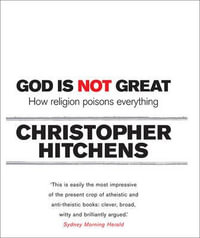
Notable and widely read titles include God is Not Great; Hitch-22; Arguably; The Portable Atheist; Letters to a Young Contrarian; Mortality; The Trial of Henry Kissinger.
Where is a good place to start if I am new to his work?
Start where your interests lie: read God is Not Great for his critique of religion, Hitch-22 for his memoir and life as a public intellectual, or Arguably or Letters to a Young Contrarian for collections of essays and shorter pieces.
Do his books form a series or should they be read in a particular order?
Most of Hitchens's books are standalone. There is no single required reading order; you can read his memoirs, essays and polemics independently or group them by theme.
What themes and topics did Hitchens frequently address in his writing?
He regularly wrote on religion and atheism, politics and public life, war and foreign policy, literature and art, and sharp critiques of public figures and ideas.
Popular Books By Christopher Hitchens

RRP $26.99
$22.99
OFF

RRP $26.99
$22.99
OFF

RRP $32.99
$26.99
OFF
RRP $26.99
$22.99
OFF

RRP $26.99
$22.99
OFF


$32.99

RRP $24.99
$23.75
All Christopher Hitchens Books

RRP $26.99
$22.99
OFF

RRP $26.99
$22.99
OFF
RRP $32.99
$26.99
OFF
RRP $26.99
$22.99
OFF


RRP $26.99
$22.99
OFF

RRP $32.99
$30.99

RRP $32.99
$26.99
OFF
$32.99
RRP $24.99
$23.75
