








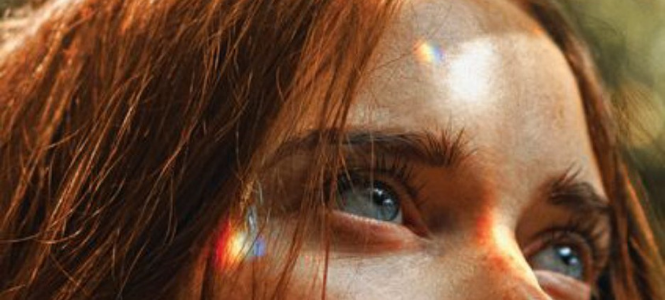
Felicity McLean’s debut novel, The Van Apfel Girls are Gone, has been published in more than half a dozen countries. It was a Barnes & Noble ‘Discover Great New Writers’ pick in the US, and was shortlisted for the Indie Book Awards, and longlisted for the UK’s Dagger Awards, and the Davitt. Her book, Body Lengths, co-written with Olympian Leisel Jones, was Apple Books ‘Best Biography of 2015’ and won the 2016 Australian Book Industry Awards ‘Reader’s Choice’ for Small Publisher Adult Book of the Year.
Today, Felicity McLean is on the blog to answer a few of our questions about her new novel, Red. Read on …

Felicity McLean (Photo by A. Hollingworth).
Please tell us about your book, Red!
FM: Red is a contemporary retelling of the Ned Kelly story, where Ned is now a teenage girl called Ruby ‘Red’ McCoy, and all the action takes place on the Central Coast of NSW in the early 1990s.
The story follows the lives of Red and her dad, Sid. When Sid is recruited into a police-sanctioned criminal racket, and then framed by Sergeant Healy, Red discovers it’s only the latest episode in a decades-long vendetta between the sergeant’s family and her own.
Ned Kelly occupies a singular place in Australian mythology and culture. What made you want to recast his story with a young girl?
FM: I was interested to see whether we’d still be as fascinated by Ned Kelly – that underdog, that larrikin – if he was a she. Would we sympathise with her? Would we identify with her? Would we judge her more harshly?
Your previous novel, The Van Apfel Girls Are Gone, followed a group of young girls on the brink of adolescence, and Red similarly follows young Ruby ‘Red’ McCoy. Why do you think that teenage girls make such compelling subjects for a novel?
FM: I’m a sucker for a coming-of-age novel.
Red is also set in Australia in the early 90s. What is it about that period that captures your writerly attention and imagination?
FM: I chose the 90s and, in particular, the years preceding the Wood Royal Commission into alleged police corruption because I wanted to set Red during an era when police corruption was rife.
What was your favourite thing about bringing Red McCoy into life on the page?
FM: Red was such a lot of fun to write! She’s brave and impulsive; opinionated and tough. She really was a joy to create.
‘I was interested to see whether we’d still be as fascinated by Ned Kelly – that underdog, that larrikin – if he was a she.’
Who did you write this book for? Who do you wish would read it?
FM: Anyone with a passing interest in police corruption, Australian idioms, and/or strong female characters.
Can you tell us a little bit about your journey towards becoming a writer?
FM: I’ve been writing (fiction, non-fiction, kids lit, speeches, book reviews, newspaper articles) for more than a decade now, and the novelty hasn’t worn off yet.
What is the last book you read and loved?
FM: Matrix. Only Lauren Groff could make 12th-century-nun fiction unputdownable.
What do you hope readers will discover in Red?
FM: I’m not sure it’s my place to say, but I hope Red will find an ally in readers.
And finally, what’s up next for you?
FM: More fiction, with any luck.
Thanks Felicity!
—Red by Felicity McLean (HarperCollins Australia) is out now. Limited signed copies are available while stocks last!

Red
Limited Signed Copies Available!
It's the early 1990s and Ruby 'Red' McCoy dreams about one day leaving her weatherboard house on the Central Coast of New South Wales, where her best friend, Stevie, is loose with the truth, and her dad, Sid, is always on the wrong side of the law. But wild, whip-smart Red can't stay out of trouble to save her life, and Sid's latest hustle is more harebrained than usual. Meanwhile, Sergeant Trevor Healy seems to have a vendetta against every generation of the McCoys.
Told in Ruby's vivid, inimitable voice, Red is part True Grit, part Blue Murder...

 What do we know about the Boy Swallows Universe Netflix show?
  Booktopia’s top thrilling fiction picks for Crime Month
  Booktopia’s Top First Nations Book Recommendations for 2023
Comments
No comments