








Robbie Arnott was a 2019 Sydney Morning Herald Best Young Novelist and won the Margaret Scott Prize in the 2019 Tasmanian Premier’s Literary Prizes. His widely acclaimed debut, Flames (2018), was shortlisted for a Victorian Premier’s Literary Award, a New South Wales Premier’s Literary Award, a Queensland Literary Award, the Readings Prize for New Australian Fiction and Not the Booker Prize. He lives in Hobart.
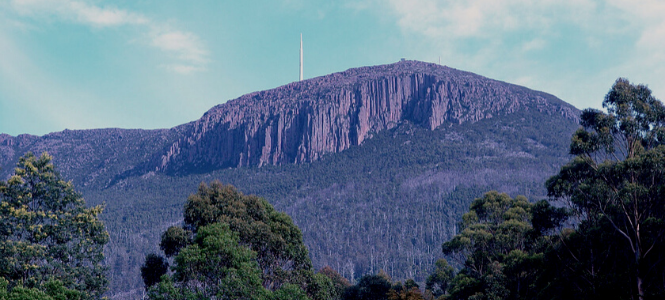
Today, Robbie is on the blog to talk about his new novel, The Rain Heron, and how it was inspired by the wild beauty of kunanyi / Mount Wellington in Tasmania. Read on …
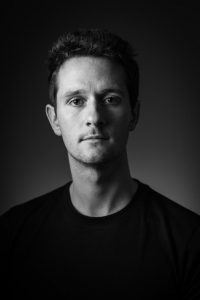
Robbie Arnott (Photo by Mitch Osborne)
During the week I spend too much time on the internet, too much time drinking lager, too much time fiddling with Word documents. But every weekend—barring heavy weather or a colossal hangover—I go to the mountain.
All week kunanyi / Mount Wellington looms above me, its grey cliffs and crags exerting a pull that, like many Hobartians, I can always feel but not often articulate. When I go there, I have two choices of activity. The first is to go for a long, meandering run on the Pipeline Track, which winds from Fern Tree around the southern face of the mountain, with views taking in Bruny Island, the green spread of the Huon Valley and, eventually, the sharp jut of Cathedral Rock. The second is to go for a bushwalk on one of the trails that cross the mountain’s slopes and summits. There are many to choose from, and they’re as varied as their names suggest: Lost World, Collins Cap, Sleeping Beauty, Potato Fields, Sphinx Rock, Octopus Tree, Snake Plains, Organ Pipes (I’ll stop there; this is just a small selection). There are also waterfalls to seek out—some that drip in glassy streams over smooth rocks, others that rush earthward in thick, white torrents. There are abandoned huts. There are lichen-scarred boulder fields. There are so many varieties of trees and ferns it would be useless to list them all. In winter there is shining snow and ice-sheeted tarns. In summer the clear sky brightens the dark dolerite. At all times, there are birds.
Spending so much time on a mountain was probably why I wrote a novel that begins on a mountain. It wasn’t a conscious connection that I made, but it’s hard to doubt the influence. I wandered high slopes, and soon I was writing about someone wandering high slopes. But that’s where the similarities between kunanyi and the mountain in The Rain Heron end. I walked through temperate eucalypts. Ren, the character in the novel, lives in a conifer forest of pines and firs. I unpeeled muesli bars and mandarins. Ren traps fish and deer. I watched for swift parrots, currawongs and goshawks, while Ren is haunted by a mythical bird, born of a storm, with feathers of mist and wings of rain.
From there, the story went other places. I couldn’t keep it on the mountain forever. But a mountain is where it started, both in this world and the world of the book, and for that I am profoundly grateful. It seems bizarre to me that I can live in a modern city with traffic lights and WiFi, and within twenty minutes find myself high on ancient rock, looking over green-blue forests that rush down the cliffs to meet an ocean that runs unbroken until it laps at Antarctic ice. All of this is freely available; I must only stand up and start walking. If you come to Hobart, I can suggest no better way to spend your time than to walk the mountain’s face. Extraordinary things could happen if you do.
—The Rain Heron by Robbie Arnott (Text Publishing) is out on the 2nd of June.
Until the 31st of May 2020, Text Publishing will donate $1 to the Royal Melbourne Hospital, one of five global WHO Collaborating Centres for Research on Influenza, for every one of their books sold – find out more here.

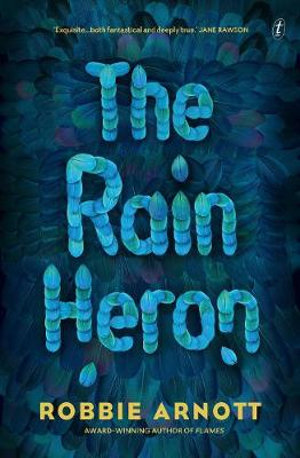
The Rain Heron
Ren lives alone on the remote frontier of a country devastated by a coup. High on the forested slopes, she survives by hunting and trading-and forgetting.
But when a young soldier comes to the mountains in search of a local myth, Ren is inexorably drawn into her
impossible mission. As their lives entwine, unravel and erupt-as myths merge with reality-both Ren and the soldier are forced to confront what they regret, what they love, and what they fear...

 What do we know about the Boy Swallows Universe Netflix show?
  Booktopia’s top thrilling fiction picks for Crime Month
  Booktopia’s Top First Nations Book Recommendations for 2023
Comments
No comments