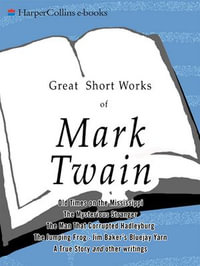
At a Glance
eBook
$5.05
Instant Digital Delivery to your Kobo Reader App
ISBN: 1230000040312
Series: THE GREAT CLASSICS LIBRARY
Published: 20th December 2012
Format: ePUB
Language: English
Publisher: Revenant
You Can Find This eBook In
Other Editions and Formats

Digital Audiobook
Published: 1st January 2009
Instant Digital Delivery to your Kobo Reader App

Digital Audiobook
Published: 6th August 2018
Instant Digital Delivery to your Kobo Reader App

Digital Audiobook
Published: 3rd December 2019
Instant Digital Delivery to your Kobo Reader App

Digital Audiobook
Published: 6th March 2008
Instant Digital Delivery to your Kobo Reader App

Digital Audiobook
Published: 6th April 2017
Instant Digital Delivery to your Kobo Reader App

Digital Audiobook
Published: 15th November 2007
Instant Digital Delivery to your Kobo Reader App

Digital Audiobook
Published: 16th January 2008
Instant Digital Delivery to your Kobo Reader App

Digital Audiobook
Published: 7th January 2019
Instant Digital Delivery to your Kobo Reader App

Digital Audiobook
Published: 15th October 2020
Instant Digital Delivery to your Kobo Reader App

Digital Audiobook
Published: 22nd November 2022
Instant Digital Delivery to your Kobo Reader App

Digital Audiobook
Published: 1st June 2021
Instant Digital Delivery to your Kobo Reader App

Digital Audiobook
Published: 14th August 2021
Instant Digital Delivery to your Kobo Reader App

Digital Audiobook
Published: 1st May 2022
Instant Digital Delivery to your Kobo Reader App

Digital Audiobook
Published: 15th November 2016
Instant Digital Delivery to your Kobo Reader App

Digital Audiobook
Published: 23rd August 2022
Instant Digital Delivery to your Kobo Reader App

Digital Audiobook
Published: 10th January 2023
Instant Digital Delivery to your Kobo Reader App

Digital Audiobook
Published: 19th December 2023
Instant Digital Delivery to your Kobo Reader App

Digital Audiobook
Published: 5th January 2025
Instant Digital Delivery to your Kobo Reader App

Digital Audiobook
Published: 7th November 2024
Instant Digital Delivery to your Kobo Reader App

Digital Audiobook
Published: 15th May 2025
Instant Digital Delivery to your Kobo Reader App

Digital Audiobook
Published: 27th October 2025
Instant Digital Delivery to your Kobo Reader App