Get Free Shipping on orders over $79
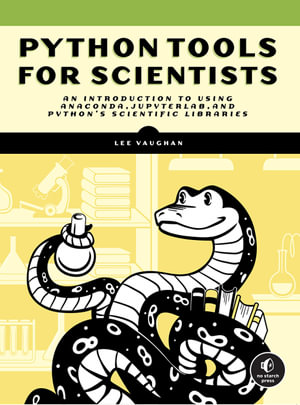
Python Tools for Scientists : An Introduction to Using Anaconda, JupyterLab, and Python's Scientific Libraries - Lee Vaughan

Python Tools for Scientists

An Introduction to Using Anaconda, JupyterLab, and Python's Scientific Libraries

By: Lee Vaughan

eText | 17 January 2023

At a Glance

eText


$50.37

or 4 interest-free payments of $12.59 with

 or 

Instant online reading in your Booktopia eTextbook Library *

Why choose an eTextbook?

Instant Access *

Purchase and read your book immediately

Read Aloud

Listen and follow along as Bookshelf reads to you

Study Tools

Built-in study tools like highlights and more

* eTextbooks are not downloadable to your eReader or an app and can be accessed via web browsers only. You must be connected to the internet and have no technical issues with your device or browser that could prevent the eTextbook from operating.

An introduction to the Python programming language and its most popular tools for scientists, engineers, students, and anyone who wants to use Python for research, simulations, and collaboration.

Python Tools for Scientists will introduce you to Python tools you can use in your scientific research, including Anaconda, Spyder, Jupyter Notebooks, JupyterLab, and numerous Python libraries. You'll learn to use Python for tasks such as creating visualizations, representing geospatial information, simulating natural events, and manipulating numerical data.

Once you've built an optimal programming environment with Anaconda, you'll learn how to organize your projects and use interpreters, text editors, notebooks, and development environments to work with your code. Following the book's fast-paced Python primer, you'll tour a range of scientific tools and libraries like scikit-learn and seaborn that you can use to manipulate and visualize your data, or analyze it with machine learning algorithms.

You'll also learn how to:

  • Create isolated projects in virtual environments, build interactive notebooks, test code in the Qt console, and use Spyder's interactive development features
  • Use Python's built-in data types, write custom functions and classes, and document your code
  • Represent data with the essential NumPy, Matplotlib, and pandas libraries
  • Use Python plotting libraries like Plotly, HoloViews, and Datashader to handle large datasets and create 3D visualizations

Regardless of your scientific field, Python Tools for Scientists will show you how to choose the best tools to meet your research and computational analysis needs.

on
Desktop
Tablet
Mobile

More in Programming & Scripting Languages

Investing for Programmers - Stefan Papp

eBOOK

The Debugging Handbook - Johannes Kuhlmann

eBOOK

RRP $67.55

$54.99

19%
OFF
The Rust Programming Language, 3rd Edition - Carol Nichols

eBOOK