








Caroline is a novelist, writer and producer. She is the author of four books: the bestselling novel, Maggie’s Kitchen (2016), Eleanor’s Secret (2018), Finding Eadie (2020) and Esther’s Children, to be published May 2022. Her debut novel, Maggie’s Kitchen, was shortlisted for Booktopia’s Best Historical Fiction in 2016 and nominated as Book of the Year and Caroline as Best New Author by AusRom Today. She has worked in documentary, film and drama, and discovered that she loves to write fiction and to share lesser-known histories; in particular those of pioneering women whose lives speak to us now. Caroline studied the craft of novel writing at the Faber Academy in Sydney, with Curtis Brown Creative in London, and has a MA in Film & Television and a MA in Creative Writing. She lives in Sydney with her husband and two teenage sons.
Today, Caroline Beecham is on the blog to tell us a little bit about how the historical figure Esther Simpson inspired her new book, Esther’s Children. Read on …

Caroline Beecham (Photo by Graham Jepson).
I knew I wanted to write about Esther Simpson when I first read an article about her key role in the Society for the Protection of Science and Learning, an organisation that helped rescue over two thousand Jewish academics and scientists—refugees—from the Nazis in the 1930s and 1940s. A number of high-profile men established the society, including Lord Beveridge, A.V. Hill, Albert Einstein, Norman Bentwich, and Leo Szilard, and their contributions (as well as the scientists and Nobel prize winners the Society helped save) are well documented but Esther’s role was far less well-known.
Esther—Tess to her friends—worked tirelessly behind the scenes, writing letters to institutions to find the refugees positions, arranging the grants, helping them with accommodation and bank accounts, and generally supporting them and their families to settle in Britain and establish new lives. She befriended many refugees and was a practical and emotional support to those who had lost their homes and livelihoods, and I was immediately intrigued by what a hidden hero she was. Her dedication and self-sacrifice moved me as did her humanity; her parents were Lithuanian immigrants who escaped the pogroms so it wasn’t surprising that she dedicated her life to helping others. What is surprising is the friendships she made and the incredible legacy of the scientists she called her children. A favourite quote of mine is from 1940, when she wrote hundreds of letters to the British government to try and free the refugees a second time after they were interned as “enemy aliens”:
“I faced one or two anxious moments last week. One naturally has something to worry about when one has a family of six hundred.”
After some initial research I contacted the Council for At-Risk Academics (CARA), the organisation that the Society became, and gained their support and access to their archives at the Bodleian Library in Oxford. I carried out research remotely and then with the help of two researchers, as well as through books and online resources, and quickly discovered that in addition to her humanitarian work, the next most important thing in Esther’s life was her music. She was an accomplished violinist and played often in ensembles with the intellectuals and the refugee scientists and she confessed that music was a passport that enriched her personal and professional life and gave her access to people that she would never have had the opportunity to meet, and places she would not have travelled to. I’ve included a Spotify list in the back of the book that includes music that Esther played or that were favourite pieces, which I hope readers will enjoy.
In real life as well as in the book, Esther returned to Vienna every year in the lead up to the war to play music. I thought the city would make a wonderful setting with its stunning architecture, its reputation as the cultural centre of Europe, and its aristocratic and artistic population, which already comprised the European diaspora. This was particularly because of the dramatic change to the city that took place when it came under Nazi control.
Letters and journals in the archives show a surprising depth of relationships and she forged lifelong friends with men like Francis Simon and Max Perutz, Engelbert Broda and Fritz Saxl—yet she never married. I felt that she probably sacrificed her personal life as she dedicated her life to helping others and I wanted to give her the love life she surely deserved. I also thought that it would be the most dramatic way to explore her story by following her quest to save the refugee she falls in love with—Harry Singer—since there is so much at stake for him and his family.
‘Esther’s Children isn’t just a complex love story; it’s a story about the impossible choices we make and the moral dilemmas we sometimes face.’
I also thought the real events would create a fascinating story with a twist because as well as saving men who went on to accomplish great things and make life-changing discoveries, there were also a few that were responsible for developing inventions that were less desirable (spoiler alert!!). I felt this would have created a real moral dilemma for Esther; above anything she was a pacifist and a humanist.
In the past I have written novels inspired by real events but created fictional characters to tell the story; this time there are a number of real characters as well as Esther and it was quite a different process. On the one hand there are public records which provide useful information about historical figures but there’s also a responsibility when you are writing about people who have walked the earth and have families, and I felt the weight of that responsibility heavily, especially getting the balance of fact and the fiction right.
The other part of this story that intrigued me was life in the internment camps; the “enemy aliens” Harry is interned with aren’t just an ordinary captives; they were artists and writers, lawyers, musicians and sculptors, and true to real life, they gave each other lectures and performed concerts and recitals. I found the juxtaposition of this life highly interesting and it sparked my imagination; as hard as the experience would have been for the refugees, eyewitnesses recount a sense of camaraderie, shared hope and cultural exchange as well as fighting amongst the captives. The interweaving of Harry’s life and struggle to survive as Esther fights for his freedom provides one of the powerful and dramatic narrative threads.
Esther really is a hidden hero and deserves to be remembered and celebrated, and hopefully readers who devoured Kelly Rimmer’s The Warsaw Orphan or Meg Waite Clayton’s The Last Train To London, or The Postmistress of Paris—a story inspired by the rescue of Jewish artists and writers from occupied France—will certainly enjoy it.
Esther’s Children isn’t just a complex love story; it’s a story about the impossible choices we make and the moral dilemmas we sometimes face, because it’s also about these scientists’ achievements—they were known collectively as Hitler’s gift to the world because of their legacy; lifesaving and life-changing inventions, but some also had a hand in developing weapons—so it’s very much about the complexities of life, especially during wartime.
Ultimately, this is a story about kindness and giving, and how one woman and a refugee organisation did that in spades and with such remarkable success that they are still operating today. As one of her colleagues, Walter Adams, wrote to Tess in 1966:
“Yours was a truly personal success, the giving of yourself and your friendship unstintingly in a way that literally changed the cultural history of the world.”
—Esther’s Children by Caroline Beecham (Allen & Unwin) is out now.

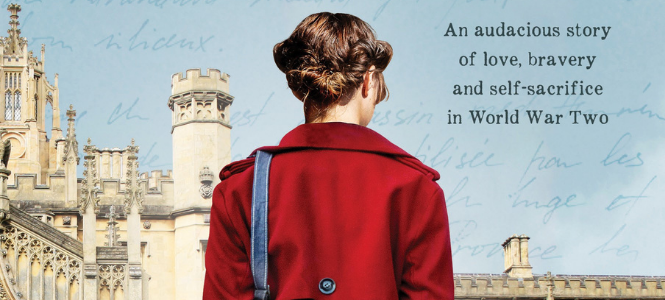
Esther's Children
Austria, 1936: Esther 'Tess' Simpson works for a British organisation that rescues academics from the cruel Fascist and anti-Semitic regimes taking hold in Europe. On a dangerous trip to Vienna to help bring aid to Europe's threatened Jewish scholars, Esther meets Harry Singer, a young Jewish academic and musician.
Tess works tirelessly to rescue at-risk academics and scientists from across Europe, trying to find positions for them in Britain and America. In 1938, she secures employment for Harry at Imperial College, London, their love affair intensifying...

 Bestsellers: Scott Pape and Ash Barty continue to prove a hit with readers!
  Bestsellers: Jane Harper and Aunty Donna prove a hit with readers!
Comments
May 20, 2022 at 12:52 pm
When I was a child, my mother gave me a biography of Nancy Wake, known as the White Mouse to the French Resistance in WW2, and she became my hero; she still is my hero. Esther Simpson is another example of strong, amazing women from this era who more people need to get to know. I can’t wait to read “Esther’s Children”!