








Fiona Murphy is a Deaf poet and essayist. Her work has been published in Kill Your Darlings, Overland, Griffith Review and the Big Issue, among other publications. In 2019, she was awarded the Overland Fair Australia Essay Prize and the Monash Undergraduate Creative Writing Prize. In 2018, she was shortlisted for the Richell Prize and highly commended by the Wheeler Centre Next Chapter program.
Today, we have Fiona Murphy on the blog to answer a few questions about her debut memoir, The Shape of Sound. Read on …

Fiona Murphy
Tell us about your book, The Shape of Sound!
FM: The Shape of Sound is a memoir about how I concealed my deafness until my late twenties. I explore the impact secrets, stigma and shame can have on relationships. As well as the joy and relief I felt once I discovered d/Deaf culture and Auslan!
You kept your deafness a secret for nearly three decades. Looking back on that time, how do you feel about it now?
FM: Looking back, I can recognise how desperately lonely and afraid I felt. At the time, without access to d/Deaf culture, I didn’t realise that it was possible to feel a sense of pride about being deaf. Instead my sense of shame felt impossibly deep and unshifting.
In some ways I’m astonished by my grit and determination to maintain the secret as it was physically and emotionally exhausting. In other ways my experiences have made me incredibly passionate about the importance of disability representation. No d/Deaf or disabled child should be made to feel like they are less worthy than anyone else.
What made you want to write your story as a memoir?
FM: I initially set out to write a series of essays that explored deafness, disability and social policy. I had begun to learn Auslan and had so many questions about what it meant to be d/Deaf. I was so petrified about revealing my deafness, I sneakily thought I could just ‘write around’ my own experiences. Needless to say: the manuscript was absolutely abysmal! The essays were clogged with academic references. Plus, the tone was achingly dry and detached as I was desperately trying to keep the reader at a distance.
Thankfully the brilliant essayist Fiona Wright gave me some excellent writing advice: trust your obsessions. While researching my book I kept being drawn to personal accounts of young d/Deaf people. These stories were heartening and enlivening. I also thought that if I just looked hard enough, I’d find a story like my own: a deaf millennial who has spent their entire life passing as hearing. Unfortunately, I couldn’t find anything. So, taking Wright’s advice, I began to write about why I longed to find this kind of story. With each draft I began to reveal more of myself. Slowly my manuscript shifted from being an overly analytical essay collection about the theory of hearing loss to something wholly personal.
Ironically, I’m now relieved that no one will ever read that terrible first draft!
Acceptance of one’s body is an ongoing process, one that’s complicated by the ways in which our society fails to serve deaf and disabled people. How do you manage any feelings of fear or shame you might have when it comes to your body?
FM: Pride takes practice, I still fall into the habit of concealing my hearing loss. But I’ve become kinder to myself. Finding d/Deaf role models and becoming an active member of the disability community has been life changing. I have now learned that I’m not alone, but I can reach out and talk to people who understand what it’s like to experience stigma, discrimination and barriers to access.
What would you say is the importance of discovering and taking part in a community of people who share your experience of the world?
FM: It has been essential for maintaining my physical and mental wellbeing. To survive as a disabled people takes endurance and ingenuity—being part of a community means that together we can share knowledge and support one another. Disability activist Eddie Ndopu writes, ‘Survival demands imagination from people who exist on the margins. To exist at the centre does not require nearly as much imagination because the centre functions to cocoon its inhabitants. Centring the imagination of the marginalized is key to saving society itself.’
Plus being part of the d/Deaf and disability arts community is brilliant fun! The art is groundbreaking and spectacularly original.
‘To survive as a disabled people takes endurance and ingenuity—being part of a community means that together we can share knowledge and support one another.’
What would you change about the way in which Australian society shapes the lives of deaf and disabled people?
FM: There must be more representation of d/Deaf and disabled people throughout all forms of media. Far too often deafness and disability are considered to be a tragedy that befalls a select few rather than a natural part of life. Until disabled people consistently appear in the media, we will continue to be treated as ‘the other’—separate from society.
This is your first book, but you’ve also written essays and poetry. What do you love so much about writing and creating across multiple forms?
FM: Writing allows me to hear myself think. If I go a few days without writing I begin to feel scattered and a little lost.
I don’t really have a set writing process. More often than not, I start with a question and I try to write my way towards an answer. The idea finds its own shape and form. A piece may start as a poem and bloom into an essay. Or I sometimes go the other way—I take great pleasure in hacking away at a piece until only the bare essentials remain.
What is the last book you read and loved?
FM: Eating With My Mouth Open by Sam van Zweden is a delicious mix of memoir and cultural critique. It is clever, tender and brimming with ideas.
What do you hope readers will discover in The Shape of Sound?
FM: Hopefully readers will discover that deafness doesn’t just mean a life of silence. Deafness is a whole-body experience.
And finally, what’s up next for you?
FM: I’m working on a novel, which features the same topics that obsessed me while writing The Shape of Sound: cadavers; secrets; social justice. It’s an ungainly mess at the moment, I have many more drafts to write!
Thanks Fiona!

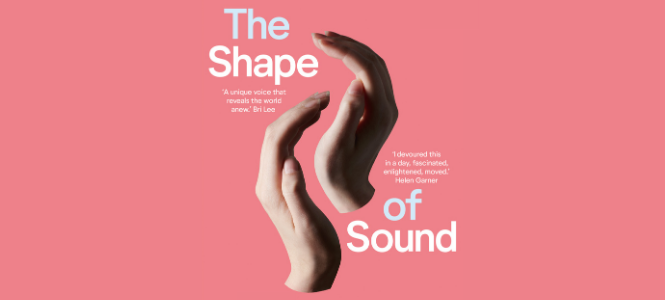
The Shape of Sound
Fiona Murphy's memoir about being deaf is a revelation. Secrets are heavy, burdensome things. Imagine carrying a secret that if exposed could jeopardise your chances of securing a job and make you a social outcast. Fiona Murphy kept her deafness a secret for over twenty-five years.
But then, desperate to hold onto a career she'd worked hard to pursue, she tried hearing aids. Shocked by how the world sounded, she vowed never to wear them again. After an accident to her hand, she discovered that sign language could change her life, and that Deaf culture could be part of her identity...

 What do we know about the Boy Swallows Universe Netflix show?
  Booktopia’s top thrilling fiction picks for Crime Month
  Booktopia’s Top First Nations Book Recommendations for 2023
Comments
No comments