









Lyn Yeowart is a professional writer and editor with more than 25 years of experience in writing and editing everything from captions for artworks to speeches for executives. Her debut novel, The Silent Listener, is loosely based on events from her childhood growing up in rural Victoria. She is now happily ensconced in Melbourne, where there is very little mud, but lots of books.
Today, Lyn Yeowart is on the blog to share her thoughts on why fiction is the perfect medium for her to talk about the very personal issues of family trauma and violence. Read on …

Lyn Yeowart (Photo by LJM Photography).
How fiction creates the conditions to reveal the emotional truth of family trauma
The word ‘family’ should never sit in front of the noun ‘trauma’, yet ‘family trauma’ rolls off our tongues as easily as ‘domestic violence’. And ‘sexual assault’. As if these pairings of words are normal. As if they aren’t oxymorons the media report on and courts pass judgement on practically every single day. As if they aren’t utterly unacceptable concepts, let alone realities that far too many people live with and sometimes die from.
I have long wanted to write The Silent Listener, partly to expand and contribute to the discussion about the long-term ramifications of family trauma. So why not write an essay or a memoir, or collect and document quantitative and qualitative data proving the lifelong legacy of sustained family trauma?
J.P. Pomare (author of best-selling novels Call Me Evie and In The Clearing) generously wrote of The Silent Listener that it ‘… is a novel about inherited violence and redemption packaged as a cracking psychological thriller.’ And that’s what novelists can do. They can ‘package’ difficult subject matter into a story we’re willing to read, because fiction, after all, is ‘made up’, isn’t it? Nothing to worry about here folks… read the last page then just move on back to your warm comfy life.
But in crafting a narrative, novelists often weave together reality and fiction, and the thread they use (at least sometimes) is emotional truth. By pulling us into the ‘story’, novelists deliver a vicarious experience of events and the emotions felt by the characters ‘living’ those events. Ideally, after you’ve read a compelling work of fiction, something stays with you, and if that novel depicts family trauma, maybe what stays with you is a little bit of that trauma. Maybe a little bit of the fear and anguish seeps in and changes your perception of the world. And maybe some good (in whatever form it takes) might come from that.

But there’s another reason I chose fiction: if you think that reading a report about the abuse or murder of children by someone who should be caring for them is horrific, imagine how traumatic it is for the reporter who researches and writes the report. Fiction allows authors to step back from reality and write in a safe space. The Silent Listener, for example, began as a cathartic exercise to process the legacy of my father’s dominance and violence, but the more I wrote, the more I discovered that weaving in fiction did more than create a better narrative—it meant I could go to places I couldn’t have if I’d been strictly adhering to ‘the facts’, because I could camouflage the truths of my childhood between events that are ‘exaggerated’ and—significantly—events that are downplayed. But to humbly paraphrase what Margaret Atwood said of The Handmaid’s Tale, there’s nothing in The Silent Listener that hasn’t happened to someone, somewhere.
Nevertheless, some writers who read early extracts of the novel said that it contained events that were “not believable” and went “too far”. So, because I was now writing fiction for readers, not memoir for me, I pressed Delete, even though those deleted lines were authentic descriptions of real events from my childhood, and I retained the fiction that rang true for those early readers. Because I wanted people to believe in everything in this book.
I once read that Norwegian author Jostein Gaarder wrote a non-fiction book about philosophy, which he presented to a publisher who promptly told him no one would read it, but added If you want to write a book people will read, go away and write a novel. So he went away and wrote a novel: the bestselling Sophie’s World: A Novel About the History of Philosophy. I wanted to write something about family trauma that people would read and take seriously, so I too went away and wrote a novel.
—The Silent Listener by Lyn Yeowart (Penguin Books Australia) is out now.
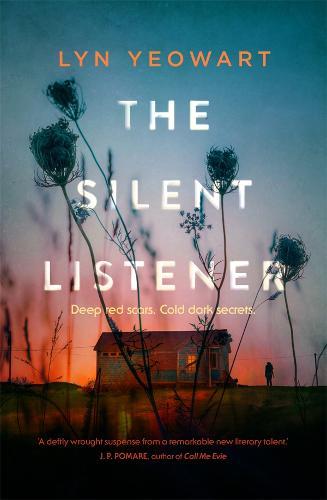
The Silent Listener
In the cold, wet summer of 1960, 11-year-old Joy Henderson lives in constant fear of her father. She tries to make him happy but, as he keeps reminding her, she is nothing but a filthy sinner destined for Hell . . .Yet, decades later, she returns to the family’s farm to nurse him on his death bed. To her surprise, her ‘perfect’ sister Ruth is also there, whispering dark words, urging revenge.
Then the day after their father finally confesses to a despicable crime, Joy finds him dead - with a belt pulled tight around his neck...

 Ten Terrifying Questions with Tobias Madden!
Comments
February 25, 2021 at 6:18 pm
Loved The Book, it was very close to the bone for me. I was always, a Silent Listener. Thank you for a great read.