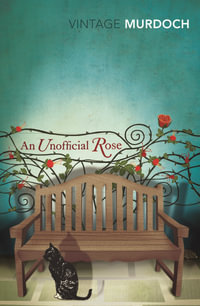
Iris Murdoch's richly peopled novel revolves round a happily married couple Kate and Octavian, and the friends of all ages attached to their household in Dorset. The novel deals with love in its two aspects, the self-gratifying and the impersonal: - the nice and the good - as they are embodied in a fascinating array of paired characters. 'The Nice and the Good' leads through stress and terror to a joyous and compassionate 'Midsummer Nights Dream' conclusion, in which the couples all sort themselves out neatly and omnia vincit amor.
About the Author
Iris Murdoch was born in Dublin in 1919 of Anglo-Irish parents. She went to Badminton School, Bristol, and read classics at Somerville College, Oxford. During the war she was an Assistant Principal at the Treasury, and then worked with UNRRA in London, Belgium and Austria. She held a studentship in Philosophy at Newnham College, Cambridge, and then in 1948 she returned to Oxford where she became a Fellow of St Anne's College. Until her death in February 1999, she lived with her husband, and teacher and critic John Bayley, in Oxford. Awarded the CBE in 1976, Iris Murdoch was made a DBE in the 1987 New Year's Honours List. In the 1997 PEN Awards she received the Gold Pen for Distinguished Service to Literature. Since her writing debut in 1954 with Under the Net, Iris Murdoch has written twenty-six novels, including the Booker Prize-winning The Sea, The Sea (1978) and most recently The Green Knight (1993) and Jackson's Dilemma 91995). Other literary awards include the James Tait Black Memorial Prize for The Sacred and Profane Love Machine (1974). Her works of philosophy include Sartre: Romantic Rationalist, Metaphysics as a Guide to Morals (1992) and Existentialists and Mystics (1997). She has written several plays including The Italian Girl (with James Saunders) and The Black Prince, adapted from her novel of the same name. Her volume of poetry, A Year of Birds, which appeared in 1978, has been set to music by Malcolm Williamson.
Industry Reviews
"Iris Murdoch is incapable of writing without fascinating and beautiful colour" * The Times * "Iris Murdoch was one of the best and most influential writers of the twentieth century" * Guardian * "Irish Murdoch's most versitile novel, and chief among them is the pleasure which the authors take in her characters" * Country Life * "Just as Jane Austen defines moral categories like "sense" and "sensibility" in her novels, so Iris Murdoch creates new constellations of meaning around those stand-bys of ordinary language, the nice and the good" * Atlantic *