Get Free Shipping on orders over $0
Plant Breeding : Principles and Prospects - I. Romagosa

Plant Breeding

Principles and Prospects

By: I. Romagosa, M. D. Hayward (Editor), N. O. Bosemark (Editor)

Hardcover | 31 May 1993

At a Glance

Hardcover


$489.01

or 4 interest-free payments of $122.25 with

 or 

Ships in 5 to 7 business days

Our requirement for plant breeders to be successful has never been greater. However one views the forecasted numbers for future population growth we will need, in the immediate future, to be feeding, clothing and housing many more people than we do, inadequately, at present. Plant breeding represents the most valuable strategy in increasing our productivity in a way that is sustainable and environmentally sensitive. Plant breeding can rightly be considered as one of the oldest multidisciplinary subjects that is known to humans. It was practised by people who first started to carry out a settled form of agriculture. The art, as it must have been at that stage, was applied without any formal underlying framework, but achieved dramatic results, as witnessed by the forms of cultivated plants we have today. We are now learning how to apply successfully the results of yet imperfect scientific knowledge. This knowledge is, however, rapidly developing, particularly in areas of tissue culture, biotechnology and molecular biology. Plant breeding's inherent multifaceted nature means that alongside obvious subject areas like genetics we also need to consider areas such as: statistics, physiology, plant pathology, entomology, biochemistry, weed science, quality, seed characteristics, repro­ ductive biology, trial design, selection and computing. It therefore seems apparent that modern plant breeders need to have a grasp of wide range of scientific knowledge and expertise if they are successfully to a exploit the techniques, protocols and strategies which are open to them.
Industry Reviews
The text is supported by many tables diagrams and excellent illustrations together with lists of references. There are good species and subject indexes. - Agricultural Progress.; The main merit of this book ... is to provide up-to-date comprehensive information in an accessible and integrated form for both postgraduate courses and research. This book is an excellent compilation of recent advances in crop improvement, written by 46 experts from 12 countries. ... The chapters are well written and logically organised. I recommend this book to both breeders and biologists working in various areas of plant improvement and wishing to be kept informed in depth about new techniques. - Planzen; ...a well balanced introduction from world authorities on the principles and practice of plant breeding...it should be required reading for all students... - Experimental Agriculture

More in Botany & Plant Sciences

Ngarn Wa'ngal : Art of the Gum Tree - Alisa Bunbury

RRP $69.99

$52.75

25%
OFF
Beautiful Blooms - Georgianna Lane

RRP $44.99

$35.75

21%
OFF
Folium : A gorgeous compendium of beautiful leaves - Jeanne Batiste
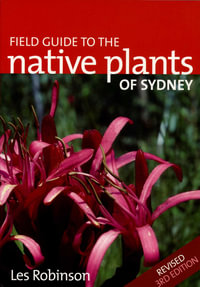
Field Guide to the Native Plants of Sydney - Les Robinson

RRP $59.99

$39.75

34%
OFF
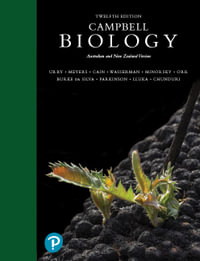
Campbell Biology : Australian and New Zealand Version, 12th edition - Lisa A. Urry
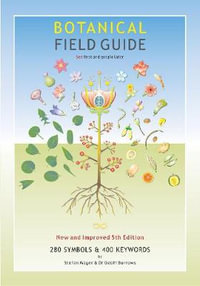
Botanical Field Guide - Aracaria  &  Geoff Burrows

Card or Card Deck

$12.00

A Field Guide to the Fungi of Australia - Tony Young

RRP $39.99

$22.75

43%
OFF
Gathering Moss : A Natural and Cultural History of Mosses - Robin Wall Kimmerer
Plant Pathology and Plant Pathogens - Catlyn Bennett